Eczema on the face: the forms it takes and why it’s so common
You look in the mirror in the morning. The skin beside your nose is flaking, your eyelids itch, your cheeks burn, or tiny bumps are popping up around your mouth. Careful, though: calling it “dermatitis” doesn’t mean it’s all the same problem.
Before you ask “which cream will help?”, ask yourself four questions: where, what does it look like, since when, and after what?
The wrong texture, or constantly switching products, can hide the pattern and make things even more confusing. So the goal of this article isn’t to diagnose you from afar or sell you skin care. It’s to help you figure out the best next step.

How we put this article together
Article summary
Dermatitis on the face isn’t one condition. It’s a description of inflamed or irritated skin.
Where it is, what it looks like, how it feels and when it started often tell you more than the redness itself.
An irritant or trigger can reach your face from your hair, nails or hands, or while you rinse out shampoo.
A rich, occlusive ointment is really helpful on truly dry, rough or cracked skin, but it isn’t the answer to every kind of redness or tiny bumps.
Eye pain, sensitivity to light, changes in vision, fast swelling or painful redness that’s spreading need a doctor’s assessment.
3 facial eczema patterns you’ll see most often
The patterns below show where changes appear and how to tell them apart. The sketches are simplified and aren’t a self-diagnosis tool.
Short answers first
What is dermatitis on the face, exactly?
Is facial dermatitis contagious?
Why does my face itch or burn?
Can makeup or skin care cause it?
How long can it last?
Which cream should I choose?
Can I use an occlusive ointment?
When should I see a doctor or dermatologist?
A map of your face: where does it show up?
Tap one of the options. The same redness on the eyelids, beside the nose, on the cheeks or around the mouth can tell a completely different story.
The same inch of redness has a different cause on the eyelids than beside the nose. That’s why a dermatologist asks “where” first and “what” second. With this map, you go to your appointment with a better question, not an answer.
Why your face isn’t just one kind of skin
The skin barrier on your eyelids, lips, nose and cheeks isn’t the same. So the same cleanser, cream or ointment won’t necessarily suit every part of your face.
Same redness, different patterns
| Pattern | What you’ll often notice | Where to go next |
|---|---|---|
| Very dry or eczema-prone skin | Itching, tightness, fine flaking, and it keeps coming back on other parts of the body too. | Atopic dermatitis · dry skin |
| Irritant contact dermatitis | A burning feeling after cleansing, shaving or using a strong product. | Contact dermatitis |
| Allergic contact dermatitis | Itching, swelling and a delayed reaction that can spread beyond where the product touched. | Contact dermatitis |
| Seborrheic dermatitis | Flaking in the eyebrows, beside the nose, in the beard or on the scalp. The scales are sometimes greasier. | Seborrheic dermatitis |
| Perioral dermatitis | Clusters of similar tiny bumps around the mouth, nose or eyes, often with a burning feeling. | Perioral dermatitis |
| Rosacea | Flushing that keeps coming back, warmth, lasting redness in the center of the face or visible small blood vessels. | Rosacea |
| A fungal infection or another look-alike | A more clearly outlined, uneven or ring-shaped patch. | A doctor’s assessment. It can’t be diagnosed from a picture. |
Patterns can overlap. Someone can have rosacea and a dry skin barrier at the same time, for example. Then skin care takes care of one and treatment takes care of the other.
Four ways an irritant reaches your face
Your eyelids can flare up because of a product you never even put on your eyelids.
Cream, makeup, cleanser, sunscreen.
Shampoo, conditioner or hair dye runs down your face.
Nail polish, acrylic nails, hand cream or fragrance end up on your eyelids.
Hairspray, perfume, a face mask, your phone, your pillow or residue on surfaces.
In specialized groups of people referred because of eyelid inflammation, some reviews report allergic contact dermatitis this often.3↗︎4↗︎
This applies to selected referred groups. It doesn’t mean that this many of all people with red eyelids have an allergy.
In a North American analysis of men referred for patch testing because of facial dermatitis, personal care products made up this large a share of the relevant sources of exposure identified.5↗︎
This figure is for a selected group of tested patients, not the general population. But it does bust the idea that contact dermatitis on the face is only a problem for women or makeup users.
When the routine is to blame, not one product
When your face is already inflamed, more products don’t necessarily mean more help. First you need a routine simple enough to see how your skin reacts to specific products, so start by cutting your routine down.
This isn’t an argument against active ingredients. Retinoids, acids and vitamin C all have their place, just not all at once on skin that’s irritated right now.

Itching, burning and when it started
It can be an allergic reaction, an intolerance, or just a natural, harmless reaction of the skin to an ingredient.
An allergic contact reaction is often delayed, so look for the culprit among products you used over the previous days too.
How a doctor figures out the cause
A conversation about every product you use for your face, hair, eyes, mouth, nails and shaving.
A look at how the changes are spread across your face.
An allergy patch test if a contact allergy is suspected.6↗︎
A small skin scraping if a fungus is suspected.
A swab if an infection is suspected.
Less often, further tests or a small skin sample.
An allergy patch test isn’t the same as a skin prick test or a blood test for immediate allergies. Patch testing checks for a delayed contact allergy.2↗︎
Don’t test possible irritants on your face at home to “see if it reacts.” On thin facial skin, the risk is bigger than what you’d learn.
What you can do at home
No need to buy ten products. Three steps that help you spot the pattern.
1 · Write down everything you notice
2 · Simplify your routine
3 · Pick a texture based on what you see
Humectants, emollients and, on the driest spots, a protective layer (occlusives) make sense. The goal is to make your skin more comfortable, limit water loss and reduce friction.
A heavy layer over the whole area may not address the main cause. See perioral dermatitis.
A richer cream alone often doesn’t address the whole pattern. See seborrheic dermatitis.
Gentle care matters, but treatment depends on the pattern. See rosacea.
The microbiome, minus the marketing miracles
Because of differences in sebum, moisture and exposure, different areas of your face naturally create different environments for microorganisms.
- →In inflamed or eczema-prone skin, the makeup of the microbiome can change.12↗︎
- →But not all facial dermatitis can be explained by one bacterium.
- →“Balancing the microbiome” isn’t a magic cure for dermatitis on the face. Being kind to it can still help, though.
- →That’s why we don’t claim that Chicatella treats or has been proven to change the microbiome. Our job is supporting the skin barrier, gentle cleansing and less unnecessary irritation.13↗︎
Your face under a mask, a scarf, a collar …
In a small 2024 study of 30 women with sensitive skin, researchers saw changes in some measures of skin barrier function and bacterial variety after three hours of wearing a mask. Moisturizer applied beforehand reduced water loss and redness.11↗︎
- a small study;
- a short observation period;
- it doesn’t prove that any one product prevents dermatitis.
But it nicely shows how moisture, heat, friction and the state of the skin barrier affect your face. The same factors are at work under a scarf, a helmet or a collar.
Effective treatment depends on the cause
The key is to identify and remove the trigger. Without that, even the best cream only takes the edge off.
Along with daily skin care, doctors use anti-inflammatory medications.7↗︎
May need antifungal or anti-inflammatory treatment, not just richer skin care.
The approach is different for each, and for both it may also differ from what you’d guess at first glance.9↗︎8↗︎
A regular cosmetic cream isn’t treatment.
If you’re already using a medication on your face, check any routine changes with your doctor or pharmacist, someone who knows your skin. Don’t start or stop a prescription medication on your own.
When not to wait
When your face mostly feels tight, flakes or cracks
Three textures that explain why one texture doesn’t suit your whole face, and why lots of people need a combination, just not the same one everywhere.
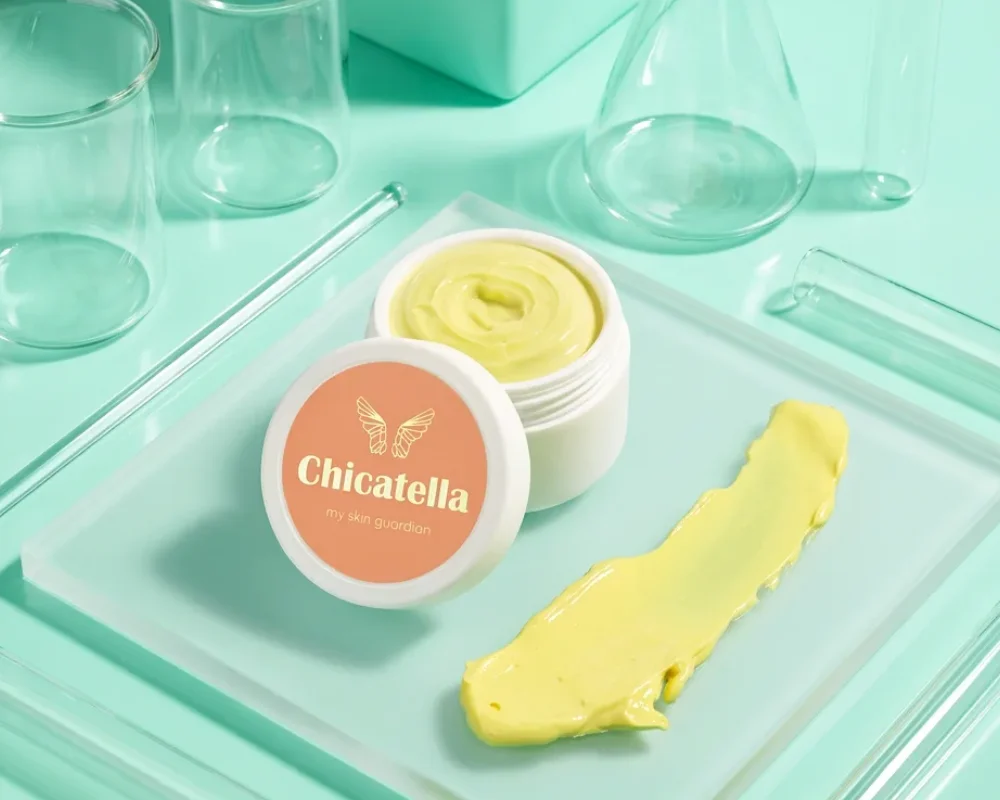
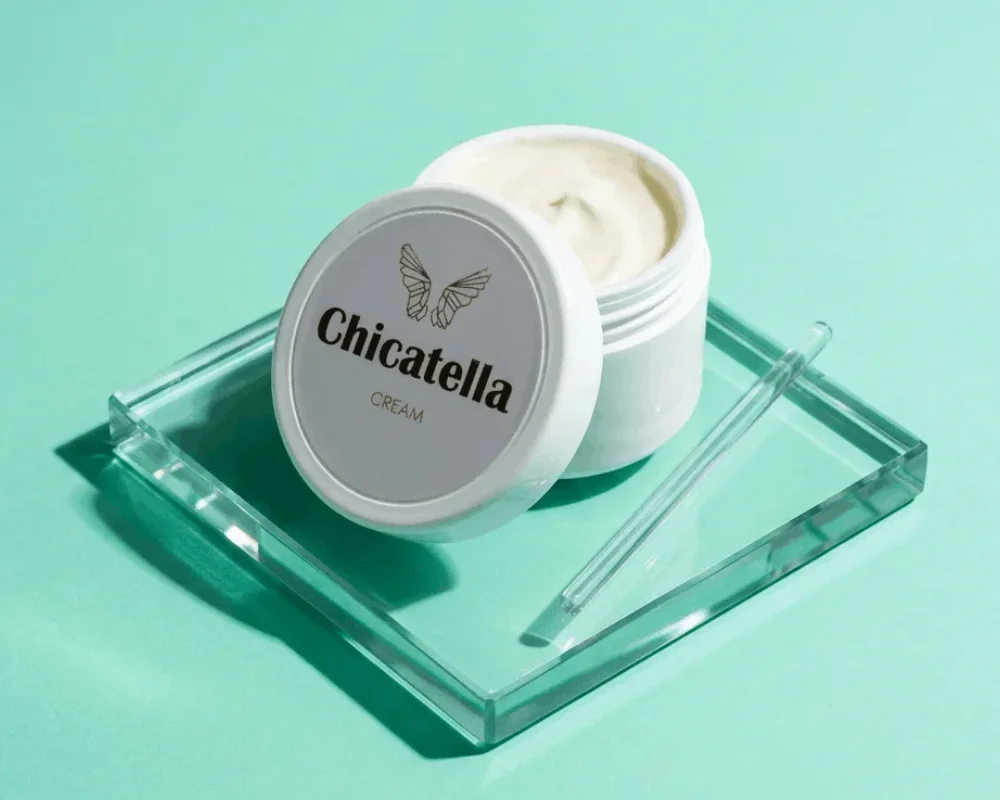
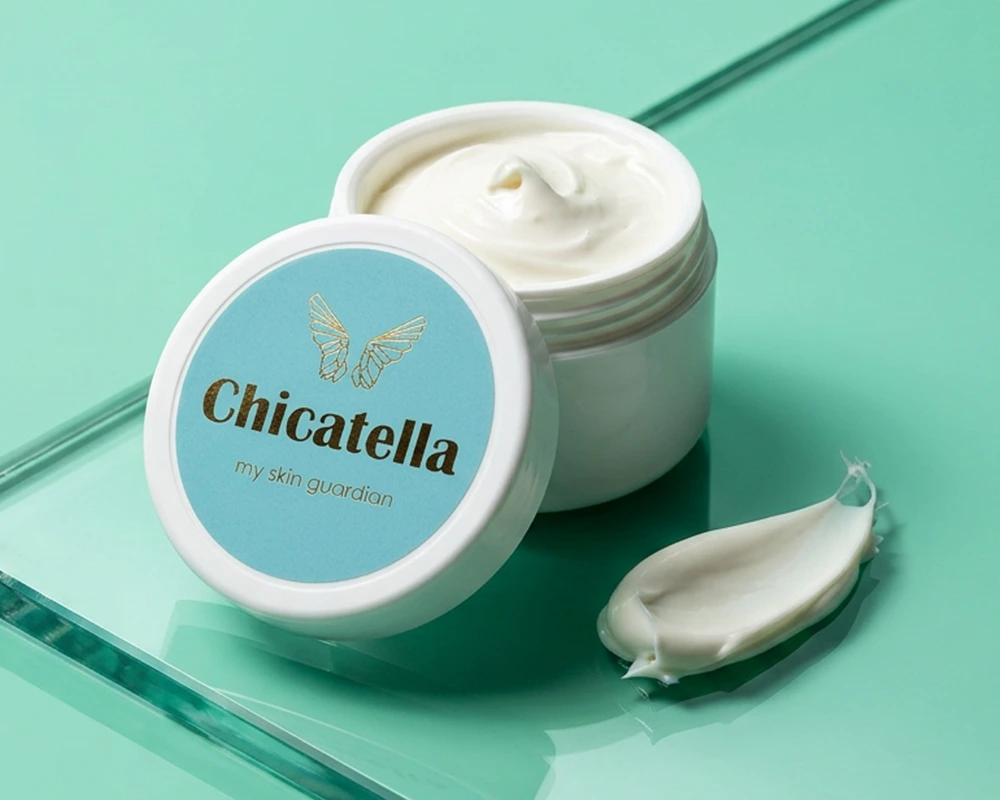
If your skin is mostly dry, tight, rough or cracked, chances are it’ll really love richer protective care. But if clusters of tiny bumps, greasy flaking or lasting flushing are the main thing, figure out the pattern first. Chicatella can care for the dryness that comes with it, but it doesn’t replace proper treatment of the cause.
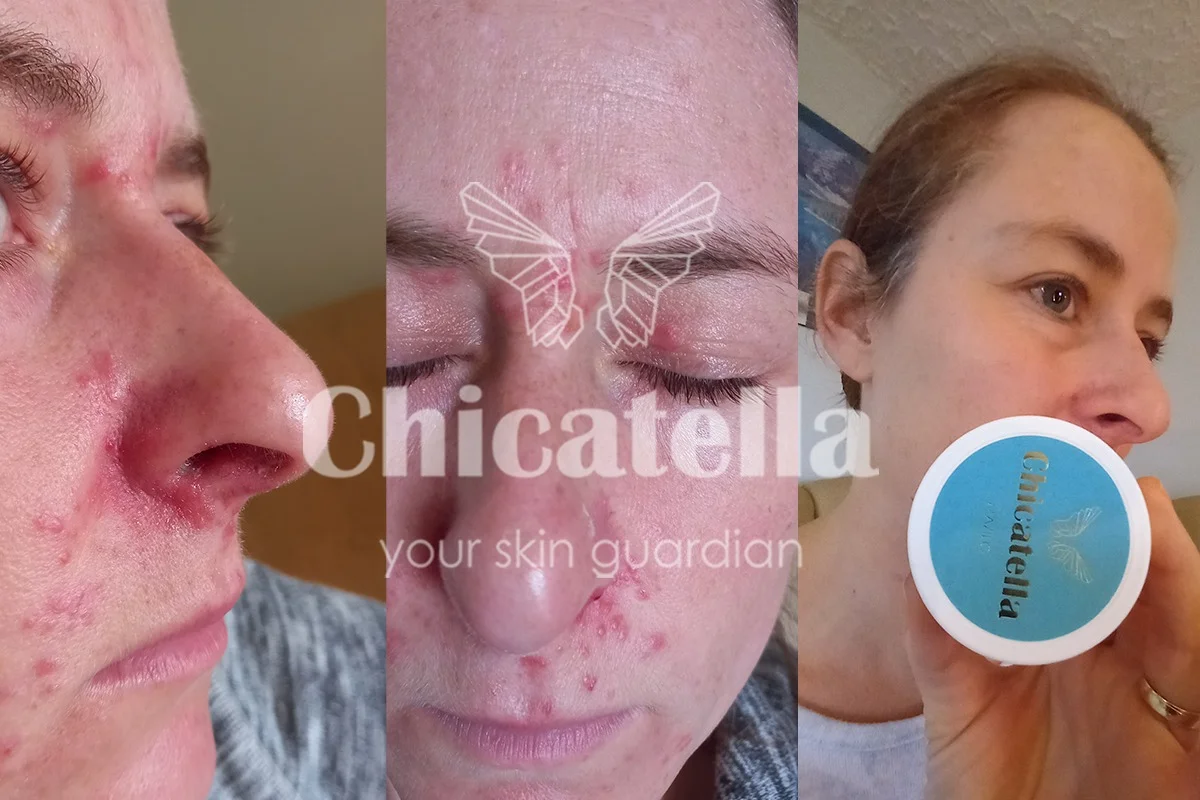
How the look of irritated facial skin can change
The same area of the face before and after care. Customer photos, shared with permission.
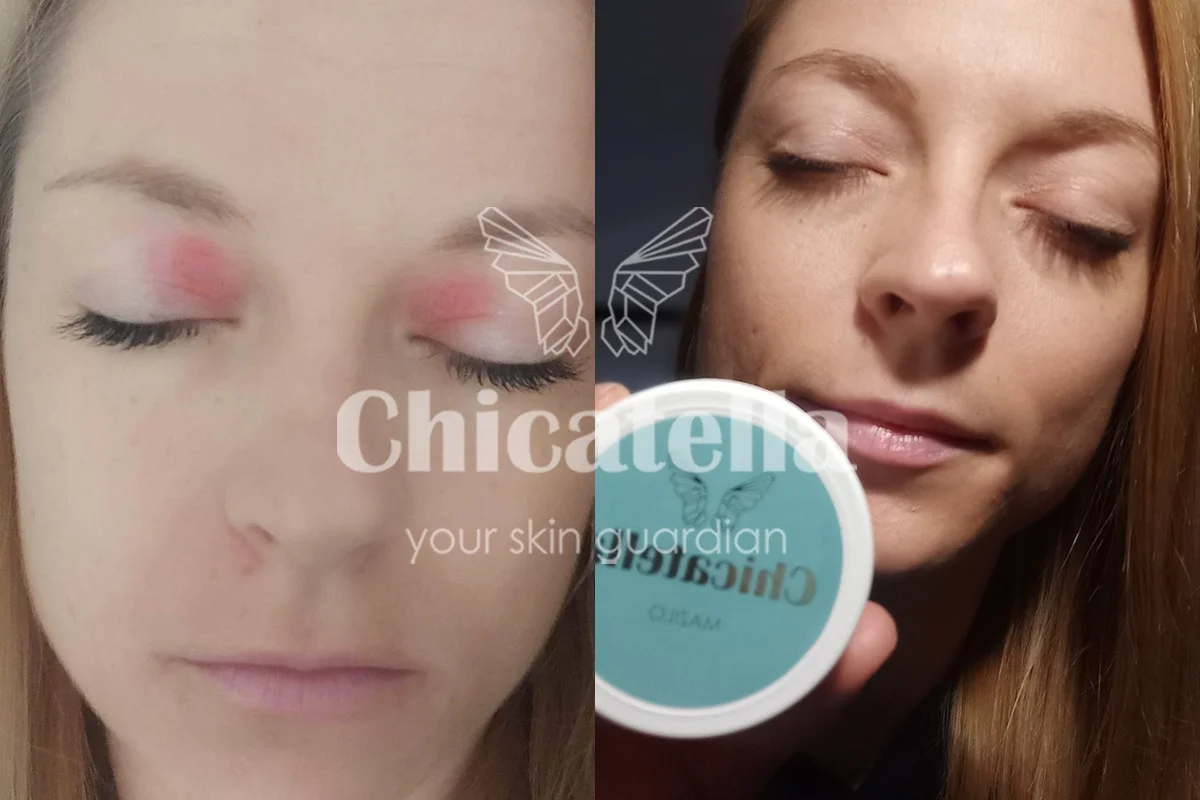
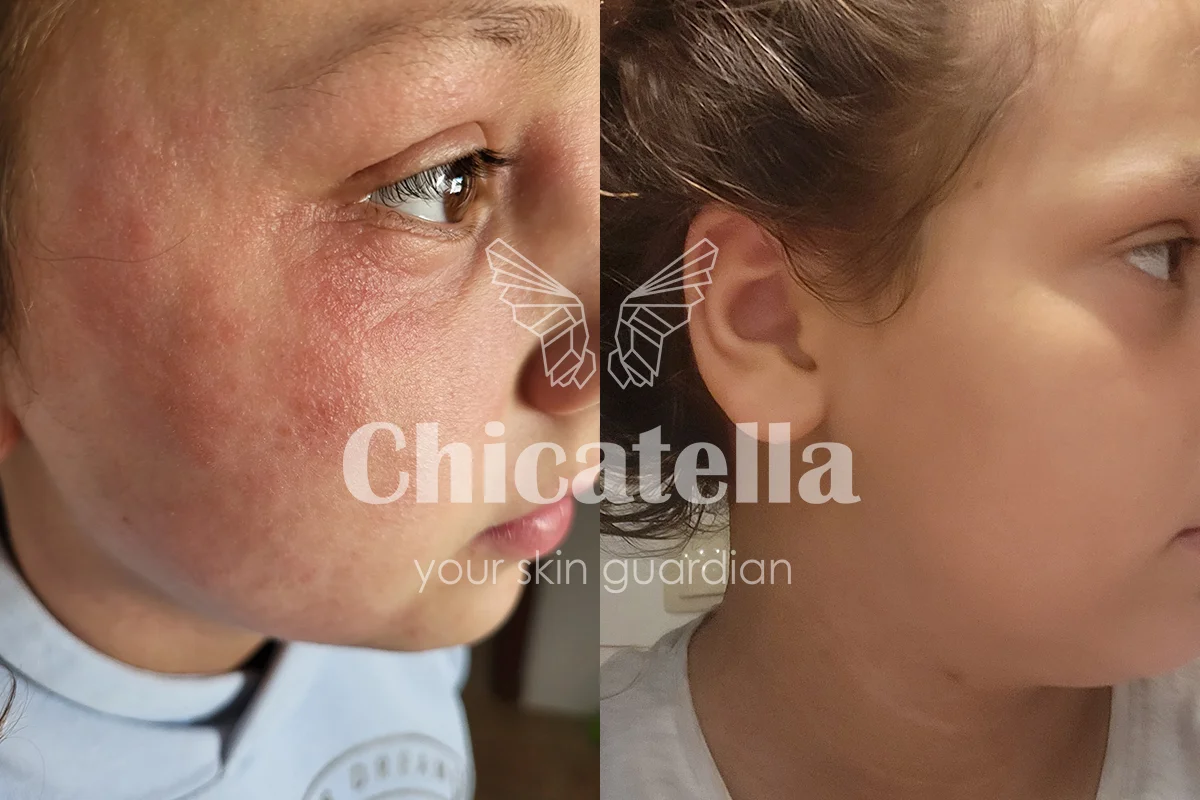
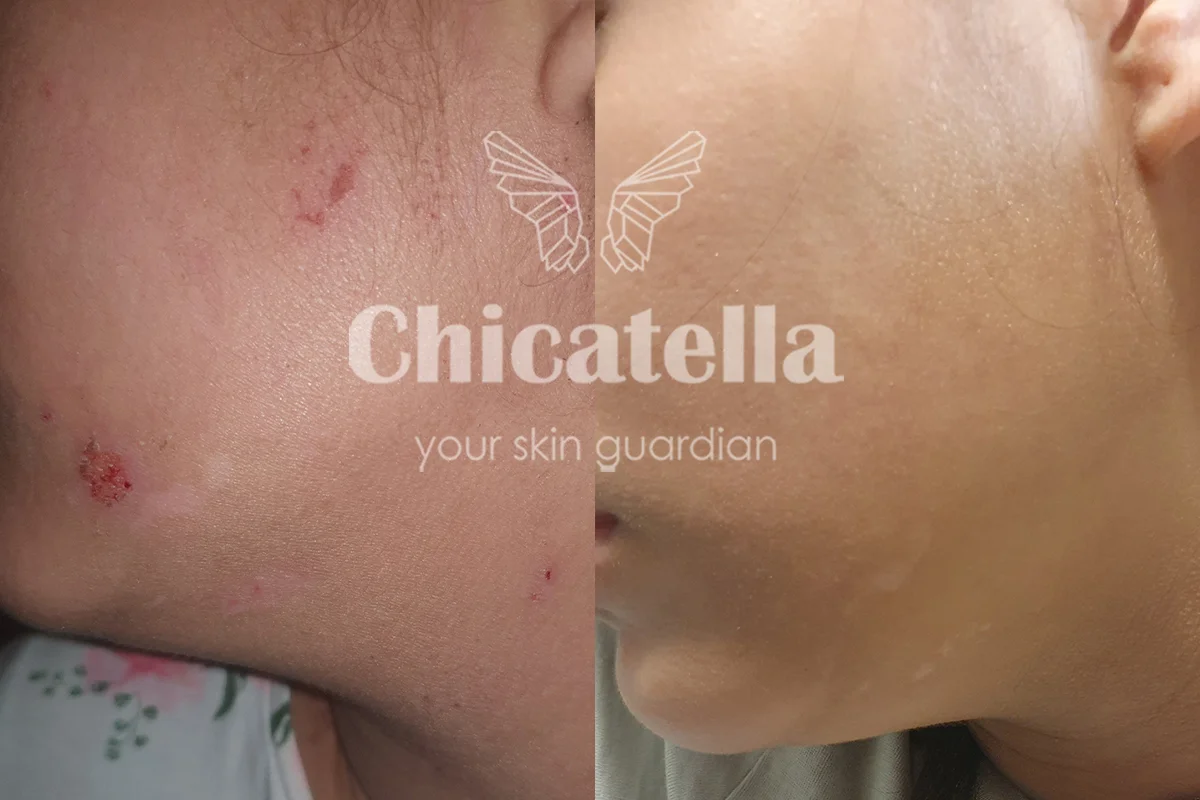
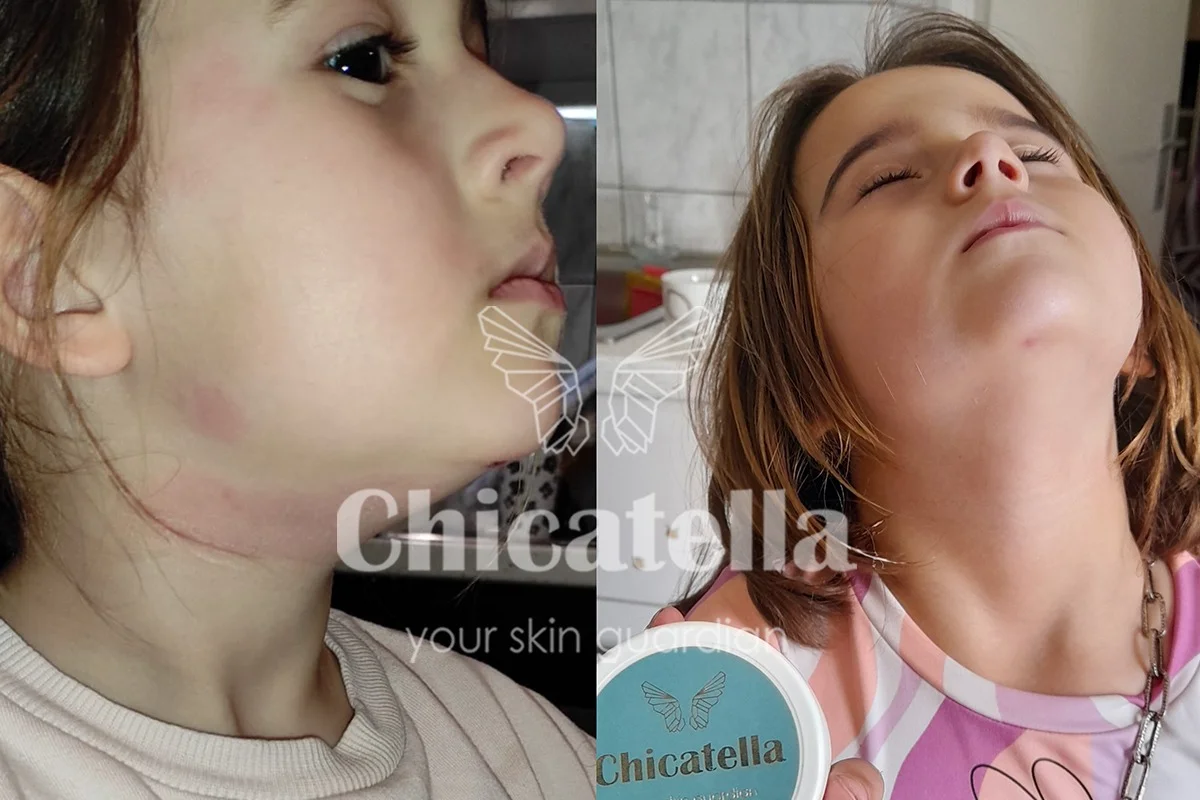
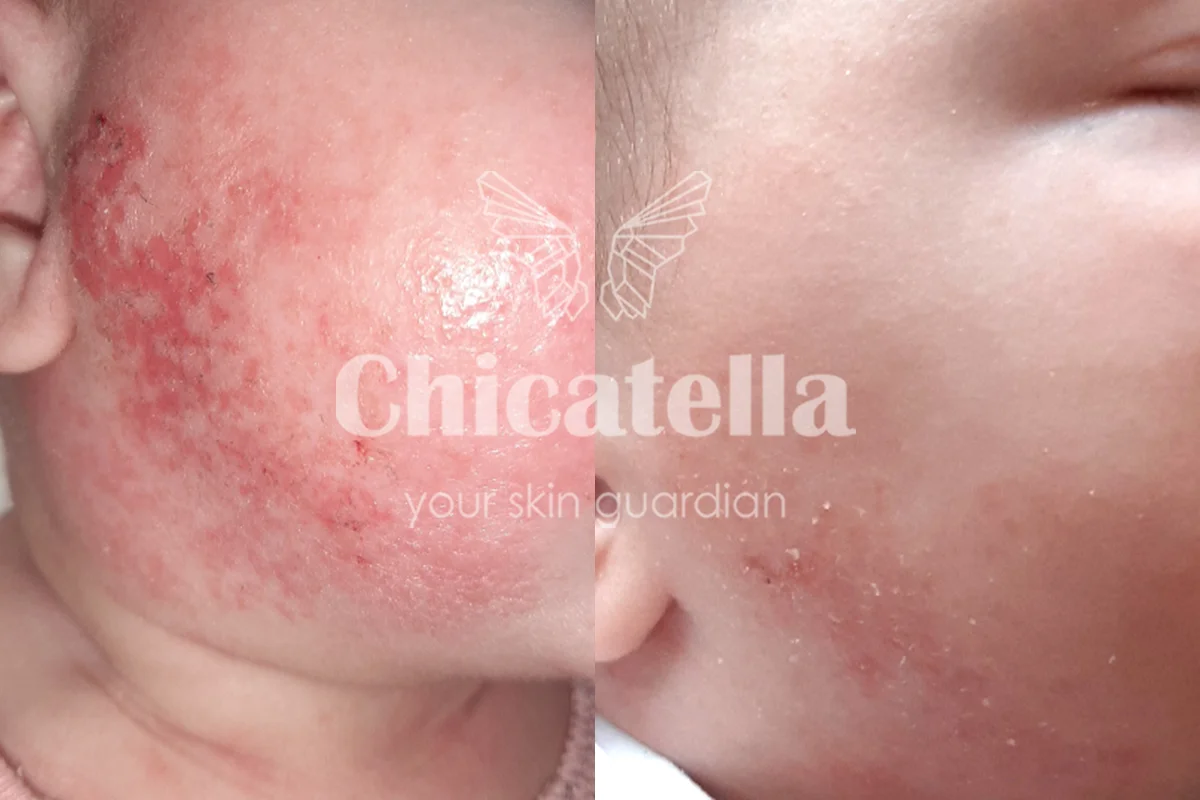
These photos show individual experiences with caring for very dry or irritated skin. The products are for cosmetic care, and results vary from person to person.
If you’d like to read more …
Know what your skin really needs
With dermatitis on the face, it’s not just about which cream is the richest. It’s about whether your skin needs more moisture, more protection, less irritation or a completely different approach. Once you can tell a dry patch from greasy flaking, tiny bumps and flushing, choosing your care gets a lot easier.
Find the right care for your skin in three steps
No guesswork. Answer three quick questions and we’ll tell you what your skin needs.
This article helps you understand the patterns of dermatitis on the face and choose your care, but it can’t diagnose you or replace a checkup. Chicatella products are cosmetic skin care products, not medicines.
- 01Location-related differences in structure and function of the stratum corneum with special emphasis on facial skin. Core physiology source. ↗︎
- 02Differential diagnosis of contact dermatitis: A practical approach. JEADV, 2024. ↗︎
- 03Patch Testing for Eyelid Dermatitis. American Academy of Ophthalmology, 2025. ↗︎
- 04Eyelid Dermatitis: Common Patterns and Contact Allergens (PDF). 2024. ↗︎
- 05Facial Dermatitis in Male Patients Referred for Patch Testing. JAMA Dermatology. ↗︎
- 06Approval of New Patch Tests for the Diagnosis of Allergic Contact Dermatitis. FDA, 2025. ↗︎
- 07Atopic dermatitis clinical guideline. American Academy of Dermatology. ↗︎
- 08Rosacea: Diagnosis, Treatment, and Steps to Take. NIAMS. ↗︎
- 09Perioral Dermatitis. StatPearls. ↗︎
- 10Perioral / periorificial dermatitis. Primary Care Dermatology Society. ↗︎
- 11Mask wearing impacts skin barrier function and microbiome profile in sensitive skin. 2024; 30 participants, short observation period. ↗︎
- 12Skin Microbiome Dynamics in Atopic Dermatitis. Review, 2025. ↗︎
- 13The Skin Barrier and Moisturization: Function, Disruption, and Mechanisms of Repair. Review, 2023. ↗︎