FREE SHIPPING ON 2 OR MORE·30-DAY GUARANTEE, KEEP THE PRODUCT·MICROBIOME-FRIENDLY CARE·FREE SHIPPING ON 2 OR MORE·30-DAY GUARANTEE, KEEP THE PRODUCT·MICROBIOME-FRIENDLY CARE·
Guide · skin conditions

Chickenpox: the last blister tells you when your child is no longer contagious

By the time you spot the first blister, your child may have been contagious for two days already. The rash then comes in waves, so you’ll see spots, blisters and scabs on the skin at the same time. This guide shows you what to do on day one, what to watch at night, and why the last blister decides when the contagious period ends.

Chickenpox is a virus, not dermatitis. Your child is contagious before the rash shows up. It ends when every blister has turned into a scab.
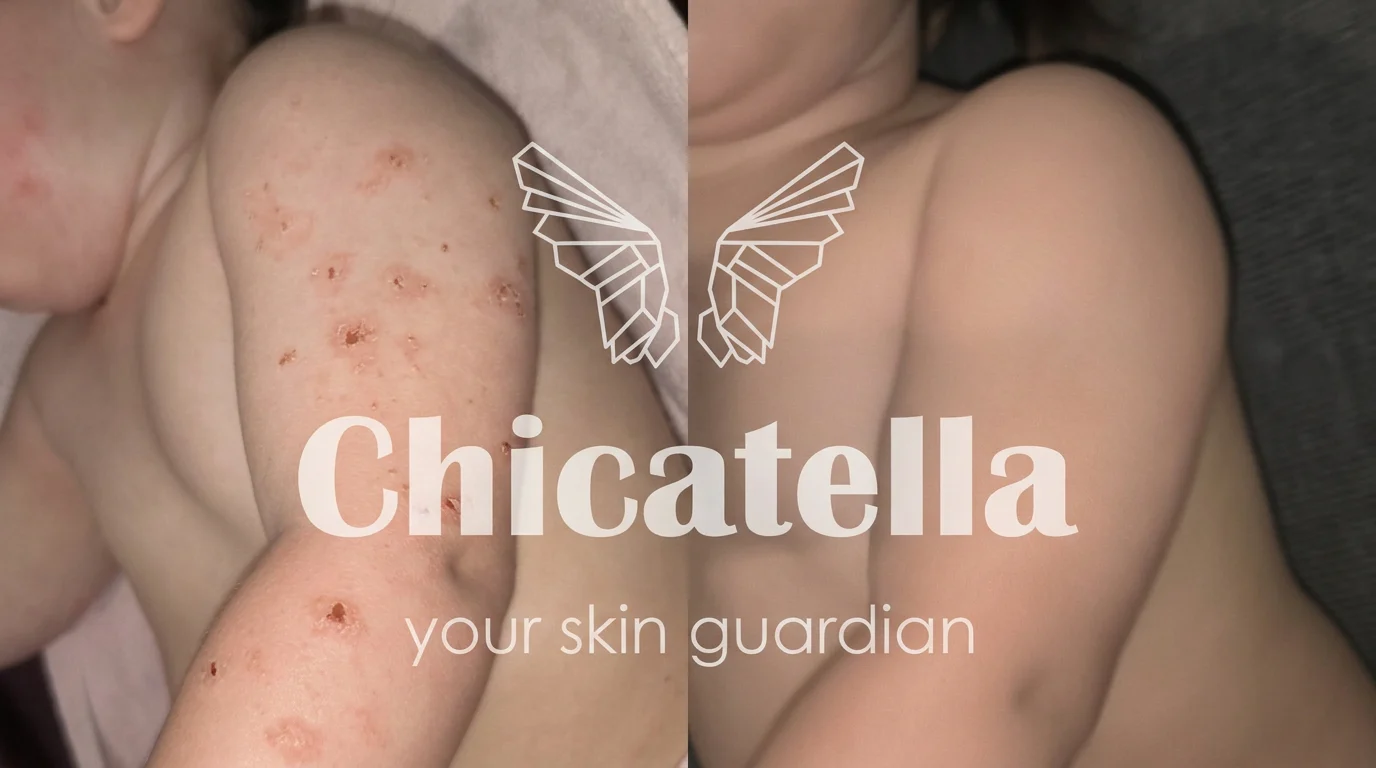

Chickenpox on a baby’s upper arm and shoulder, before and after – red spots and scabs, then clear skin
The photo shows how skin can look. It is not a diagnosis.
Reading time
≈ 18 min
Published
August 2026
Medically reviewed
August 2026
How we put this article together
This article is based on guidance from the Slovenian National Institute of Public Health (NIJZ), European and US public health agencies, and peer-reviewed research checked up to August 2026. Every number links to its source, right next to the text and in the list at the bottom of the page. It’s here to help you understand how chickenpox runs its course and how to care for the skin, not to diagnose. Chicatella publishes this article and sells the products shown near the end.
The essentials in 30 seconds

The key points

01

Chickenpox is caused by the varicella-zoster virus. From infection to the first signs usually takes 10 to 21 days, on average 14 to 16.NIJZ↗︎

02

A child can be contagious as early as two days before the rash. After that, the rash keeps coming in new waves every one to two days.

03

Your child is no longer contagious only once all the blisters are dry and have turned into scabs. In an otherwise healthy child, the illness usually lasts 7 to 10 days.

04

What helps: fluids, a cooler room, short nails, loose clothes, washing with lukewarm water and gently patting the skin dry.

05

For fever, acetaminophen (Tylenol) is the usual choice, following the label. Never give your child aspirin. Only use ibuprofen for chickenpox if your doctor recommends it.NHS↗︎

06

A pregnant woman, a newborn or anyone with a weakened immune system who has been around chickenpox should call a doctor as soon as possible, even before any rash appears.

What it looks like

Four stages of the same spot

Every spot goes through the same four stages: a flat red spot, a raised bump, a blister, a scab. Because the rash comes in waves, you’ll always see all four stages at once. Here’s what each one looks like, where on the body you’ll notice it first, and which one itches the most. The drawings are diagrams; a doctor confirms the diagnosis.

Browse→
WHERECLOSE UP
01 · Torso and face
Spot

First comes a tiny red spot. On darker skin it may look more brownish or purple than red.

FIRST HOURS · FLAT
Read more ↓
WHEREHOURSCLOSE UP
02 · Torso, face, scalp
Bump

Within a few hours it rises into a bump. That speed is often the first clue that it isn’t bug bites.

WITHIN HOURS · RAISED
Read more ↓
WHERECLOSE UP
03 · All over the body
Blister

A blister filled with clear fluid. This stage itches the most and is also the most contagious, so don’t pop the blisters.

DAY 1–2 · ITCHIEST AND MOST CONTAGIOUS
Read more ↓
WHERECLOSE UP
04 · All over the body
Scab

A dry scab. Once every spot has reached this stage, the contagious period is over. Don’t pick off the scabs.

AFTER 1–2 DAYS · DRY
Read more ↓
WHERE1234CLOSE UP
05 · On the same skin at once
All stages at once

This is the classic sign of chickenpox: you see several “days of the illness” on the same patch of skin.

NEW WAVES FOR 3–5 DAYS
Read more ↓
WHERECLOSE UP
06 · Scalp, eyelids, mouth
Where parents often miss them

Check under the hair, on the eyelids and inside the mouth too. Blisters in the mouth hurt when eating, so a child sometimes refuses food before the skin shows much at all.

CHECK HERE TOO
Read more ↓
FAQ

Short answers first

What is chickenpox?
A contagious viral illness caused by the varicella-zoster virus. It shows up as a very itchy rash that comes in waves, often with fever and feeling unwell. In an otherwise healthy child it usually lasts about 7 to 10 days.NIJZ↗︎
How does chickenpox start?
Often it starts with tiredness, feeling unwell and a fever, followed by tiny red spots that turn into bumps and blisters within a few hours. The rash often starts on the torso and head and then spreads. More in the section Four kinds of rash at once.
How does chickenpox spread?
The virus spreads through the air, through droplets when people cough and sneeze, and through close contact with fluid from the blisters. It’s very contagious: after close contact, about 90 % of people who aren’t immune get sick.NIJZ↗︎
How long does chickenpox last?
From infection to the first signs usually takes 10 to 21 days, on average 14 to 16. In an otherwise healthy child the rash itself lasts about 7 to 10 days, with new blisters showing up every one to two days.
How long is a child contagious?
From about two days before the rash until all the blisters have dried into scabs. That often happens about five days after the rash starts, but what counts is the skin, not the number of days. More in the section on the last blister.
Can a vaccinated child get chickenpox?
Yes, but it’s usually much milder: often fewer than 50 spots, few blisters and a low fever or none. They can still spread the virus, though. See the comparison in the section on vaccinated children.CDC↗︎
Can you get chickenpox twice?
After chickenpox, the immune system usually builds long-lasting protection, so getting it again is rare. The virus stays in the nerves, though, and can wake up later as shingles.
When can my child go back to daycare or school?
When there are no fresh blisters and every spot has dried into a scab. Don’t just count five days. If new blisters appear, the contagious period gets longer.
Is chickenpox dangerous?
For most otherwise healthy children it’s mild. According to Slovenian public health data (NIJZ), complications happen in about 2 % of patients. The risk is higher for newborns, teens and adults, pregnant women and people with a weakened immune system.
How are chickenpox and shingles connected?
They’re caused by the same virus. After chickenpox it stays in the nerves and can wake up later as shingles. Someone who isn’t immune doesn’t catch shingles from a person with shingles, but they can get infected for the first time and come down with chickenpox. More in the section on the virus after chickenpox.
A calendar on the skin

The first blister isn’t the first day of infection

  • →The virus spreads through the air, droplets and close contact.
  • →Someone who’s been exposed can have no signs at all for 10 to 21 days. That’s the incubation period, the time from infection to the first signs.
  • →The contagious period can start about two days before the rash.
  • →That’s why it often spreads through a daycare or a household before anyone knows the child has chickenpox.
  • →After close contact, about 90% of people who aren’t immune (who haven’t had chickenpox and aren’t vaccinated) get sick.NIJZ↗︎

The contagious period often ends about five days after the rash starts, but that’s not a rule. The real test is always that every blister has turned into a scab.

What makes chickenpox different

Why you see four different kinds of rash on the same skin

With chickenpox, the skin doesn’t move through one single wave. While the first blisters are drying, new spots can pop up. So the same skin shows several “days of the illness” at once.

Three waves on the same skin
WAVE 1 scabs WAVE 2 blisters WAVE 3 fresh spots new waves every 1–2 days
Where it shows up
TORSO AND HEAD FIRST

The rash often starts on the torso and head and then spreads.

It can also show up on the scalp, in the mouth, on the genitals or around the eyes, so it’s worth checking those spots too.

A diagram, not a diagnostic map. Every child’s rash spreads a little differently.

Your plan for today

The first 24 hours: what to do as a parent

1
Write down or take a photo of when you first noticed the rash.
2
Keep your child at home and let the daycare or school know you suspect chickenpox.
3
Before going to the doctor’s office, always call ahead so your child doesn’t infect people in the waiting room.
4
Check whether your child has been around a pregnant woman, a newborn or someone with a weakened immune system.
5
Take their temperature and keep an eye on drinking, peeing, alertness and breathing.
6
Trim and clean their nails. It’s one of the most effective things you can do.
7
Have ready: loose cotton clothes, a clean towel and a cooler room.
8
Also check the scalp and mouth. If there are problems with an eye, drinking or peeing, call the doctor.
Itching

Nights are often harder than days

At night the body is warmer, the blanket adds heat and there’s nothing to distract from the itch, so it gets stronger and kids scratch in their sleep. On the left is the cycle that keeps itself going. On the right are the steps that take away its fuel.

A cycle that feeds itself
BREAK IT HERE itching scratching damage irritation possible infection scar

The goal isn’t to keep telling your child “stop scratching” but to take away the reasons to scratch.

What breaks the cycle
short, clean nailsbreaks it
a cooler roombreaks it
loose cotton clothesbreaks it
lukewarm or cool waterbreaks it
skin gently patted drybreaks it
an antihistamine, after askingbreaks it
soft mittens at nightbreaks it

Ask a doctor or pharmacist about an antihistamine. Only use mittens if your child tolerates them safely.

★ The Chicatella community

Be the first to know

Sign up and be the first to get our latest science-backed skin care tips. No boring emails, just good things for your skin.

Join 23,400+ fans · no spam, unsubscribe in one click
Myth or fact

Bathing isn’t the enemy. Rubbing is.

Myth

You shouldn’t wash a child with chickenpox.

Fact

Clean skin helps lower the chance that damaged blisters get an extra infection.

Public health advice (NIJZ, Slovenia)
  • →use lukewarm water;
  • →while blisters are active, skip soap and body wash;
  • →don’t rub the skin;
  • →just pat it dry with a soft, clean towel;
  • →don’t pop blisters or pick off scabs.NIJZ↗︎

Essential oils, rubbing alcohol, vinegar and homemade mixtures are not a proven treatment. If you’re thinking about a cooling product from the pharmacy, ask the pharmacist for one made for your child’s age and for active chickenpox.

Rubbing vs. patting
IRRITATES
STAYS INTACT
Diagram. The same towel, two completely different results.
Practical help

What helps with fever, itching and blisters in the mouth

Fever and feeling unwell
  • plenty of fluids;
  • rest;
  • acetaminophen (Tylenol) as directed for their age or as your doctor advises;
  • never give your child aspirin;
  • only use ibuprofen for chickenpox if a doctor specifically tells you to. Public health guidelines advise against it because it’s linked to serious skin infections.NHS↗︎
Itching
  • a cooler room;
  • loose clothes;
  • water and gentle drying;
  • short nails;
  • ask a doctor or pharmacist about an antihistamine.
Blisters in the mouth
  • cold drinks;
  • soft foods;
  • a popsicle, if your child is old enough to eat one safely;
  • avoiding sour, very salty or spicy foods;
  • call the doctor if your child refuses to drink, has fewer wet diapers or is in a lot of pain.

Antibiotics don’t work against the chickenpox virus. A doctor prescribes them only if a damaged blister gets a bacterial infection or another bacterial complication develops.

Contagious period

The last blister stops the clock

Why the countdown ends later than you’d expect
WAVE 1 all dry ✓ WAVE 2 new fresh blister COUNTDOWN gets longer →
✗Don’t just count five days from the first spot. Check for yourself.
✓Your child can be around other people again when there are no fresh blisters and every spot is a scab.
Until then, your child should especially stay away from
pregnant women who haven’t had chickenpox or the vaccine;
newborns, especially preemies;
people with a weakened immune system.
Three decisions

Three situations where you don’t wait

Mild case: keep watch at home
  • your child is drinking;
  • they’re responsive;
  • they’re breathing normally;
  • the fever and how they feel aren’t getting worse;
  • the skin around the blisters isn’t very painful, hot or oozing pus.
Call the doctor the same day
  • the person with chickenpox is a newborn or a very young baby;
  • a teen or adult gets sick;
  • the patient is pregnant;
  • the person has a weakened immune system;
  • the person takes medicines that weaken the immune system or is on long-term steroid treatment;
  • your child has a more serious chronic skin or lung condition;
  • there’s a rash in the eye, or sores in the mouth or on the genitals make it hard for your child to drink or pee;
  • you’re not sure what it is;
  • someone at risk has had close contact, even if they don’t have a rash yet.
Emergency: call 911
  • trouble breathing or a bad cough that keeps getting worse;
  • your child is hard to wake, confused or unusually unresponsive;
  • trouble walking or losing balance;
  • a severe headache, stiff neck or repeated vomiting;
  • signs of dehydration, such as peeing very little;
  • painful, hot or swollen skin spreading quickly around the blisters;
  • pus draining from the skin;
  • the fever comes back after getting better, or things are clearly getting worse;
  • bleeding spots or unusual bruising.CDC↗︎

For some people, protective measures and antiviral medicines are time-sensitive, so waiting several days doesn’t make sense. Treatment is always the doctor’s call. Most otherwise healthy young children don’t need an antiviral.

Redness can be harder to see on darker skin, so also watch for warmth, swelling, pain and changes in how your child feels.

How common are complications
≈ 2 % of patients have complications 100 dots = 100 people
Based on Slovenian public health data (NIJZ). The risk is higher in certain groups: newborns, teens and adults, pregnant women and people with a weakened immune system.NIJZ↗︎
When chickenpox doesn’t look like “classic” chickenpox

A vaccinated child can have a different rash

How many spots
Unvaccinated
OFTEN 250–500
Chickenpox after vaccination
OFTEN FEWER THAN 50
Diagram of spot density, not a picture of skin.CDC↗︎
Typical course when unvaccinatedChickenpox after vaccination
often 250–500 spotsoften fewer than 50 spots
lots of fluid-filled blistersfew blisters, or just red bumps
fever is more commonoften no fever or a low one
lasts longerusually shorter
  • →Even with a milder rash, a vaccinated person can still spread the virus.
  • →This kind of rash can look like bug bites or other skin changes.
  • →When the course is unusual and confirming it matters, a doctor can order a PCR test of a sample from a spot.CDC↗︎
  • →Don’t diagnose by comparing photos.
Similar rashes

What else it could be

PossibilityWhat’s typicalWhat you do
Chickenpox: the last blister tells you it’s overnew waves, different stages at once, often torso and headwatch how it develops and the contagious period
Hand, foot and mouth diseasesores in the mouth and often on the palms and solesif you suspect it, talk to a doctor
Bug bitesmostly on exposed skin, usually without the typical stages one after anotherwatch for new spots
Impetigosticky, honey-colored crustsneeds a doctor’s advice
Scabiesintense itching at night, wrists and between the fingers, often several family members itchneeds a checkup
Shinglespainful spots, usually only on one side of the bodyneeds a doctor’s exam

If you want to tell apart other kinds of skin inflammation in kids, see eczema in children or baby eczema.

After the illness

What happens to the virus after chickenpox

Chickenpox goes away, but the virus doesn’t leave the body. Its path has four stops, and the last one doesn’t always happen.

1 · Skin
Chickenpox: the last blister tells you it’s over

After chickenpox, the immune system usually builds long-lasting protection.

2 · Sensory nerve
The virus retreats

Even so, the virus stays in the nerves.

3 · Nerve cluster
zzz
Dormant

No signs, often for decades. For most people, the story ends here.

4 · Later, maybe
Shingles

Later on, it can wake up again as shingles.

dotted line = doesn’t have to happen
A common mix-up

Someone who isn’t immune doesn’t “catch shingles” from a person with shingles, but they can get the virus for the first time and come down with chickenpox.

SHINGLES VIRUS CHICKENPOX, NOT SHINGLES
Skin care after the illness

Once the illness is gone, your skin may still be asking for help

Chicatella doesn’t treat chickenpox and does nothing to the virus. Where it fits best is later: when there are no fresh, wet blisters, when the skin is no longer freshly broken but stays dry, rough or tight.
What the skin needs now
The skin isn’t freshly broken anymore, but it’s dry and feels tight
Now skin care makes sense. After the illness, skin often needs moisture, softness and protection from drying out. This is where Chicatella comes in.
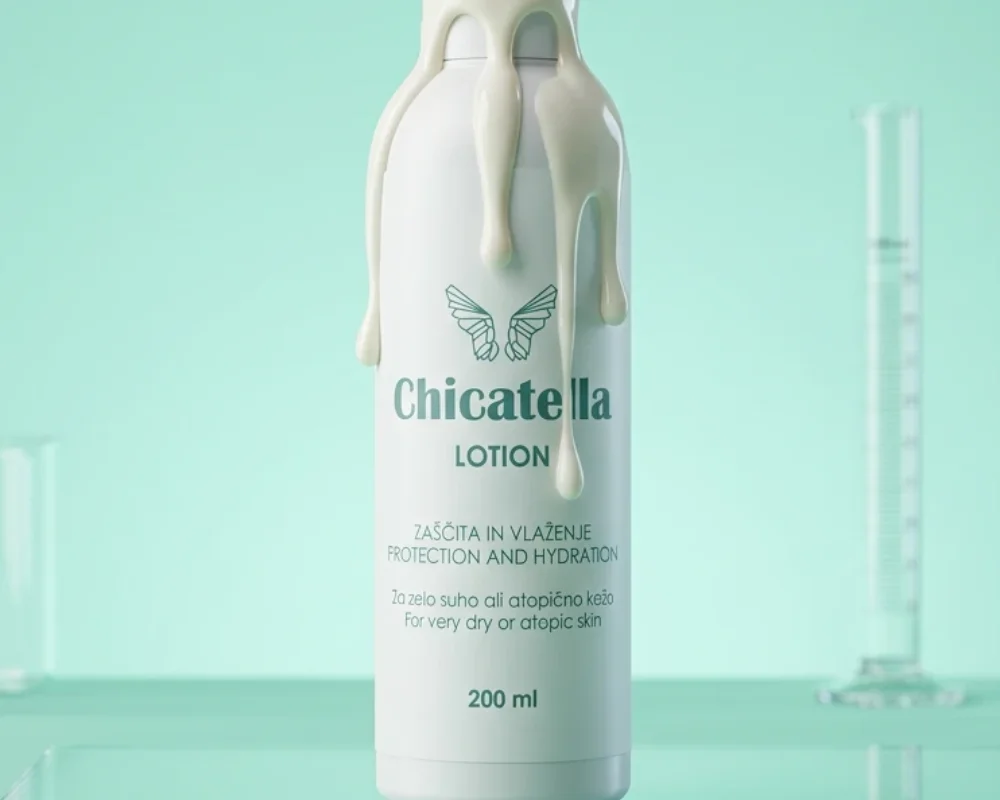
Body Lotion for dry skin after chickenpox – a bottle of gentle body lotion for kids and adults
Larger areas of dry skin
Body Lotion

A lighter texture for the torso, arms and legs when a larger area of skin is dry after the illness. It absorbs quickly, so it works for a kid who won’t sit still for a long rub-in.

When

Once the skin is closed and there are no fresh blisters.

See the lotion →
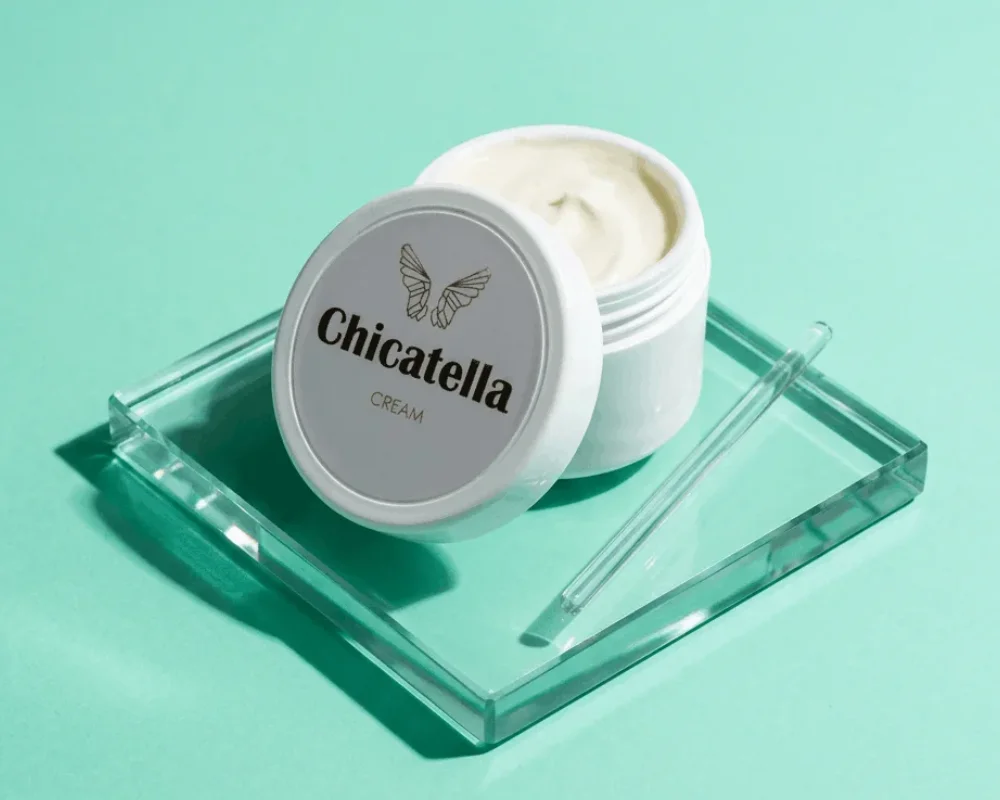
Night Repair Cream for sensitive skin – rich cream for children’s dry skin, in an open jar
When skin needs more softness
Night Repair Cream

A richer texture for skin that stays rough and tight after the illness. It stays on the skin longer than the lotion, so that tight feeling often eases noticeably.

When

In the evening, after a quick wash with lukewarm water.

See the cream →
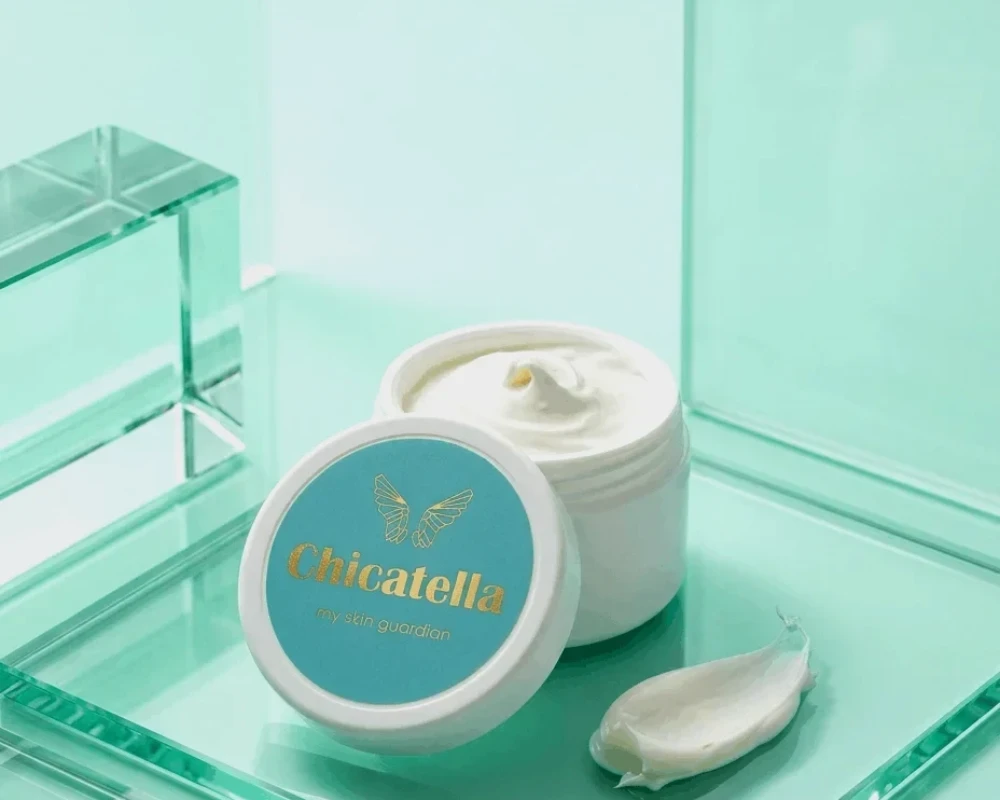
SOS Ointment for very dry skin – a jar of protective ointment between glass blocks
Small, very dry patches
SOS Ointment

For single closed, very dry patches, where a protective film helps slow down water loss. A thin layer is enough.

When

Only on closed skin. Never on fresh or open blisters.

See SOS Ointment →
Keep reading

Related articles

Dry skin
How to support skin that stays dry after an illness.
Read →
Eczema in children
When the rash isn’t viral but inflammatory.
Read →
Baby eczema
What the location of the rash tells you.
Read →
Atopic dermatitis in children
When skin itches even without an infection.
Read →
Atopic dermatitis in babies
Dry, inflamed or maybe infected.
Read →
All skin conditions
An overview of all our guides.
Read →
Help me choose

Find the right care for your skin in three steps

No guesswork. Answer three quick questions and we’ll tell you what your skin needs.

This article helps you understand how chickenpox runs its course, how to care for the skin and how long it’s contagious. It can’t diagnose anything or replace a doctor’s exam. Chicatella products are cosmetic skin care products, not medicines.

Sources
  1. 01Chickenpox (in Slovenian). NIJZ, Slovenian National Institute of Public Health. ↗︎
  2. 02Varicella. ECDC. ↗︎
  3. 03Clinical Features of Chickenpox. CDC. ↗︎
  4. 04How to Treat Chickenpox. CDC. ↗︎
  5. 05Breakthrough Varicella. CDC. ↗︎
  6. 06Laboratory Testing for VZV. CDC. ↗︎
  7. 07Chickenpox. NHS. ↗︎