Atopic dermatitis isn’t just dry skin. It’s a vicious cycle between the skin barrier, the immune system and the microbiome.
Most articles about atopic dermatitis, the most common type of eczema, start with a list of symptoms. This one starts where the trouble really begins: with a skin barrier that loses too much water, an immune alarm that has a hard time switching off, and the tiny residents of your skin that change during a flare-up. Once you understand this cycle, you also know what skin care can do.
You’ll also hear it called atopic eczema or simply eczema. In everyday use they mean the same condition.

How we put this article together
What we’ve learned about atopic dermatitis, in nine sentences
A summary of everything we explain at more length on this page and across the site. If you read only one thing, read this.
Read the science behind Chicatella →“You can’t fill a bucket that leaks.”
WHY MOISTURIZING ALONE DOESN’T CUT IT
- 01
It’s not just dry skin.
The skin barrier leaks: water gets out, irritants and microbes get in. That’s why moisturizing alone doesn’t cut it until you protect the barrier.
- 02
It itches and comes back in waves.
Dry skin itches, scratching damages it, and inflammation makes the itch even stronger. The cycle is easiest to break early, with regular care, not only during a flare-up.
- 03
Where it shows up changes with age.
Babies: cheeks, forehead, the outer sides of arms and legs. Kids: skin folds, wrists, neck. Adults: hands, eyelids, neck. The diaper area usually stays clear.
- 04
Red is just one color of inflammation.
On darker skin, inflammation looks purple, gray or brown. Touch tells you more than color: rough, dry, with tiny bumps.
- 05
A photo can’t diagnose it.
Contact dermatitis, fungal infections and psoriasis can look the same in a picture. A doctor makes the diagnosis during an exam.
- 06
Food usually isn’t the cause.
In babies with more severe eczema, food is a trigger in about one in three. In adults, it’s rare. Targeted testing, not cutting foods across the board.
- 07
A protective film is the most tangible help.
An occlusive (petrolatum, lanolin) slows water loss from the skin’s surface and gives the skin the calm it needs to recover. Skin care, not medicine.
- 08
The microbiome is an ally.
You can’t sterilize your skin, and it doesn’t need that. It needs calm. Gentle washing, fragrance-free, microbiome-friendly.
- 09
When to see a doctor right away.
Weepy, very painful skin with pus, or eczema that spreads fast, needs a doctor to look at it, not a new product.
Short answers first
If you just want a quick answer, you’ll find it here. Further down the page, we get into what really makes a difference.
What is atopic dermatitis?
How is it different from ordinary dry skin?
What does it look like on different skin tones?
Is it contagious?
Why does it come in flare-ups?
Do kids always grow out of it?
How is it diagnosed?
When should I see a doctor?
More people have the diagnosis. Your own risk isn’t higher.
More people with a diagnosis doesn’t mean a higher risk for each person.
More people live on Earth than in 1990. That alone pushes the total up.
Once you adjust for the age of the population, the share of people with the condition actually drops a little.
Today the condition gets recognized and recorded better than it did thirty years ago.
That’s a real research question that’s still open. Several studies link a Western-style diet, highly processed food and polluted air with a higher risk of atopic dermatitis, especially in more Western, urban areas.Processed food 2021↗︎Diet in pregnancy↗︎ It’s a link, not a proven cause in any one person, but it’s serious enough that we’d rather mention it honestly than leave it out.
Four parts, one vicious cycle
Tap each part to see how one problem drives the next. None of them is the main culprit. Only together do they make up the condition.
CYCLE
The top layer of the skin is like a wall. When it isn’t sealed well, more water escapes through it, and irritants and allergens get in more easily. Dry, leaky skin gets irritated faster. That irritation sets off the next link in the cycle.Barrier 2024↗︎
Atopic dermatitis isn’t one broken thing. It’s a system where several problems feed each other.
The barrier is more than an oily film on the surface
Picture a brick wall. Skin cells are the bricks, and between them is a fatty mortar made of ceramides, cholesterol and fatty acids. When there isn’t enough mortar, the wall leaks: water gets out, irritants get in.
Here’s something interesting: with atopic dermatitis, even skin that looks healthy is often a little different. That doesn’t mean you need to treat your whole body. But it does mean regular, gentle care pays off in the calm stretches too.Skin without a rash↗︎
A note on wording: skin doesn’t “breathe,” whatever the ads say. What matters is water loss and how well the barrier seals. That can be measured.

Your skin isn’t alone. It has its own team.
Healthy skin is home to a diverse community of bacteria, yeasts and other tiny residents. That’s the microbiome, and it isn’t dirt. It’s part of your defense. It helps keep the surface slightly acidic, takes up space that less friendly neighbors would otherwise grab, and works together with the skin’s immune system.
A more diverse community means a more stable surface. In that sense, healthy skin is a well-planted garden, not a sterile room.
Variety drops and the bacterium S. aureus takes over, especially on active patches.
The goal isn’t to kill everything. The goal is to give the skin conditions where its own team can recover. A protective “stand-in” layer on top of the skin can help with that.
What harms the microbiome most? Harsh soaps that raise the skin’s pH, strong surfactants, fragrance and alcohol, and long hot showers. That’s why at Chicatella we talk about microbiome-friendly care: we cleanse gently and don’t strip the skin more than we need to.
Just because a bacterium is there doesn’t mean there’s an infection or that you need an antibiotic. That’s for a doctor to decide.Meta↗︎
The link between S. aureus and how severe the condition is, is moderate. It doesn’t prove the bacterium is the only cause.Meta 2026↗︎
In one study, researchers managed to reduce S. aureus, but symptoms didn’t improve in any meaningful way. The microbiome is part of the story, not the whole story.Omiganan↗︎
The microbiome isn’t an enemy to sterilize. It’s an ally that needs calm.
Itching is more than a symptom
The itch of atopic dermatitis isn’t a lack of willpower. It’s a physical event. Some inflammatory substances in the skin wake up the nerve fibers directly, and others make the skin more sensitive to itch.
The fact that new medicines target exactly these signals says a lot: itch is a real treatment goal, not a bad habit. And poor sleep isn’t laziness. It’s one of the hardest parts of this condition.
Every wash is a daily test for your skin barrier
Washing isn’t the enemy. What matters is how you wash: how hot the water is, how long and how often, what you use and what’s in it, and how hard you scrub with a washcloth or towel.
pH isn’t the only thing that counts. The whole formula matters. A “pH-balanced” label on its own doesn’t mean a cleanser is gentle.
The strongest everyday skin care tool: a protective film
If the barrier leaks, the most direct help is to slow water loss from the outside. That’s exactly what an occlusive does: it forms a film on the skin that keeps water underneath. Your skin gets the calm it needs to recover.
Draws in and holds water, glycerin for example.
Smooths the surface and fills the cracks between flakes of skin.
Forms a film that slows down water evaporating. The most tangible help for very dry skin.
An occlusive is a roof over your skin. And a roof is exactly what cracked skin needs while the repairs happen underneath.
How much a film cuts water loss depends on the ingredient, the amount, how thick you put it on and for how long. That’s why we don’t promise one single percentage for every case. What holds true: for very dry, cracked skin, a thicker, more occlusive product usually works better than a light, watery cream.Occlusives review↗︎
A short plan for every day
This doesn’t replace treatment from your doctor, but it’s a good foundation.
Seven-day flare-up diary
For one week, jot down the things below. The patterns will help when you talk to your doctor.
Basic skin care is the foundation. Always.
Caring for the barrier is the foundation of treatment. With more severe eczema, though, it isn’t always the whole treatment.
Regular moisturizing, gentle cleansing, a protective film on cracked spots and avoiding irritants. It’s the only step that applies to everyone, all the time, even when your skin looks calm. Everything else builds on it.
As your doctor directs, matched to the area and how the eczema behaves.
For moderate to severe disease, always under a specialist’s care.
For more severe cases, there are now also biologic medicines and pills from the JAK inhibitor group. A specialist decides on them, because they work differently and carry different risks. This is information only, not a recommendation.EuroGuiDerm↗︎
Careful, this does not mean “48% of parents are afraid of creams.” It’s the average score on a fear questionnaire. Parents who had read more online content about the dangers reported more fear.SLO 2026↗︎
The most dangerous thing an online article can do is scare someone away from the treatment their doctor prescribed.
Steroid creams aren’t the enemy
During an inflamed flare-up they’re often a necessary part of treatment, and for decades they’ve been the best-studied anti-inflammatory medicine for atopic dermatitis. Used the way your doctor prescribes them, the right strength in the right place at the right time, they calm inflammation faster and more safely than waiting for it to “go away on its own.”
- →Untreated inflammation does more harm to the skin than a properly used cream: itching, scratching, infections, poor sleep.
- →Fear of them often leads to using too little, for too short a time, so the flare-up drags on and keeps coming back.
- →Skin care like Chicatella works alongside treatment, during flare-ups and after them. It doesn’t replace it.
- →If you’re worried, ask your doctor how long, where and how much. Don’t stop treatment because of an online article, this one included.
What we know, what we suspect and what we don’t know yet
- Genes, the barrier and the immune response all work together.
- Smoking and polluted air are linked to a higher risk.
- Heat, cold, sweat and irritants make it worse for some people.
- Some environmental and early-childhood factors.
- Taking antibiotics.
- Very high or very low temperatures.
- That microplastics, one chemical or “modern food” is the main culprit.
- That there’s a diet that helps everyone.
- That the condition can be solved just by changing the microbiome.
With pollution, there’s an important difference between a small risk for a whole population and a certain cause in one person. Using it to scare people isn’t fair.Environment 2025↗︎Review 2026↗︎
Eight things most people get wrong
In a review of studies, about 50 in 100 people who cut out foods saw a clear improvement, and so did 41 in 100 of those who didn’t. The difference is small and the evidence is weak. So cutting out dairy, gluten or several food groups without a confirmed allergy isn’t recommended. If you suspect an allergy, let a doctor and, if needed, a dietitian decide.Diet review↗︎
Signs not to wait on
If you notice any of the signs below, get medical help. It could be an infection that needs quick care.
At the same time: S. aureus being there, or skin that weeps a little, doesn’t mean every flare-up needs an antibiotic. That’s for a doctor to decide.AAD↗︎NICE↗︎
Among Slovenian children who were referred for patch testing, contact sensitivity was found in 27.7% of kids with atopic dermatitis and 22.7% of kids without it. That is not a figure for all children, only for this selected, referred group.SLO 2026↗︎
Two products, two important jobs
Once you understand how the skin works, the routine is simple: cleanse without irritating and protect the cracked surface so water stays in the skin.
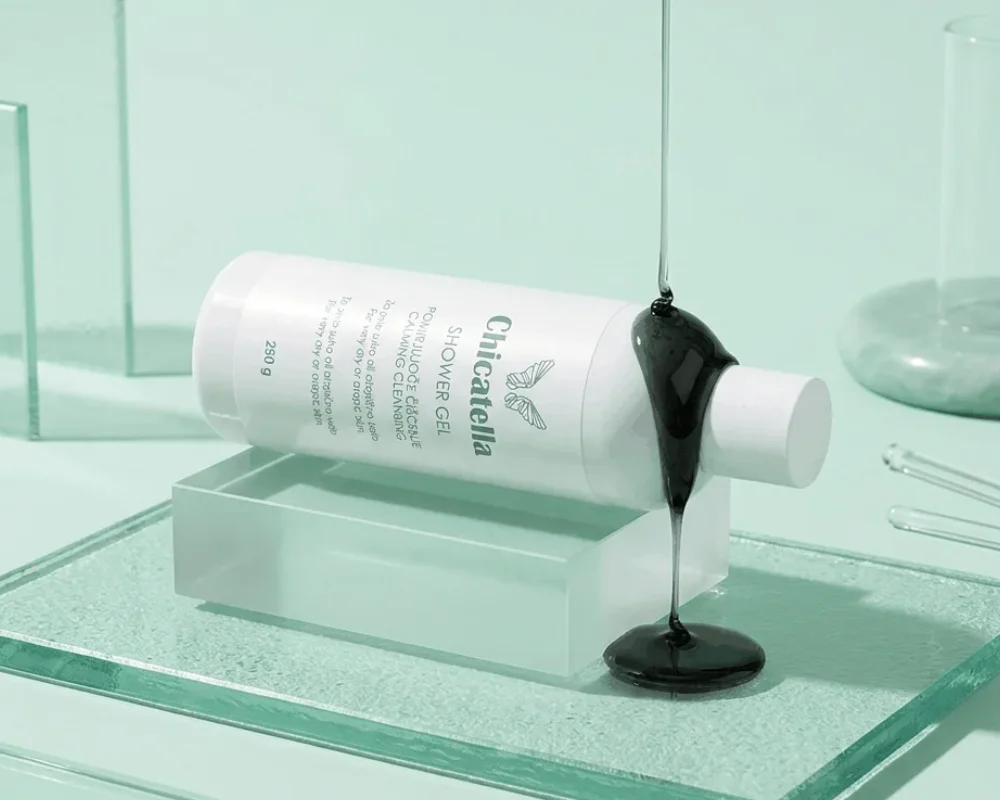
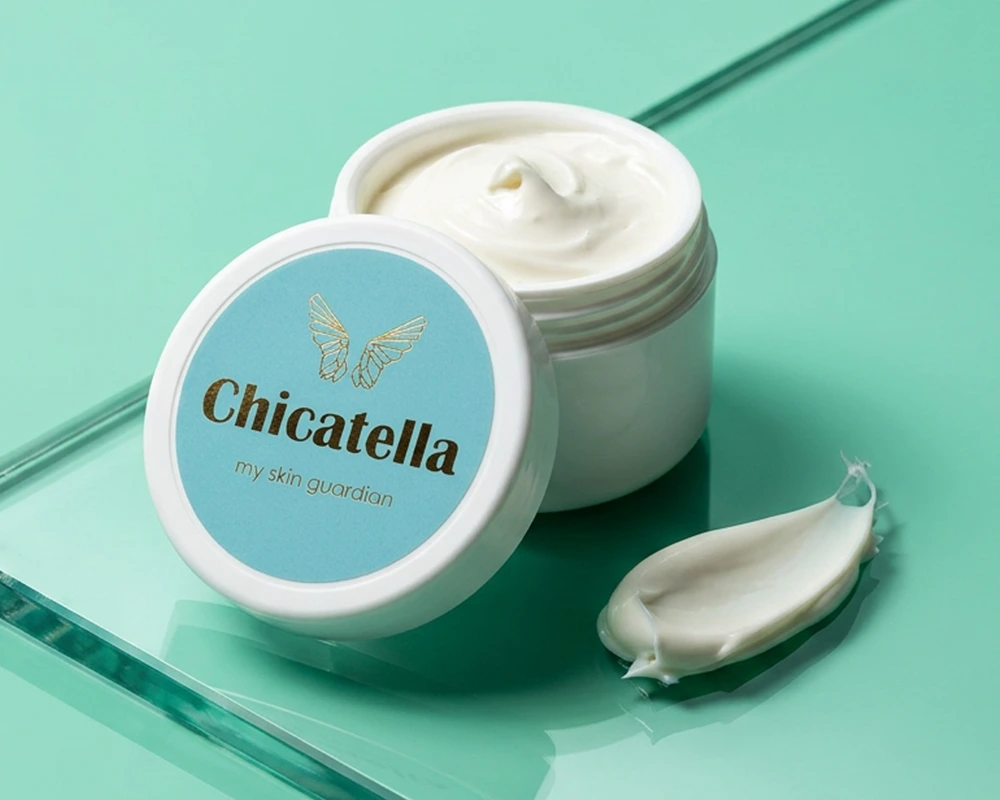
How to use SOS Ointment on eczema-prone skin, step by step: eczema cream.
Product claims are cosmetic and kept separate from the medical information on this page, in line with EU Regulations 1223/2009 and 655/2013. Chicatella doesn’t treat or diagnose any condition.
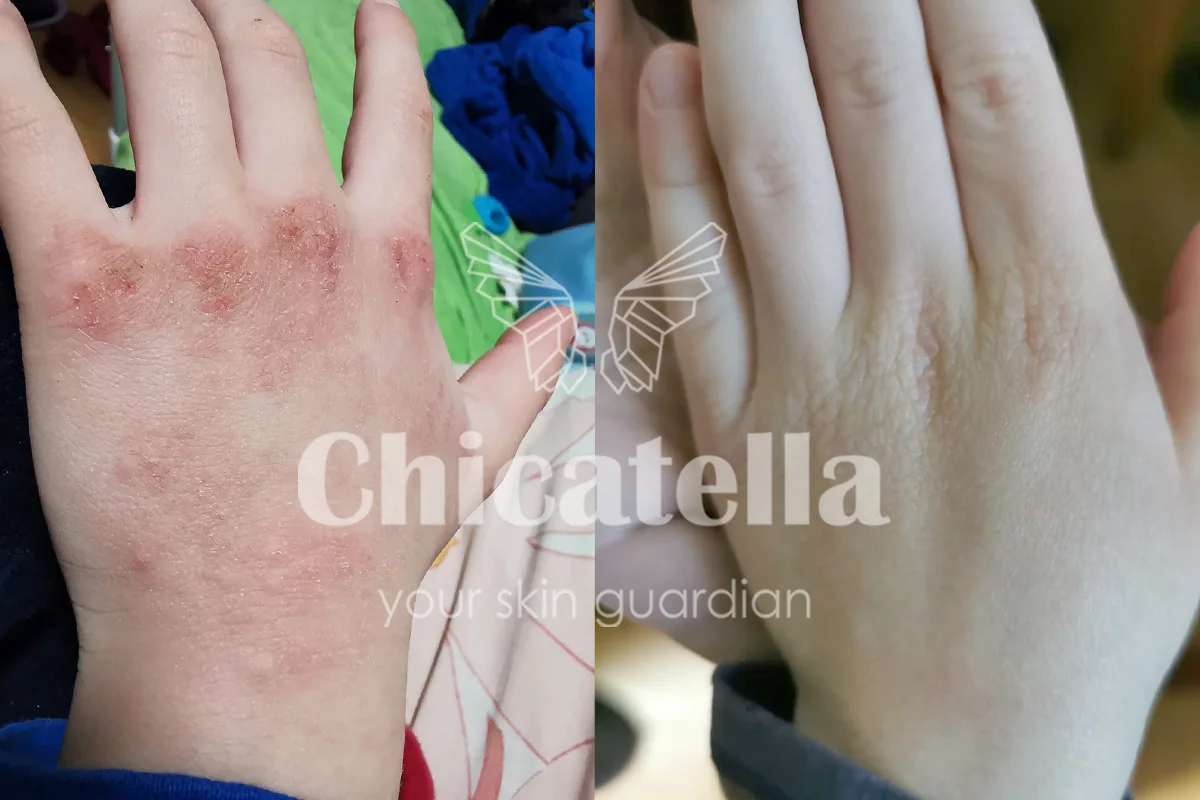
Before and after
Each photo shows the same area before and after care. Customer photos, shared with permission.
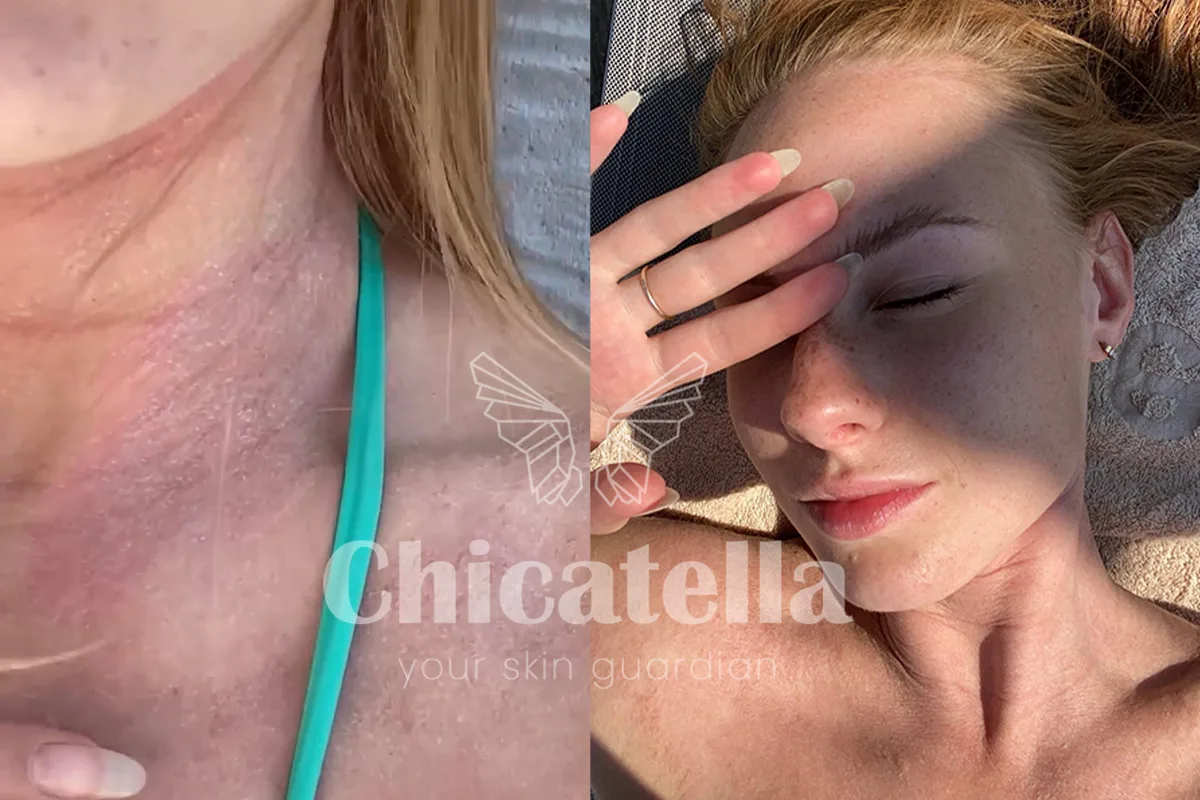
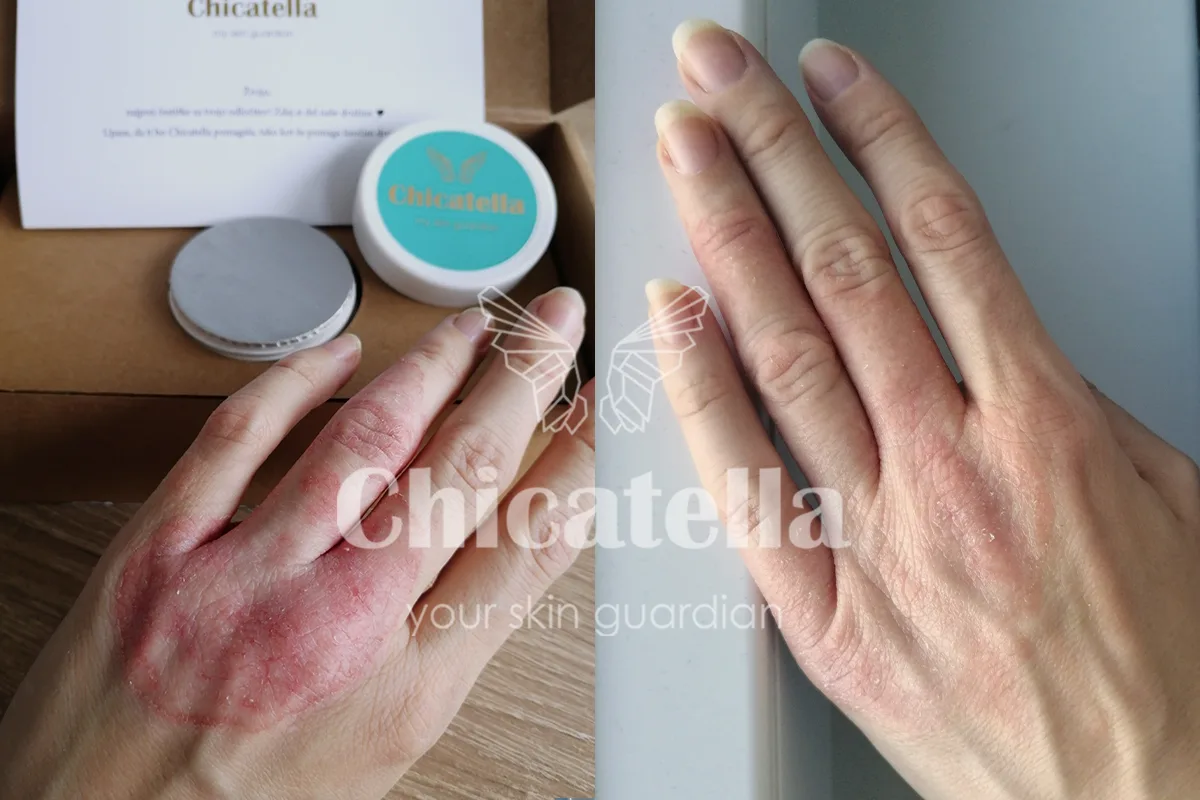
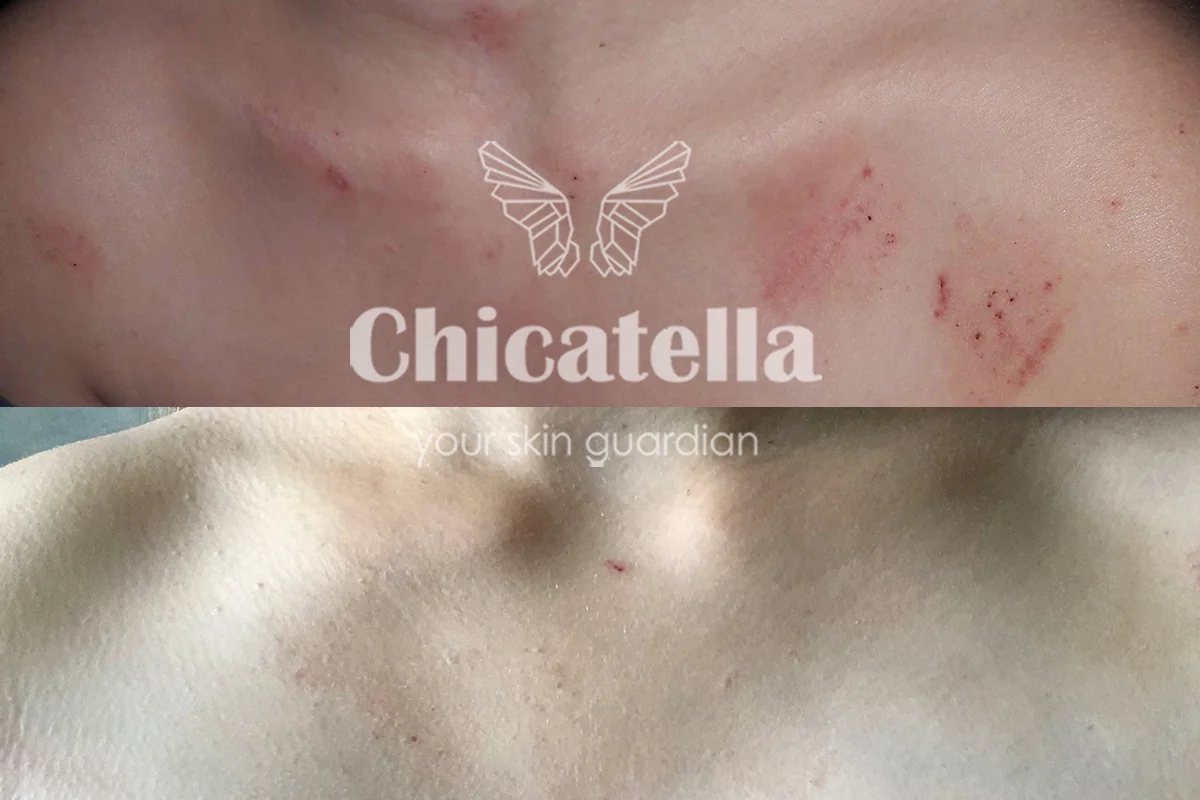
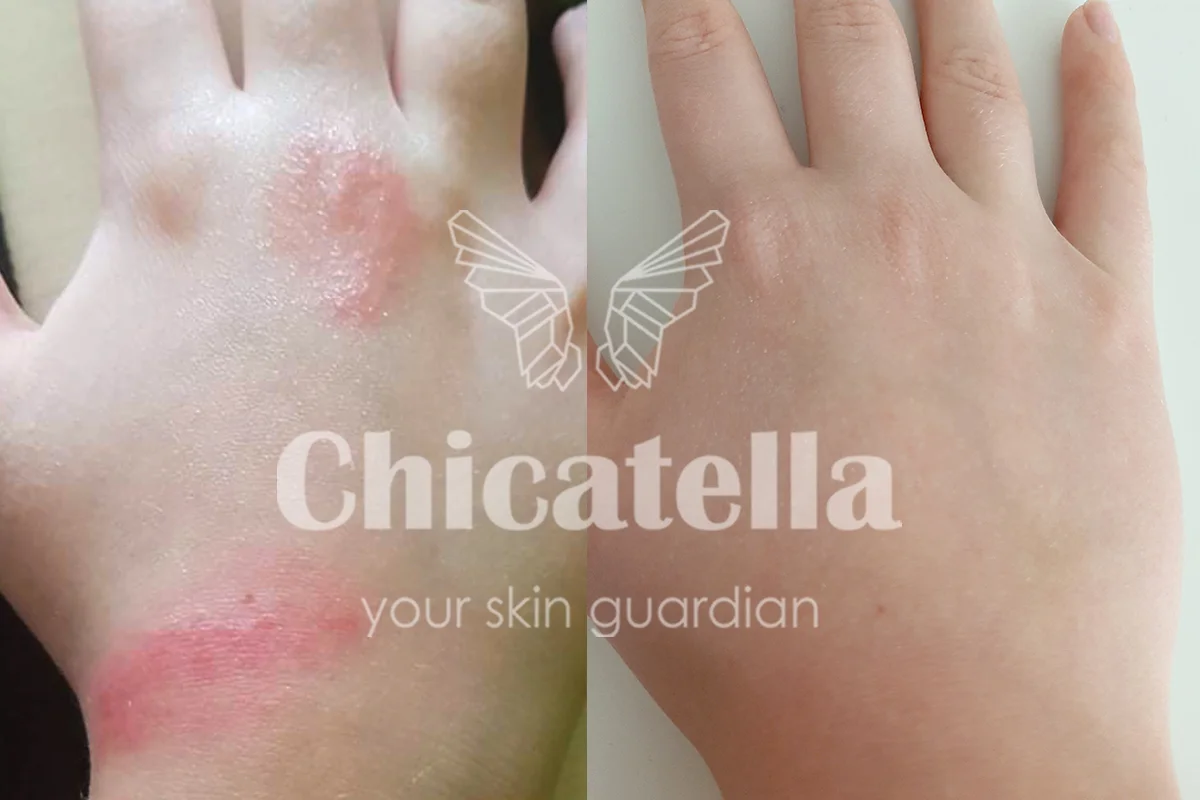
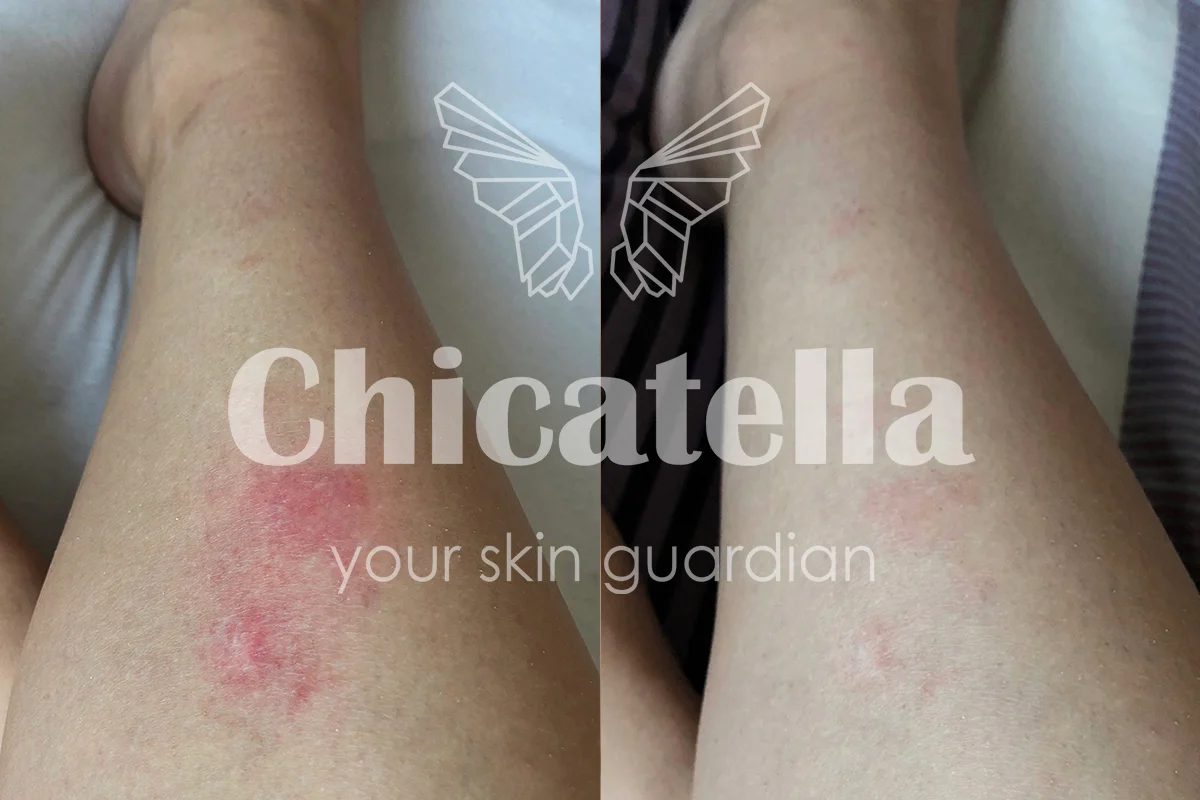
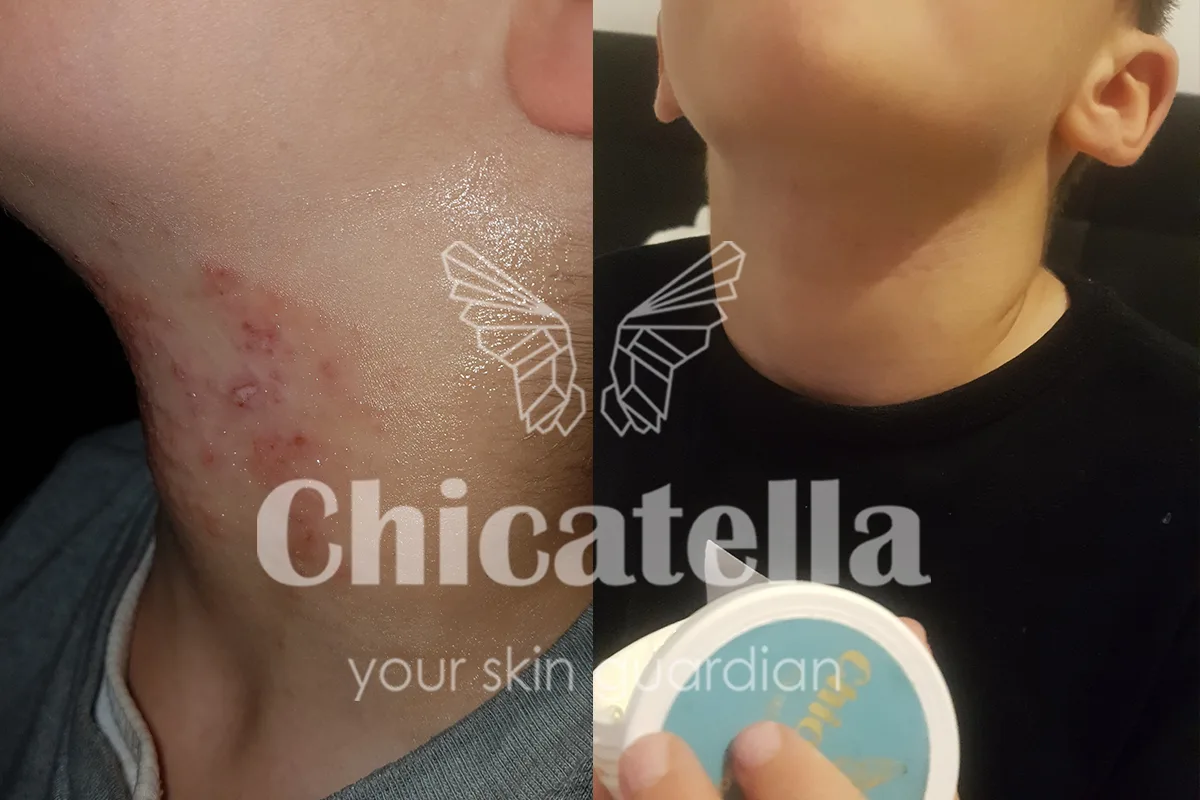
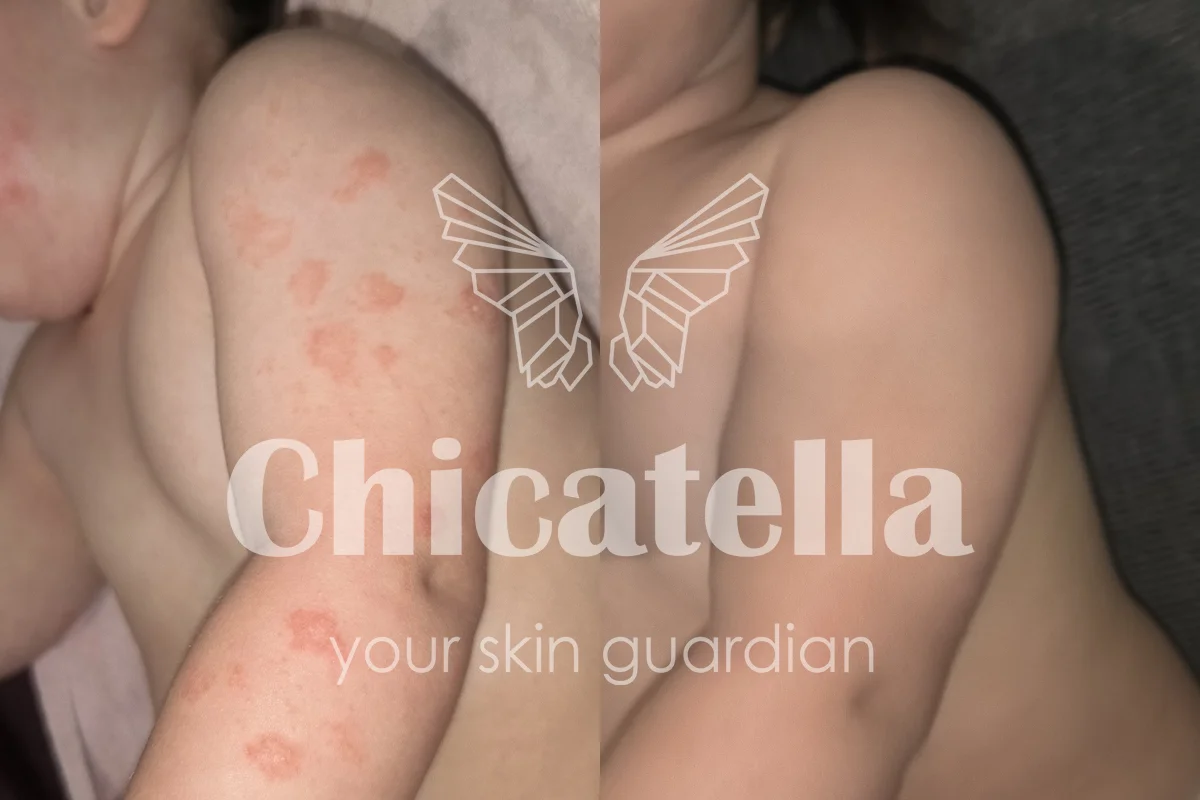
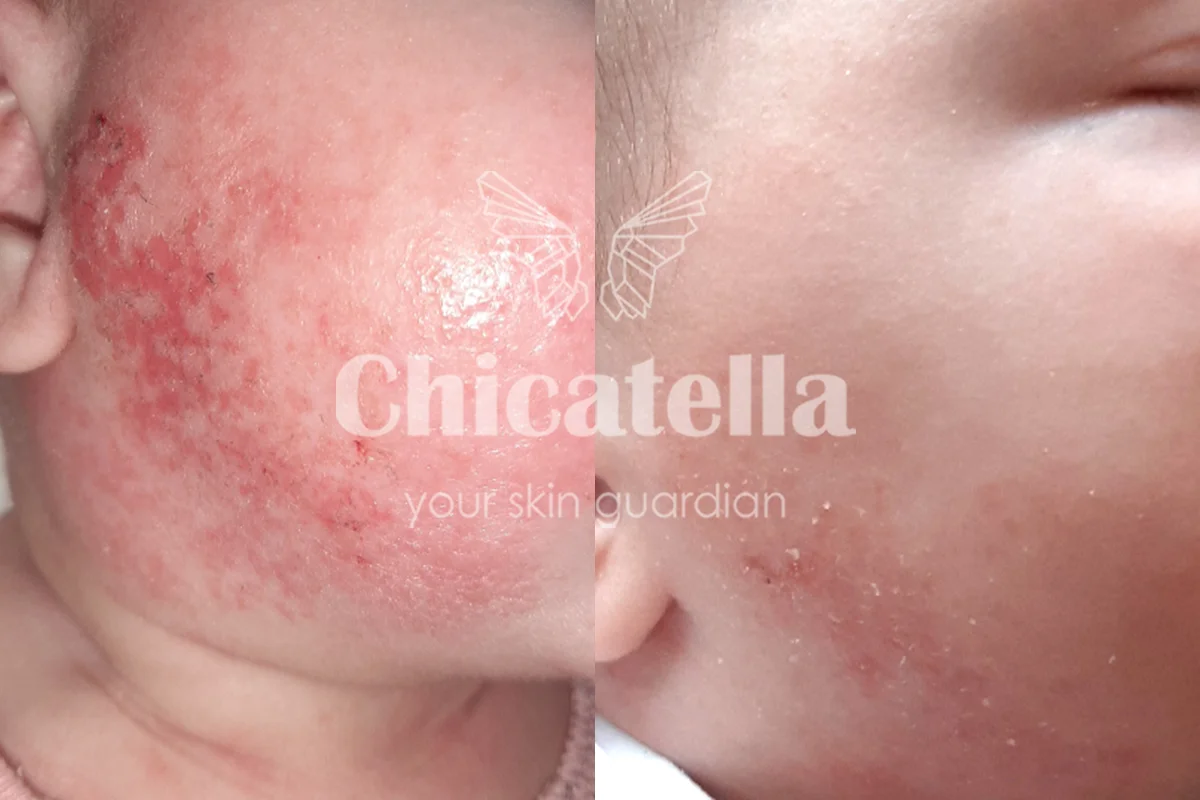
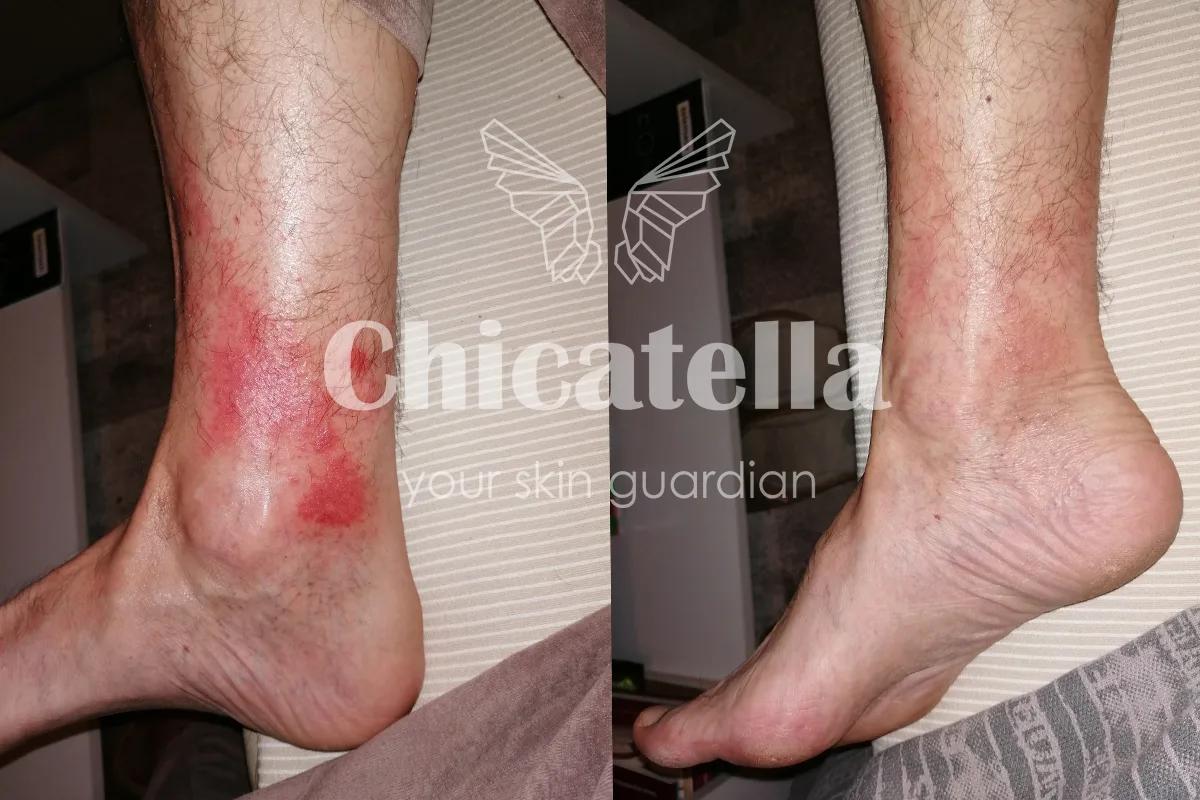
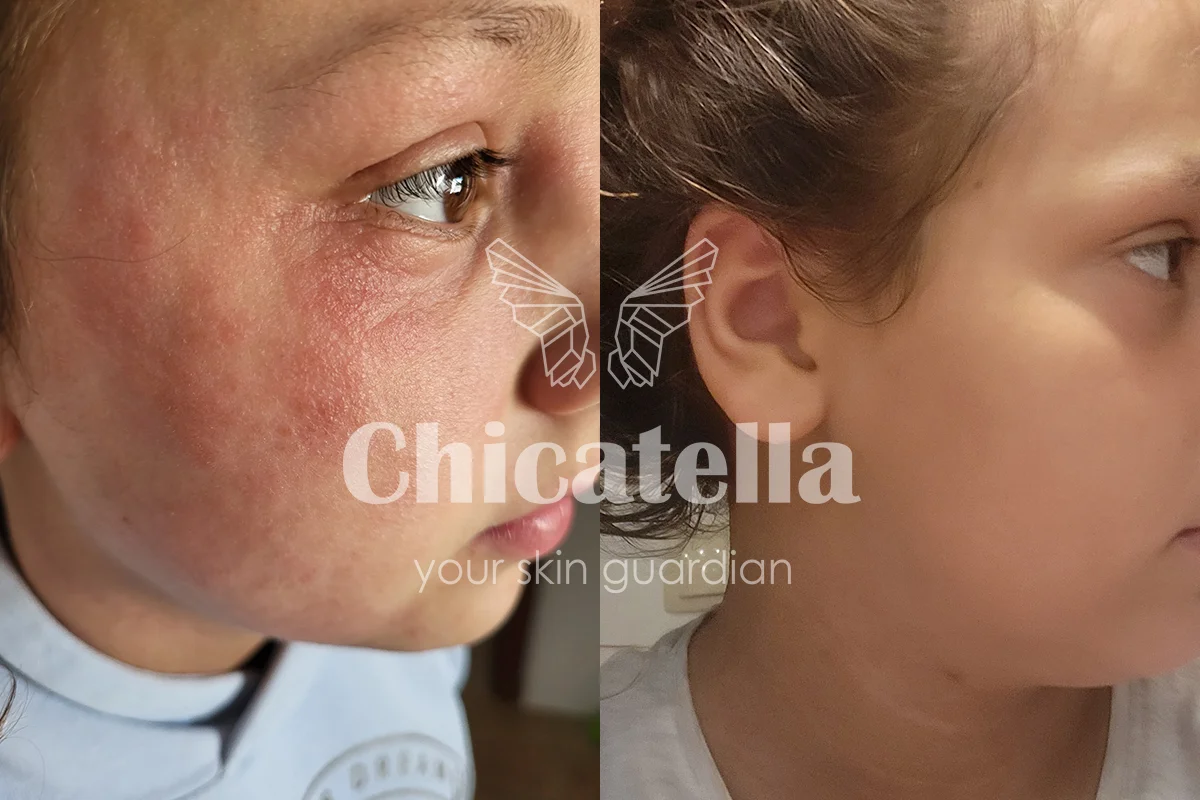
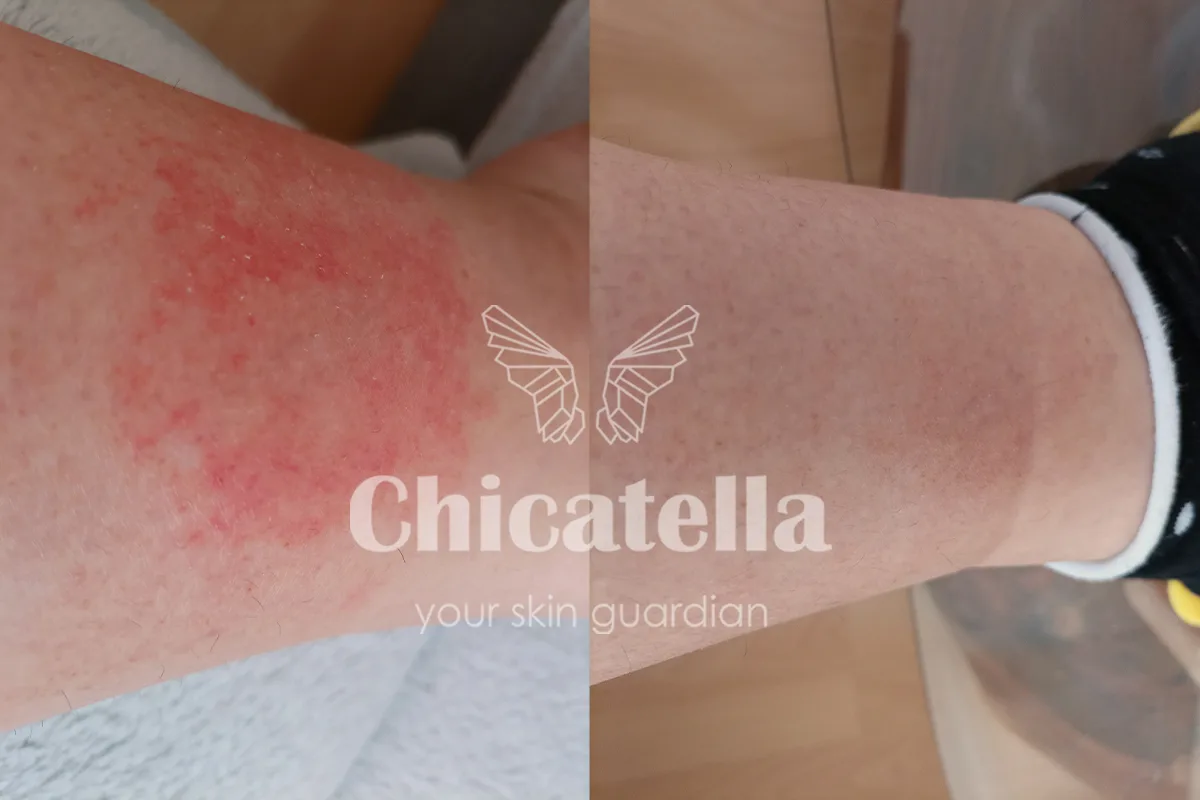
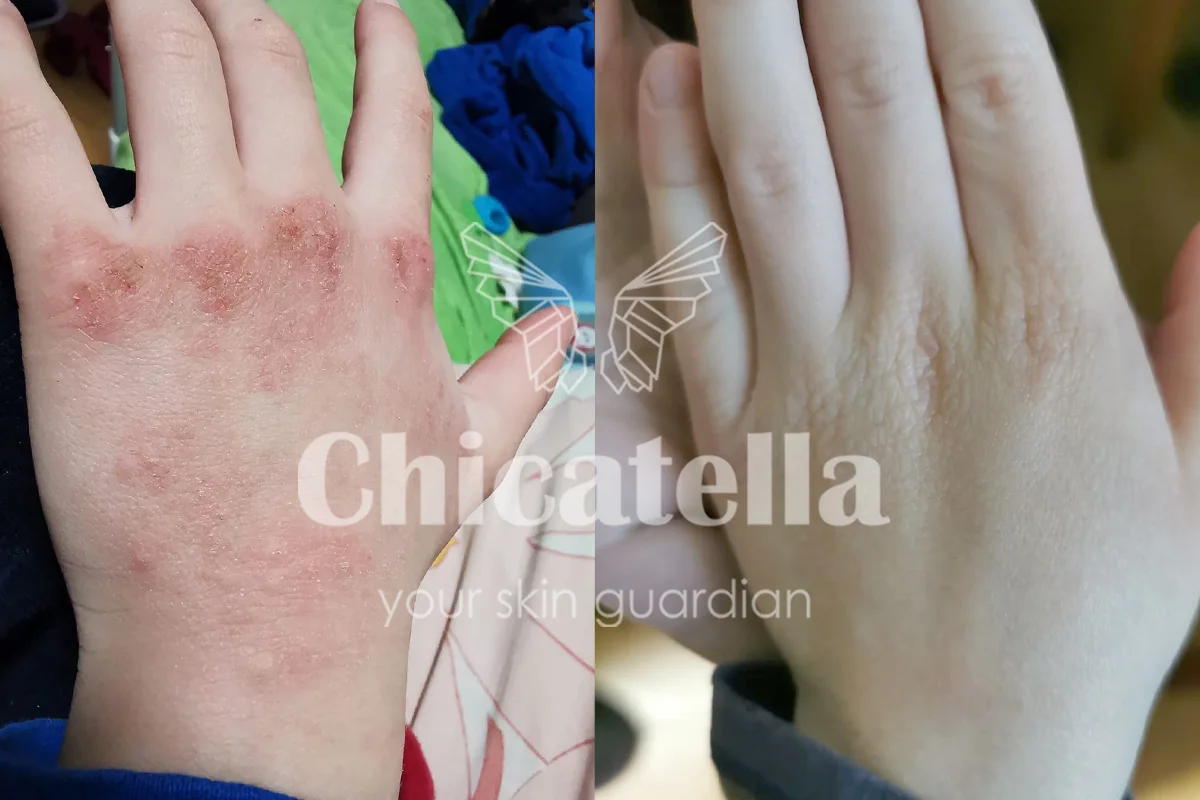
These photos were sent to us by customers themselves, after using our care at home. We’re very grateful for their trust, and that’s exactly why we need to be honest about this too: our care is cosmetic, not medicine. It doesn’t cure atopic dermatitis, and we don’t see these photos as proof of treating a disease. Every skin responds in its own way, so experiences vary and yours may be different.
Find the right care for your skin in three steps
No guesswork. Answer three quick questions and we’ll tell you what your skin needs.
For those who want to go deeper
Do probiotics cure atopic dermatitis?
Is Staphylococcus aureus always an infection?
Do I need allergy testing?
Do I need to cut out dairy or gluten?
Are steroid creams dangerous?
Can I use an occlusive ointment every day?
What if my scalp is the worst spot?
Why does my skin get worse even though I use “natural” products?
Want to read more?
- 01Global Burden of Disease 2021: atopic dermatitis. PubMed. ↗︎
- 02Systematic review of prevalence, 2025. Dermatitis. ↗︎
- 03The Skin Barrier in Atopic Dermatitis, 2024. J Invest Dermatol. ↗︎
- 04Skin lipids and barrier function, 2024. PubMed. ↗︎
- 05Neuroimmune mechanisms of itch, 2025. PubMed. ↗︎
- 06Non-lesional skin in atopic dermatitis. Allergy. ↗︎
- 07Meta-analysis of S. aureus colonization. PubMed. ↗︎
- 08Pediatric meta-analysis of colonization, 2024. PubMed. ↗︎
- 09Colonization and disease severity, meta-analysis 2026. PubMed. ↗︎
- 10Omiganan study. PubMed. ↗︎
- 11Microbiome changes with dupilumab. PubMed. ↗︎
- 12Petrolatum: barrier repair and antimicrobial response. JACI. ↗︎
- 13The role of moisturizers in dermatitis (occlusives, lanolin). Clin Med Res. ↗︎
- 14pH of 250 cleansing products, 2024. PubMed. ↗︎
- 15S3 guideline for atopic dermatitis, 2024. JDDG. ↗︎
- 16Cochrane: emollients and moisturizers for eczema. ↗︎
- 17BEEP: five-year results. PubMed. ↗︎
- 18Different effects of emollient creams on the barrier. PubMed. ↗︎
- 19Meta-analysis of ceramide moisturizers. PubMed. ↗︎
- 20EuroGuiDerm: living guideline, 2025. JEADV. ↗︎
- 21Comparative analysis of systemic treatments. JAMA Dermatol. ↗︎
- 22Slovenian study of steroid phobia, 2026. PubMed. ↗︎
- 23Systematic review of elimination diets. PubMed. ↗︎
- 24Environmental factors and visits for AD, 2025. PubMed. ↗︎
- 25Umbrella review of environmental factors, 2026. PubMed. ↗︎
- 26Slovenian study of contact sensitization, 2026. PubMed. ↗︎
- 27AAD: warning signs. ↗︎
- 28NICE: eczema herpeticum. ↗︎
- 29NICE: secondary bacterial infection of eczema. ↗︎
- 30EU Regulation 655/2013 on cosmetic claims. ↗︎
This content is for general education and doesn’t replace a diagnosis or treatment from your doctor, pediatrician or dermatologist. If things get worse fast, or you notice pain, signs of infection or eye involvement, get medical help.