Contact dermatitis: did something irritate your skin, or did your immune system remember an allergen?
The redness can look exactly the same. But in one story, water, soap, detergent or friction wore down your skin barrier. In the other, your immune system recognized a substance your skin may have handled just fine for months or even years. Until you know which story is playing out on your skin, you can do the wrong thing with the best intentions.

How we wrote this article
Quick answers first
What is contact dermatitis?
What’s the difference between allergic and irritant contact dermatitis?
How soon after contact does the rash appear?
Is contact dermatitis contagious?
How long does contact dermatitis last?
What actually helps with contact dermatitis?
How do you find out what your skin is allergic to?
Contact dermatitis often takes the shape of whatever touches your skin
Eight cards: how to recognize it, where it shows up and when. Sharp edges in the shape of an object and the spot where it touched tell you more than the color. The sketches are simplified and can’t reliably tell irritation from allergy; only a doctor can diagnose it.
The same rash. Two completely different mechanisms.
The table below shows the patterns dermatology sources describe. But they aren’t diagnostic rules: with long-lasting problems, both types can look and feel very similar, and they often overlap on the same skin.
| Feature | Irritant contact dermatitis | Allergic contact dermatitis |
|---|---|---|
| What happens | An irritant damages the skin barrier | The immune system recognizes a specific allergen |
| Prior sensitization | Not needed | Needed |
| Who can get it | Almost anyone, with enough exposure | Only someone who’s sensitized |
| Timing | Right after a strong irritant, or gradually | Usually 24–72 hours after the next contact |
| Main sensation | Often burning, pain and tightness | Often intense itching |
| Where it spreads | Usually right where the contact was | Starts where the contact was, can spread |
| Test | No specific test | Patch testing |
| Main fix | Cutting down how much and how often you’re irritated | Avoiding one specific allergen |
Why does this matter? Because it leads to two different fixes. With irritation, it’s about the total load, which you need to bring down. With allergy, it’s about one specific substance your skin can’t tolerate, even in small amounts.DermNet↗︎

When one hand wash is no problem, but a hundred can be
Picture a glass. Every contact with water, soap, detergent or friction pours a little in. Between contacts, the glass slowly empties, as long as your skin has enough time to recover. When it fills faster than it empties, you get dryness, burning, redness and cracks.
A schematic model, not a gauge for your skin. There’s no single limit that applies to everyone: concentration, contact time, frequency, friction and the current state of your skin all work together. A strong acid or alkali can cause acute damage after just one contact, while frequent washing with a mild product causes a slower, cumulative type.
It’s often defined as having wet hands or wearing gloves for at least two hours per workday, or washing your hands at least 20 times a day. That’s a research and occupational definition of exposure, not a hard line between safe and dangerous.
The study found a link between different kinds of wet work and moderate to very severe hand eczema. It was an observational study, and hand eczema isn’t always contact dermatitis.Brands 2024↗︎
Your skin learns a substance first, and only reacts to it later
A contact allergy isn’t like a pollen allergy that hits within minutes. Your immune system first memorizes the substance. When it meets it again, it reacts with a delay of one to three days.JACI 2024↗︎
The substance gets into the skin and binds to skin proteins. There’s no rash. Most people don’t even remember this contact.
Memory T cells form. They wait for weeks, months or years. The whole time, your skin is completely calm.
At the next contact, the memory cells trigger inflammation. Not right away, but 24 to 72 hours later. That’s why people often look for the culprit on the wrong day.
What this means for you: you may have used a cream, fragrance, gloves or jewelry for years with no trouble and still develop an allergy. “It never bothered me before” doesn’t rule out an allergy. Writing down what you used in the last three days tells you more than guessing.
Timing can be the first clue
How much time passed between contact and reaction often tells you more than how the rash looks. Pick a time window and see what it usually means.
Fast itching, swelling or hives within minutes can mean contact urticaria or another immediate reaction. That’s not the same as allergic contact dermatitis, and it isn’t diagnosed with a patch test either.
Fast swelling of the lips, tongue or throat, trouble breathing, dizziness or widespread hives need emergency care: call 911.
The culprit isn’t always where you’re looking
Substances travel. Nail polish on your fingers can cause eyelid dermatitis, shampoo leaves a trail on your neck, and a phone or tool can carry metal somewhere else. Pick an area and see what’s worth checking there.
- nail polish or gel, carried over by your fingers
- hair dye or hair products
- fragrances
- preservatives
- eye drops
- metal tools, like eyelash tweezers
Your eye product isn’t necessarily the culprit. The eyelids are often just the thinnest skin, so they react first.
These aren’t diagnoses, just starting points for a talk with a dermatologist.
Modern allergens hide in completely everyday things
Jewelry, metal buttons, buckles, tools and electronic devices.
Perfumes, cosmetics, essential oils, detergents and products that list parfum or fragrance.
Important ones include isothiazolinones, found in some cosmetics, cleaning products and other products.
Gel nails, adhesives, dental materials and some medical sensors and bandages. A reaction on the eyelids can come from transfer from the nails.
The problem isn’t necessarily latex itself. The allergy can come from chemicals used to make rubber gloves.
Permanent hair dyes and some temporary black henna tattoos.
A useful emollient for many people, but also a possible contact allergen for a small share of the population.DermNet↗︎
Linalool and limonene can change into more reactive compounds when they’re exposed to air.Review 2024↗︎
Some fragrance ingredients slowly change when exposed to air and light. Linalool and limonene form hydroperoxides, which cause contact allergy more often than the original ingredients. In a North American analysis of patch tests, linalool hydroperoxides were among the common positive results.NACDG↗︎
In practice: scented products that have been open for a long time are riskier for sensitized skin. That doesn’t mean fragrances are dangerous for everyone.
Three numbers and what they really mean
A meta-analysis of 28 studies with 20,107 people tested estimated that about one in five people in the general population has a positive contact allergy to at least one common tested allergen. The most common was nickel, with an overall estimated rate of 11.4%.Meta-analysis↗︎
A positive test, or sensitization, isn’t the same as active allergic contact dermatitis.
In a North American analysis of patch test results for 2021–2022, 72% of the people referred had at least one positive reaction. Common ones: nickel 24.9%, methylisothiazolinone 11.5%, linalool hydroperoxides 10.1%.NACDG↗︎
This isn’t data for the general population. It’s for a select group of people who were referred for testing.
In occupational hand dermatitis, the irritant type makes up a large share of cases.DermNet↗︎
This applies to occupational hand dermatitis, not to every rash or every case of contact dermatitis in the general population.
Where an ingredient comes from doesn’t tell you whether your skin will see it as an allergen
Your immune system doesn’t check whether a substance comes from a plant or a lab. It recognizes the shape of the molecule. That’s a slightly uncomfortable truth for the cosmetics industry too, including us.
Essential oils can contain contact allergens, and propolis and plant extracts can trigger an allergy in some people.
Lanolin is a natural ingredient and a good emollient, but it can also be a contact allergen for a small share of people.
Synthetic doesn’t automatically mean dangerous, and natural doesn’t automatically mean safe. What you really need is the specific name of the allergen and whether it’s on the INCI list.
Why European labels are changing
An EU regulation has expanded individual labeling of fragrance allergens by 56 more substances. For sensitized people, that means they can check ingredients more precisely. The transition period for placing new products on the EU market ends on July 31, 2026, and for withdrawing non-compliant products already on the market, on July 31, 2028.Regulation 2023/1545↗︎
One word could cover dozens of fragrance ingredients. A sensitized shopper had no way of telling whether their allergen was in the product.
This is a simplified example of an ingredient list, not the INCI of a real product.
A test where waiting is part of the diagnosis
Because allergic contact dermatitis is a delayed reaction, the test has to be delayed too. We summarize the process from the 2026 European guidelines.ESCD 2026↗︎
Small amounts of standardized allergens are placed on your back.
The patches come off and the first reading follows.
The skin is checked again, often around day four, and later if needed.
The dermatologist also decides whether a positive reaction is linked to your current rash.
- a method for diagnosing contact allergy;
- the baseline series picks up a large share of common allergens;
- depending on your job, cosmetics, gloves, shoes or medical devices, specialized series often need to be added;
- a dermatologist can also test your own products under controlled conditions.
- it’s not a skin prick test and doesn’t diagnose food or airborne allergies;
- a blood test can’t replace it for allergic contact dermatitis;
- a positive result doesn’t yet mean that this allergen caused your current rash;
- it doesn’t confirm irritant dermatitis, which has no single lab test to confirm it.
| Comparison | Patch test | Skin prick test |
|---|---|---|
| Type of allergy | Delayed type IV allergy | Immediate type I allergy |
| Reading | Over days | Within minutes |
| What it tests | Metals, fragrances, preservatives, acrylates … | Pollen, dust mites, some foods … |
| Which condition it explains | Contact dermatitis: irritation or allergy? | Hives, hay fever, immediate allergies |
Dabbing a cosmetic on a small area at home isn’t a diagnostic patch test. At most it’s a careful tolerance test, and it doesn’t rule out a contact allergy.DermNet↗︎
Don’t just look for a new product. Look back 72 hours.
Check what applies to you. The list isn’t a diagnosis and doesn’t identify the allergen. It’s something to bring to your dermatologist.
The list doesn’t tell you which substance is to blame. It only tells you where it’s worth looking.
- take photos as it develops;
- write down when you were exposed and when the reaction started;
- keep the packaging and the INCI list;
- hold off on new products you don’t need;
- change one thing at a time;
- if it keeps coming back, get a professional exam.
Don’t deliberately expose yourself to a known or suspected strong substance to “test” whether it really causes a reaction. With an allergy, even a small amount can trigger a new reaction, and repeated contact drags the problem out.
The right glove protects. The wrong one, or a soaked one, can drag the problem out.
A dry, well-chosen glove keeps detergent or chemicals off your skin and gives it a break. But no glove works for every substance. The material has to match the substance and its safety data sheet.
- for longer jobs, cotton liner gloves can help;
- it makes sense to take off rings during wet work;
- some people aren’t allergic to latex, but to rubber accelerators;
- even a product labeled “accelerator-free” isn’t automatically right for everyone;
- a barrier cream or ointment doesn’t replace proper personal protective equipment.
“Alcohol hand sanitizer is always harder on your hands than soap.”
Not necessarily. A systematic review found a link between frequent hand washing and hand eczema, while using alcohol hand sanitizer wasn’t significantly linked to a higher risk. Formulas differ, damaged skin may sting with alcohol, and hygiene rules always come first.Systematic review↗︎
This isn’t a call to skip necessary hygiene. What matters is the specific formula and how your skin tolerates it: no added fragrance, and care after washing.
First, stop the contact. Then help your skin recover.
Three steps, in this order. Care only really pays off once contact with the irritant or allergen has been cut down.
With irritation, the total amount counts: less wet work, fewer repeats, more breaks. With allergy, strictly avoid the confirmed allergen, even in small amounts.
Depending on the area, your age and how severe it is, your doctor prescribes topical anti-inflammatory treatment. The face, eyelids, children’s skin and long-term corticosteroid use call for caution. Don’t stop medication on your own.
Emollients and occlusives reduce dryness, cracks and water loss. They only work once contact has already been cut down. No cream can beat an allergen that touches your skin every day.
An ointment can reduce water loss. It can’t remove an allergen.
For very dry, cracked skin, a protective film is the most tangible everyday help. But it works mechanically: it reduces water loss and friction. It doesn’t neutralize the pH of irritants, and it isn’t a watertight shield against chemicals.
- the irritant has been removed or reduced;
- the skin is dry, rough or cracked;
- there’s no active oozing;
- there’s no known allergy to the product’s ingredients;
- the goal is to reduce water loss and protect the skin mechanically.
- exposure to the allergen is still going on;
- the changes keep coming back after the same product;
- the skin is oozing a lot or has fresh blisters;
- there’s pain, pus or signs of infection;
- the cause isn’t clear;
- an allergy to one of the product’s ingredients has been confirmed.
For ingredients like petrolatum and lanolin, there are research findings at the ingredient level, for example about reduced water loss under occlusion. These are ingredient-level findings from research, not measured claims for a finished product.
Once you’ve stopped the contact, help your skin feel like itself again, sooner
Cracked hands, dry skin under your watch, stinging eyelids. Once you’ve removed the culprit, your skin needs three things: gentle washing, moisture and a protective layer. No fragrance, no unnecessary ingredients.
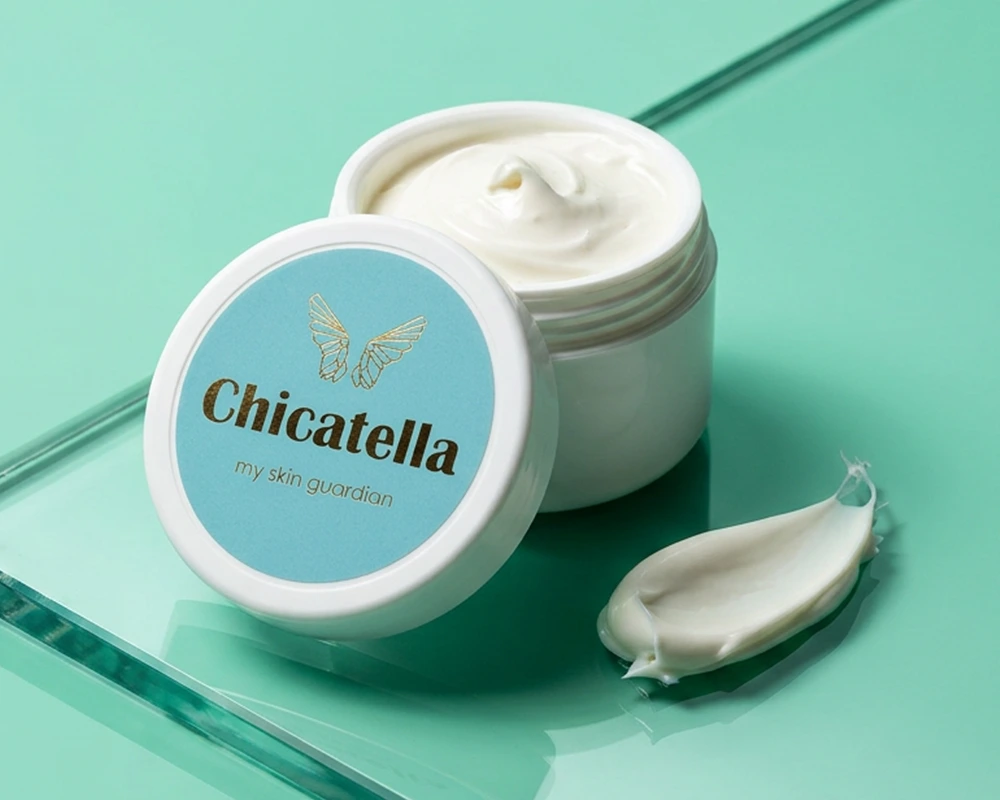
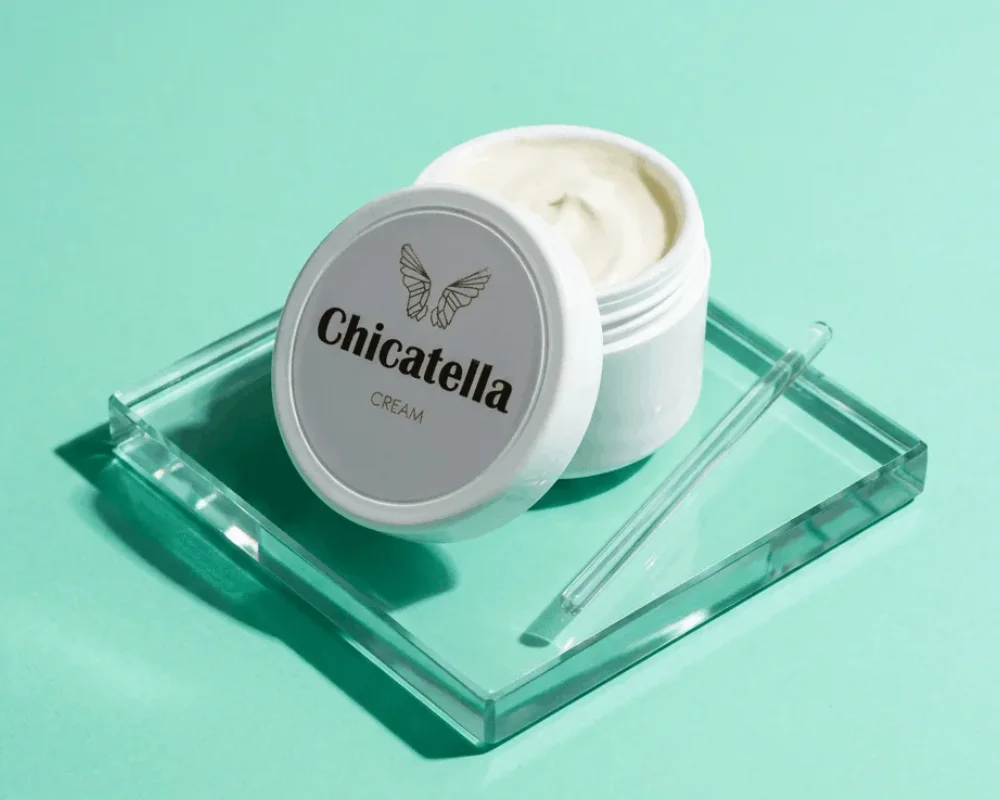
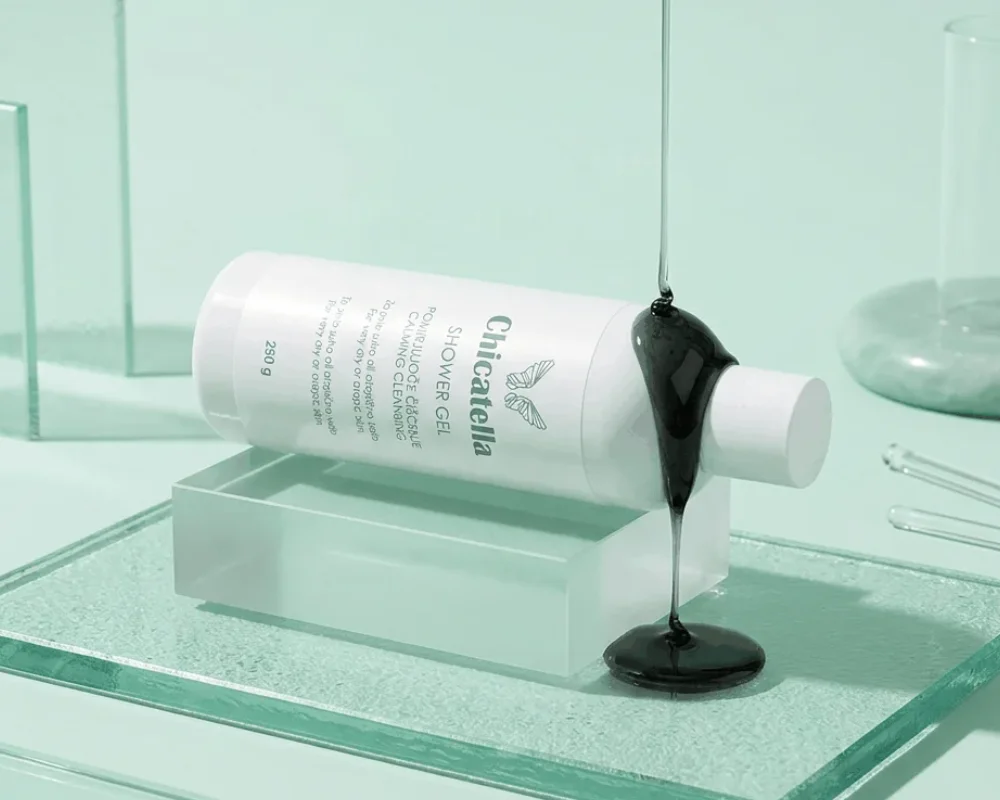
Chicatella is cosmetic care and doesn’t treat contact dermatitis. SOS Ointment contains lanolin: if you have a confirmed allergy to wool alcohols, choose the body wash. Before using any product, check the INCI list against your confirmed allergens; with fresh blisters, oozing or an unclear diagnosis, see a doctor first.DermNet↗︎
When the irritation is gone and your skin gets time to recover
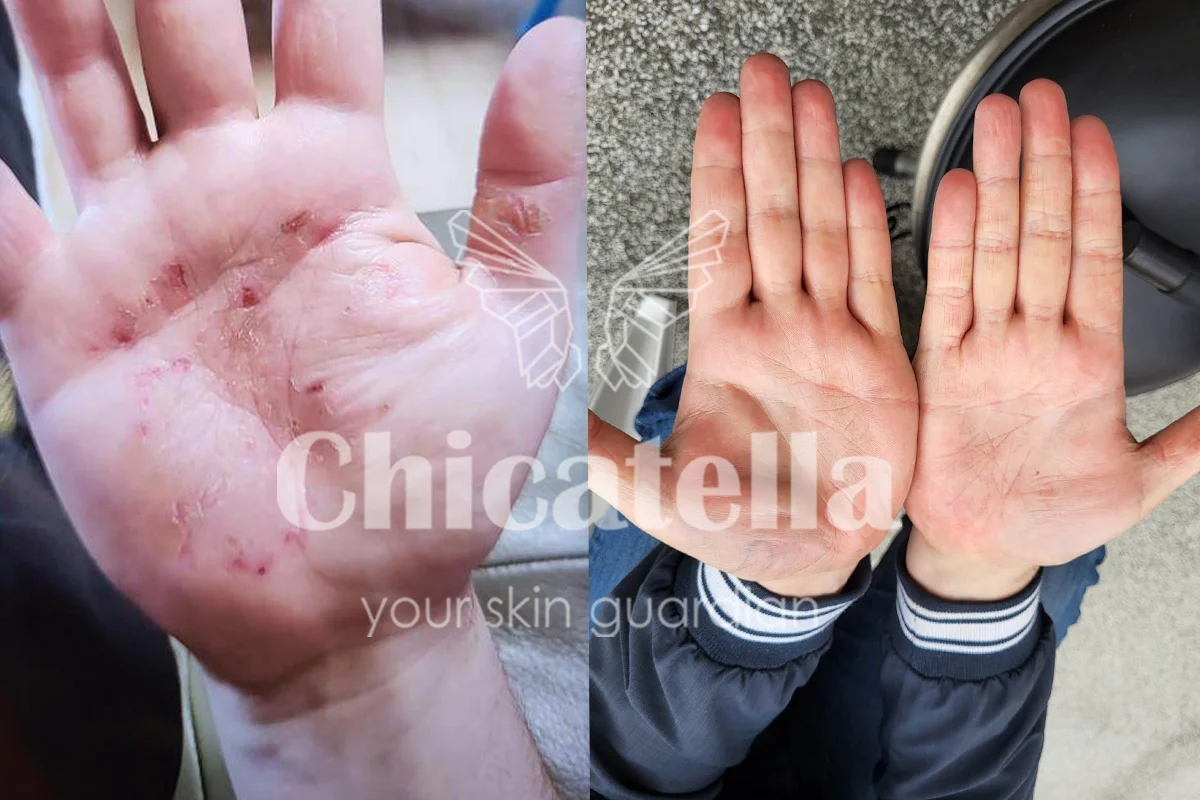
The same skin before and after care. Customer photos, shared with permission.
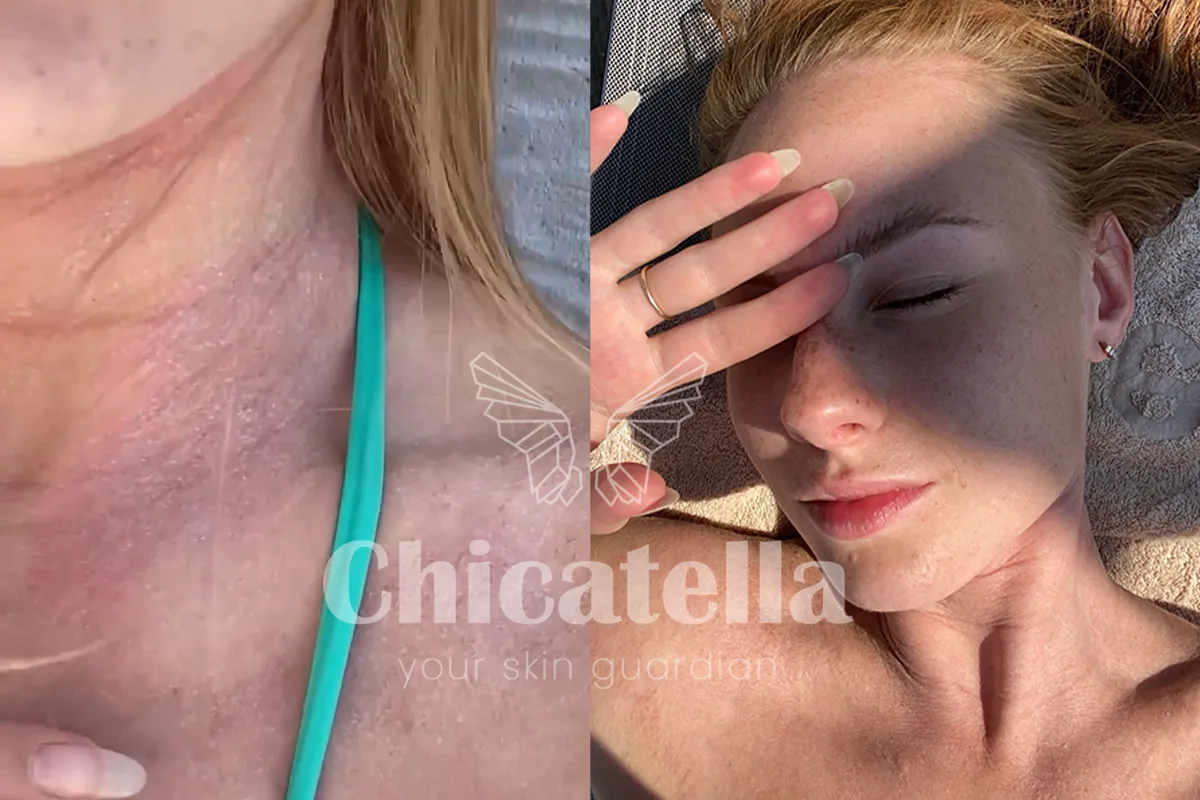
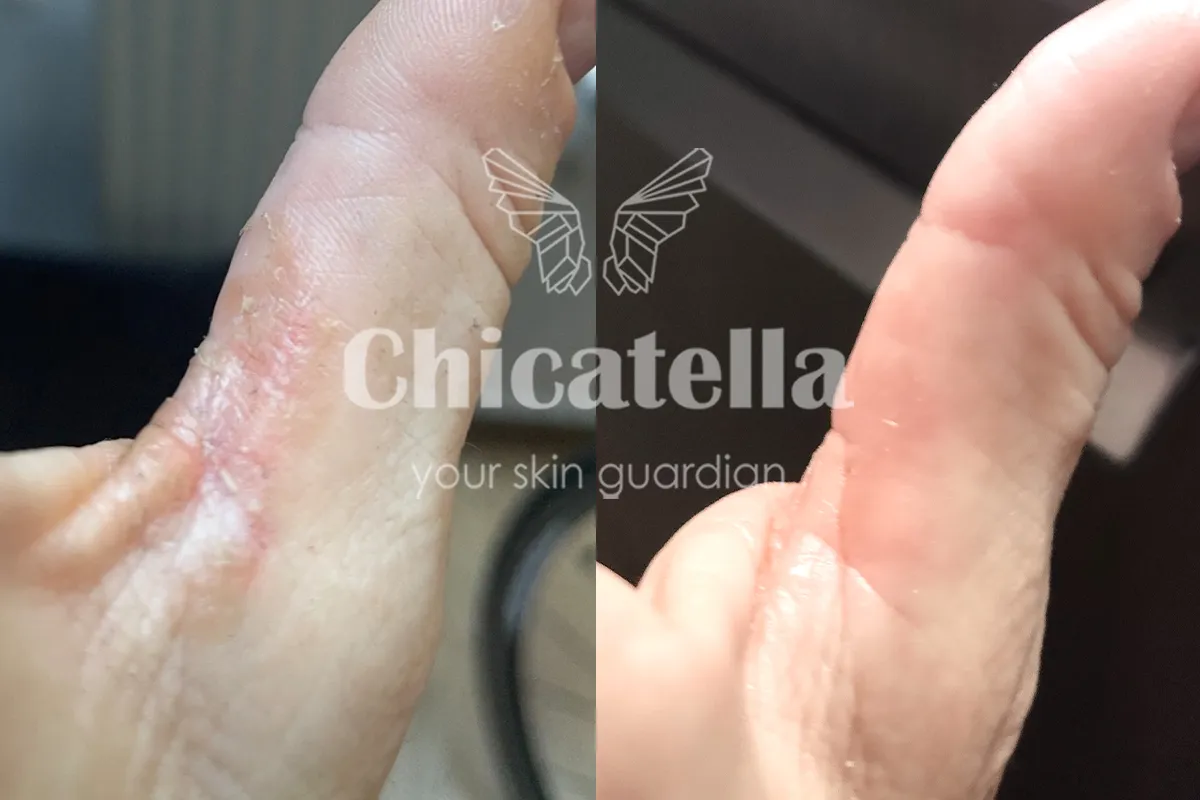
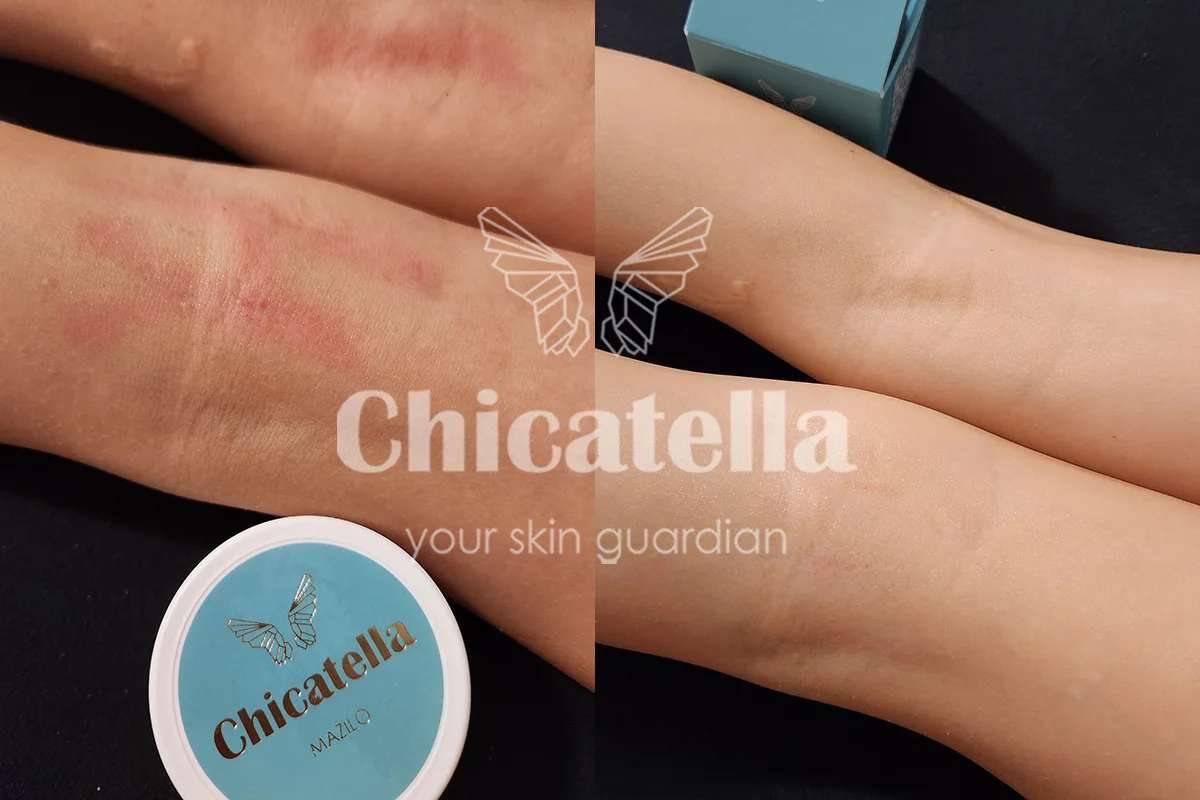
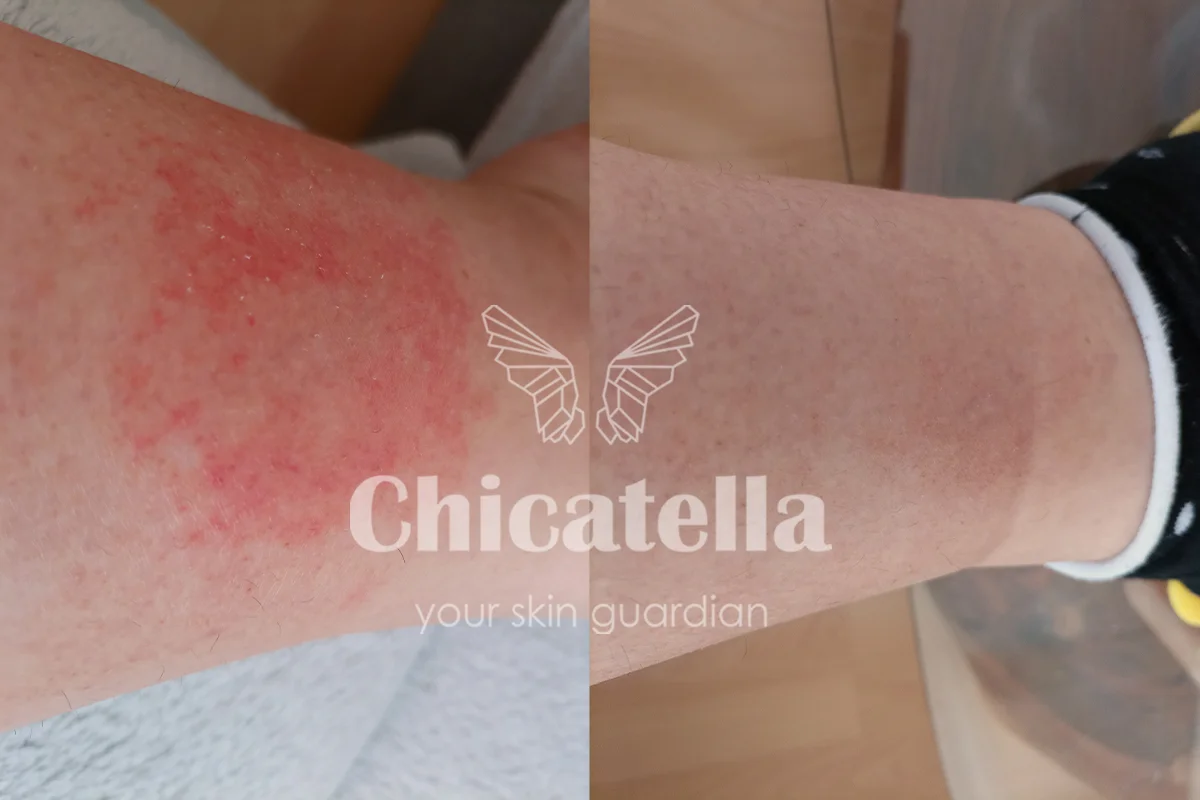
The photos show individual experiences with cosmetic care of very dry or irritated skin. Chicatella isn’t a medicine for contact dermatitis, a photo doesn’t confirm a diagnosis, and individual results may vary.
Where to go next if the pattern still isn’t clear
Find the right care for your skin in three steps
No guesswork. Answer three quick questions and we’ll tell you what your skin needs.
This content is for information only and doesn’t replace a medical exam, diagnosis or treatment. A photo doesn’t make a diagnosis, and a contact allergy isn’t the same as a food or airborne allergy. Chicatella products are cosmetic skin care, not medicines.
- 01European Society of Contact Dermatitis Guideline for Diagnostic Patch Testing – Update 2026. ↗︎
- 02Allergic contact dermatitis. DermNet NZ. ↗︎
- 03Irritant contact dermatitis. DermNet NZ. ↗︎
- 04Recognizing and Managing Allergic Contact Dermatitis. JACI In Practice, 2024. ↗︎
- 05Prevalence of contact allergy in the general population – meta-analysis. ↗︎
- 06North American Contact Dermatitis Group Patch Test Results 2021–2022. ↗︎
- 07The association between wet work and hand eczema. Contact Dermatitis, 2024. ↗︎
- 08Hand hygiene and hand eczema – systematic review and meta-analysis. ↗︎
- 09Treatments to prevent hand skin irritation in the workplace. Cochrane. ↗︎
- 10Fragrance Contact Allergy – a review. 2024. ↗︎
- 11Commission Regulation (EU) 2023/1545 on the labeling of fragrance allergens. ↗︎
- 12Patch tests. DermNet NZ. ↗︎
- 13Contact reactions to lanolin. DermNet NZ. ↗︎
- 14Contact dermatitis – patient information. British Association of Dermatologists. ↗︎