Keratosis pilaris: three things hiding in one tiny bump
On the surface you see one bump. Underneath, three different things can be going on. That’s why one person sees a big difference from regular moisturizing, another needs a product that softens the plugs, and a third needs an acid exfoliant.
GOOD TO KNOW“It’s not acne. It’s not about hygiene. It’s not contagious.”
Lots of people call it “chicken skin” or “strawberry skin.” The medical name is keratosis pilaris, or KP. It often goes hand in hand with dry skin.
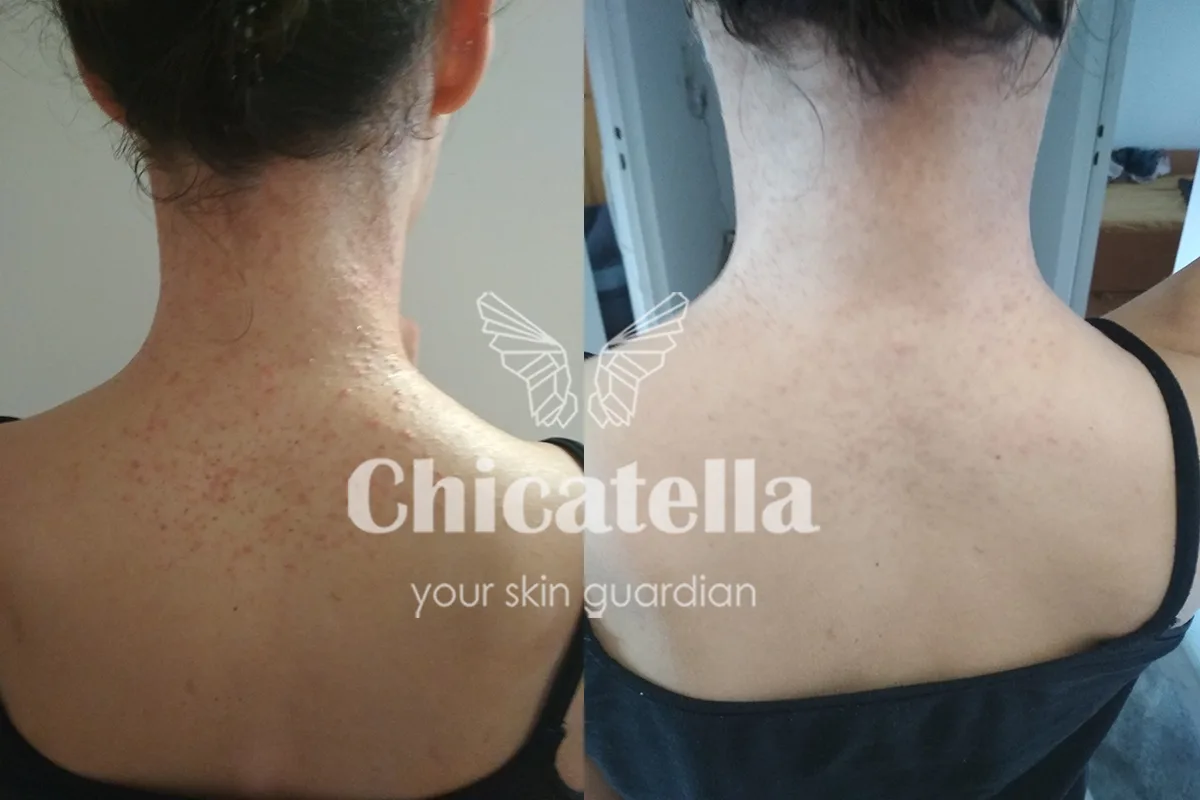

How we put this article together
Quick summary
Very common, harmless and not contagious.
The bumps form around the openings of tiny hairs and aren’t caused by dirt.
Skin can be just rough, or there can also be red or darker rings.
Moisturizing mainly helps with dryness and roughness; products that soften the plugs target a different part of the problem.
Hard scrubbing and squeezing can make redness and sensitivity worse.
Judge the change after about 4–6 weeks of consistent care, not after two evenings.
If you don’t know which part bothers you most, you might be using a good product for the wrong problem.
Same condition, different looks
Six ways to recognize it. These are illustrations. We don’t have our own approved keratosis pilaris photos, so we’d rather show less than use photos that could mislead.
Short answers first
What is keratosis pilaris?
What causes it?
Is it contagious?
Is keratosis pilaris the same as acne?
Can I squeeze or scrub the bumps off?
Which cream helps with keratosis pilaris?
Does keratosis pilaris go away?
Can kids get it?
Why is it worse in winter?
Can laser treatment help?
Take a look inside one bump
One bump, three different targets for care. Keratin is a perfectly normal protective building block of skin, hair and nails. The problem isn’t that it’s “bad.” It just builds up differently at the opening of the hair follicle.
The skin around the bump holds on to water less well, so it feels tight and rough. This is where regular moisturizing does the most.
Keratin builds up at the opening of the follicle and forms a firm plug, with the hair stuck underneath. A product that gradually softens keratin helps here.
There’s mild irritation around the follicle: red on lighter skin, brown on darker skin. Less rubbing works better here than stronger exfoliating.
People get what “clogged pore” means, but it’s more accurate to talk about a plug in the hair follicle. It isn’t dirt, and it doesn’t mean your skin isn’t clean enough.
One bump, three different targets
First figure out what really bothers you most. Only then pick a product.
| What you notice | What’s likely front and center | What that part usually needs |
|---|---|---|
| Dry, tight, rough skin | Not enough water and lipids, and skin that holds on to moisture less well | Regular moisturizing, softening and protection |
| Stubborn tiny bumps | Keratin plugs at the hair openings | Gentle, gradual softening or exfoliating of the plugs |
| Red or brown rings | Irritation, mild inflammation or pigment left after irritation | Less rubbing, a calmer routine and professional care if needed |
| Pain, warmth or pus | That isn’t the typical picture of simple keratosis pilaris | An exam or a different explanation for the problem |
Can noticeably soften the skin without fully removing the plugs.
Can smooth out the bumps, but overdoing it makes redness worse.
Really good at locking in moisture, softening the skin and easing that dry feeling. Its job isn’t to dissolve keratin, though.
The hair under the plug
Almost every article talks about keratin. Fewer mention that in some bumps the hair itself plays an important part too.
Using dermoscopy, a study found coiled hairs in every bump it looked at. The authors suggested that a coiled hair may damage the follicle wall and add to inflammation and keratin buildup.Thomas 2012↗︎
Limitation: a small study. It isn’t the final explanation for everyone, and it doesn’t mean every bump definitely has a trapped hair.
Besides the plugs, researchers also found hair abnormalities, changes in the skin barrier, more water loss through the skin and a clear absence of oil glands in the areas they examined. The authors suggested that reduced activity or absence of oil glands might play a part early on, as the bumps form.Gruber 2015↗︎
Limitation: it’s an interesting model, not a fully proven sequence of events.
Filaggrin explains a link, not the whole story
Filaggrin is a protein that helps build and moisturize the outer layer of the skin. In the study above, 35 % of the 20 people with keratosis pilaris had changes in the filaggrin gene.Gruber 2015↗︎
That means filaggrin can contribute to the problem for some people, but it doesn’t explain it for everyone.
That fits with the observation that keratosis pilaris shows up more often with dry skin, eczema-prone skin, ichthyosis and a family tendency.
There’s no good basis for presenting the microbiome as a proven main cause of keratosis pilaris. Current evidence points much more to the hair follicle, keratin buildup, the hair, the oil gland and the skin barrier. Gentle care still matters, though: extra irritation can make dryness and redness worse.
If the bumps stay once you’ve warmed up, it’s not just goosebumps
- caused by cold or an emotional reaction;
- the bump is temporary;
- no lasting roughness.
- the bumps are there even when you’re not cold;
- they feel firm to the touch;
- the surface is rough even when you’re warm.

Where does it show up, and why is it more noticeable in winter?
Click an area on the picture. The location is a clue, not a diagnosis.
Red, skin-colored or brown: the same bump doesn’t look the same on every skin tone
- →On lighter skin the ring can be pink or red.
- →On darker skin it can look more brown, grayish-brown or darker than the skin around it.
- →After rubbing, scratching or inflammation, a dark mark can stay behind.
- →A photo on its own isn’t enough for a diagnosis.
Keratosis pilaris or something else?
| Sign | Keratosis pilaris: three things in one tiny bump | Acne | Folliculitis | Ingrown hair | Regular goosebumps |
|---|---|---|---|---|---|
| How long it lasts | Sticks around | Sticks around or changes | Usually develops over a shorter time | Often after shaving or hair removal | Goes away quickly |
| How it feels | Rough, mostly painless | Can be painful or inflamed | Can hurt, burn or itch | A single tender bump | No lasting roughness |
| What’s inside | A keratin plug around the hair | Blackheads or inflamed pimples | May contain pus | A trapped hair | No plug |
| Typical area | Upper arms, thighs, buttocks, cheeks | Face, chest, back | Anywhere with hair | Shaved areas | Anywhere, when you’re cold |
It’s worth getting checked if the changes are:
Laser treatments: the same laser doesn’t always target the same problem
In a randomized trial it improved roughness and texture, but not clearly the underlying redness.JAMA Derm↗︎
A study in 21 people showed improvement in roughness and redness, but it’s still a small study.2022↗︎
A different light or laser technology may target redness from blood vessels better than roughness alone.
The type of laser, your skin tone and the main target matter more than a blanket promise that “lasers remove keratosis pilaris.” That’s why it’s worth talking to a dermatologist before any procedure.
The exfoliation paradox
Move the slider and see what happens when you add more force.
Keratosis pilaris isn’t dirt you need to scrub off. The goal is to gradually soften the surface and the plugs, not to sand your skin down.
That doesn’t mean every gentle physical exfoliant is off-limits. But hard, frequent scrubbing, scratching and squeezing raise the chance of redness and dark marks.AAD↗︎
A six-week test instead of six new products
Three steps to smooth, soft skin
Wash without drying, lock in moisture every day, and soften the roughest spots with an ointment.
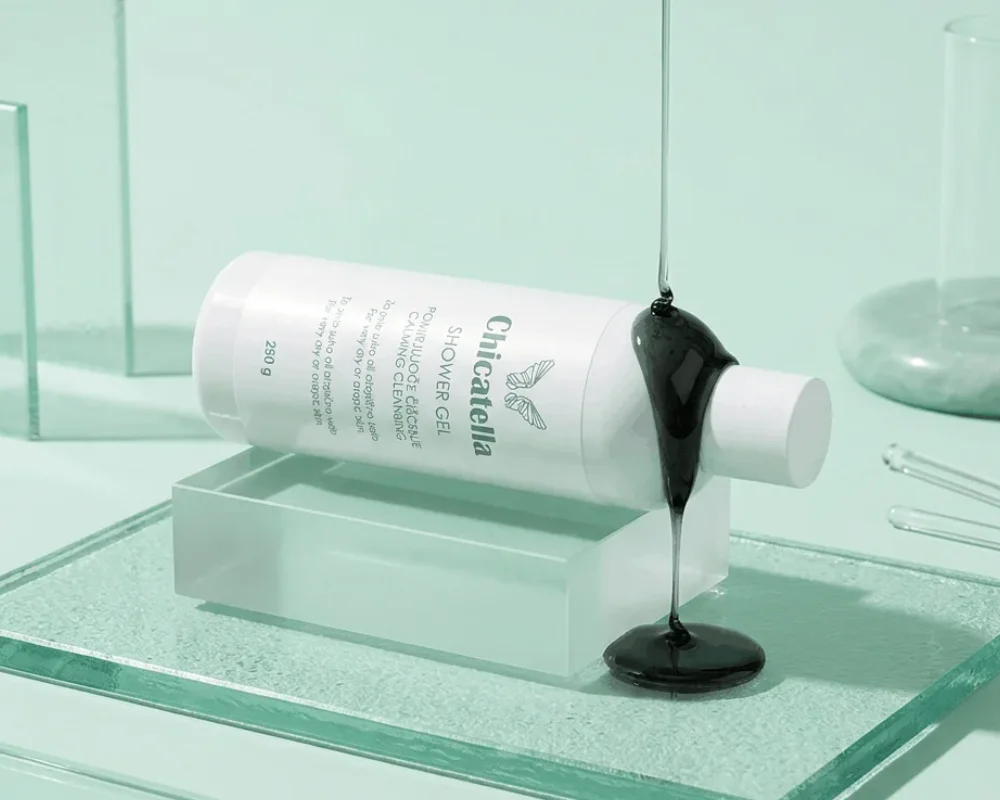
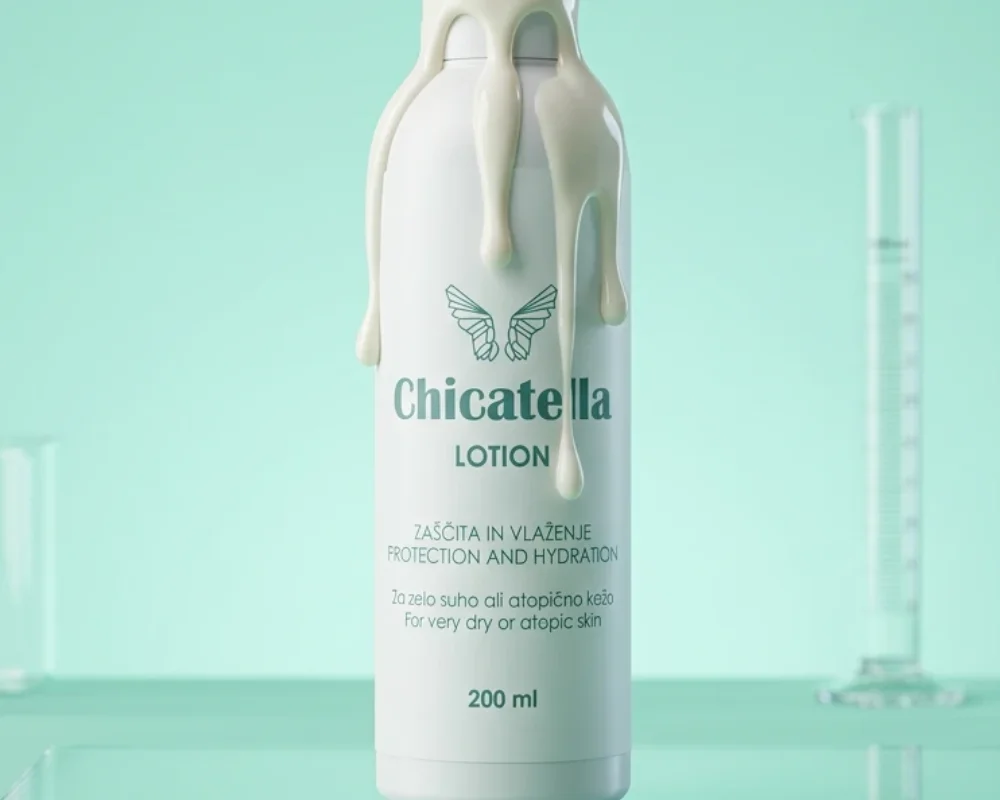
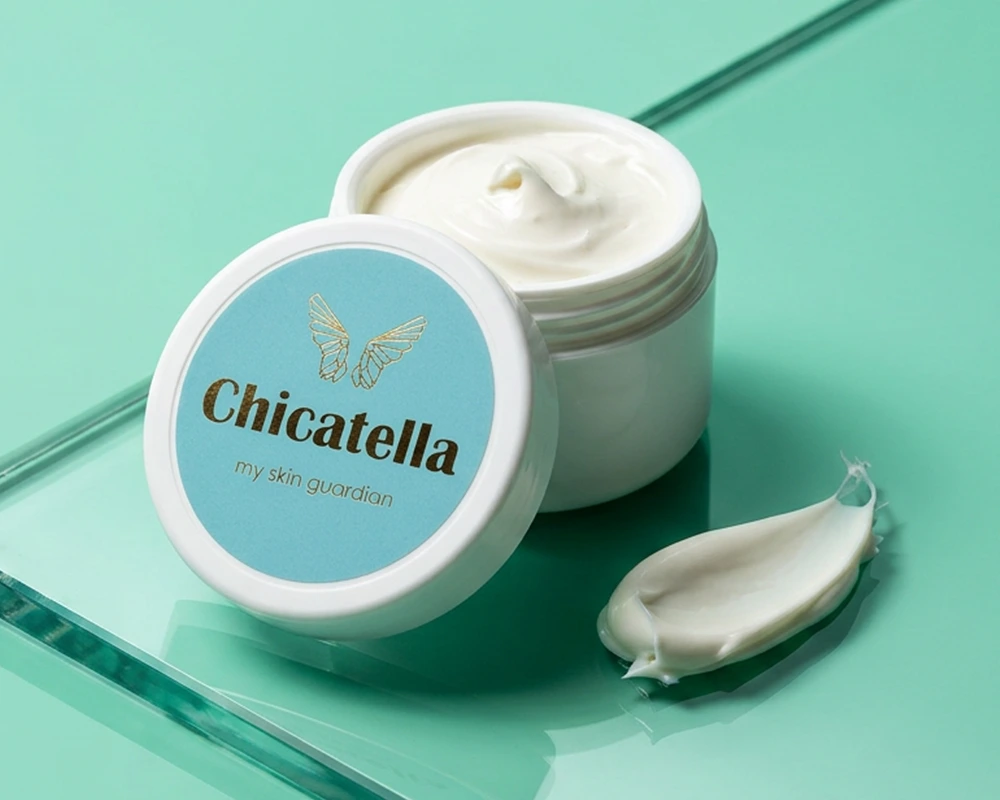
Find the right care for your skin in three steps
No guesswork. Answer three quick questions and we’ll tell you what your skin needs.
Related reading
This article helps you understand keratosis pilaris and choose care based on what bothers you most. It doesn’t diagnose anything and doesn’t replace an exam. A photo on its own isn’t enough for a diagnosis.
- 01Keratosis pilaris. DermNet. ↗︎
- 02Diagnosis and treatment. American Academy of Dermatology. ↗︎
- 03Self-care. AAD. ↗︎
- 04Keratosis pilaris. British Association of Dermatologists. ↗︎
- 05Sebaceous gland, hair shaft, and epidermal barrier abnormalities, 2015. Gruber et al. ↗︎
- 06Keratosis pilaris revisited, 2012. Thomas and Khopkar. ↗︎
- 07Lactic acid compared with salicylic acid, 2015. Kootiratrakarn et al. ↗︎
- 08Moisturizing cream with 20% urea, 2024. McCormick et al. ↗︎
- 09Keratosis pilaris treatment paradigms, 2024. Wong et al. ↗︎
- 10Updated systematic review and treatment strategies, 2025. Beyron et al. ↗︎
- 11Development and validation of KP-IGA and KPAI, 2025. Wang et al. ↗︎
- 12810-nm diode laser randomized clinical trial. Ibrahim et al., JAMA Dermatology. ↗︎
- 13755-nm alexandrite laser split-body randomized trial, 2022. Li et al. ↗︎
- 14Keratosis pilaris (PDF, in Slovenian). Slovenian Pediatrics journal. ↗︎