Seborrheic dermatitis isn’t just dandruff. It’s a balance between skin oil, the microbiome and your skin barrier
On the surface there’s oil. Underneath, there’s skin that loses too much water, plus a yeast that lives on almost everyone’s skin. Seborrheic dermatitis isn’t a story about one culprit. It’s about a balance that’s been thrown off.
Three things worth knowing up front“Chronic, but manageable. Not contagious. Not caused by poor hygiene.”

How we put this article together
Start with the short answer
What is seborrheic dermatitis?
Is seborrheic dermatitis a fungal infection?
What’s the difference between dandruff and seborrheic dermatitis?
Is seborrheic dermatitis contagious?
What actually helps with seborrheic dermatitis?
Can it show up on the face, eyebrows and around the nose?
Seborrheic dermatitis has more than one face
Eight cards: where it shows up, how to recognize it and what makes it worse. Greasy, yellowish flakes on red skin in the areas with the most oil glands are what they all have in common. The sketches are simplified; only a doctor can diagnose it.
Skin can be oily on the surface and still lose water
This is the biggest misunderstanding. When we see an oily scalp, we assume the skin is well hydrated. But those are two completely different measurements.
Oil on the surface of the skin. This is what you can feel and see.
Moisture inside the top layer of skin. You can’t see this.
How much water vapor escapes through the skin into the air.
How well the barrier keeps water in the skin.
A diagram of the direction of the difference, not of measured values.
Oiliness and hydration aren’t the same measurement. Skin can be oily on the surface while its barrier is worse at holding on to water.
A 2019 study compared 42 people with seborrheic dermatitis of the scalp with 40 people without it. The seborrheic dermatitis group had more surface lipids, higher water loss and less water in the outer skin layer.2019 study↗︎ It was a cross-sectional study: it shows a link, not cause and effect. So we can’t conclude from it that skin makes more oil to make up for missing water. The study doesn’t prove that.

It comes from a relationship, not a single cause
Tap each player. None of them explains the condition alone. It’s how they interact that creates it.
Oil glands on the scalp, face and chest release sebum. It’s not just how much there is that matters, but also what it’s made of, because that decides what’s available on the surface for microorganisms.
It isn’t only the yeast. Dry, leaky skin plays a part too.
Researchers compared two patches of skin on the same person in 37 people: one with a rash and one without. What was different?Exp Dermatol 2024↗︎
There was just as much yeast on the rash as on healthy skin. The difference was in the skin itself: where the rash was, the skin held water less well.
That’s why an antifungal shampoo alone isn’t enough for many people. Your skin also needs help to hold on to water: gentle washing and regular care that protects the surface.
One study with 37 people isn’t final proof. But it’s a good hint, and it matches what we see in real life.
You’re not alone, and it’s not “just cosmetic”
Two large analyses pulled together data from more than a hundred studies worldwide. Here are two numbers worth knowing.
people have seborrheic dermatitis. In a class of 25 kids, that’s one.
An estimate of 4.38% from a review of 121 studies with more than 1.26 million people. It varies a lot between countries.2024 meta-analysis↗︎
On a quality-of-life questionnaire, people scored 7 out of 30 points on average. At that level, the problem noticeably affects how you feel every day, but not yet every part of your life.
DLQI questionnaire, average 7.2 in 3,812 people.2026 meta-analysis↗︎
So: a common condition that really bothers people. It deserves proper care, not a shrug.
A map of the areas rich in oil glands
Where it appears isn’t random. It follows the areas with the most oil glands.
- scalp and hairline
- between the eyebrows and on the eyebrows
- creases beside the nose
- behind the ears and the outer ear canal
- beard and mustache
- edges of the eyelids
- breastbone and upper back
- larger skin folds
You may see white or yellowish flakes, redness, itching and a tight feeling. Dandruff can be a milder, less inflamed part of the same spectrum, but not all dandruff is the same as seborrheic dermatitis.
What it can be mistaken for
| Condition | What can set it apart | Common areas | Read more |
|---|---|---|---|
| Dandruff | Flaking with little or no visible redness. | Scalp | Part of the same spectrum, covered on this page |
| Seborrheic dermatitis: why it keeps coming back | Redness, itching and greasy or dry flakes. | Scalp, eyebrows, nose, ears, chest | This page |
| Psoriasis (sebopsoriasis) | Thicker plaques with sharper edges. | Scalp, behind the ears, elbows | More about psoriasis → |
| Contact dermatitis | Linked to a new product or contact with something. | Where the product was applied or touched the skin | Irritation and allergy from contact → |
| Atopic dermatitis (eczema) | Very dry skin, strong itching and a different pattern. | Face or skin folds, depending on age | Barrier, inflammation and microbiome → |
| Tinea (fungal infection) | Ring-shaped patches, breaking hair or hair loss in one spot. | Skin or scalp | Needs a doctor’s opinion |
A flare-up isn’t proof you’re doing something wrong
It helps to separate three things: causes (why someone develops the condition), associated factors (what often shows up alongside it) and flare-up triggers (what ends a calm stretch). The list below belongs to the third group.
None of these triggers applies to everyone. That’s exactly why a simple flare-up diary is useful: area, weather, products, stress, itching and time until the flare-up. After a few weeks, your own pattern usually shows up, and that’s more useful than any general list.
Calming a flare-up and keeping it calm aren’t the same job
When seborrheic dermatitis is confirmed, doctors often recommend antifungal medicines or medicated shampoos, for example with ketoconazole or ciclopirox. With strong inflammation, a doctor may suggest a short course of anti-inflammatory treatment.
Follow the directions for the specific product, or from your pharmacist or doctor, especially for the face, eyelids, children and long-lasting problems. We don’t give doses here.
- wash your scalp often enough that oil, flakes and product residue don’t build up
- how often isn’t the same for everyone: some people need every day, others twice a week
- a medicated shampoo and a regular shampoo don’t do the same job
- very hot water, scratching and harsh scrubbing increase irritation
- if flare-ups keep coming back, a doctor or pharmacist may suggest using a medicated product for maintenance
Washing less often isn’t automatically gentler, and washing every day isn’t automatically harmful.
- with ketoconazole, the chance that symptoms were still there after four weeks was 31% lower than with a placebo;
- in the studies analyzed, ketoconazole worked about as well as topical corticosteroids, but with fewer reported side effects;
- ciclopirox led to more clinical improvement than a placebo.Cochrane↗︎
An important limit: the quality of the included studies varied, and many were short and small. So here too, there’s no single recipe that works the same for everyone.
Scalp, face and cradle cap need different approaches
With a medicated shampoo, what matters is that it reaches your scalp, not just your hair, and that you leave it on as long as the directions say.
We don’t recommend putting a thick layer of greasy ointment over an adult’s whole scalp and leaving it on overnight.
Gentle cleansing, no fragrance or irritating actives during a flare-up, and care that’s light enough. Fewer steps are often better here.
The area around the eyes needs extra care and a doctor’s opinion.
Cradle cap usually runs a different, milder course than chronic seborrheic dermatitis in adults. Gentle washing helps, along with carefully softening the flakes and removing them with a soft brush. No picking.
If there’s spreading redness, oozing, a bad smell, your baby seems unwell, or it keeps spreading, have a pediatrician take a look. More: baby eczema.
Occlusion isn’t the enemy. The wrong timing is.
An occlusive layer can reduce water loss through the skin. That’s why it can help on small, flat, very dry or cracked areas. At the same time, it isn’t antifungal and doesn’t treat the underlying inflammation.
A thick occlusive layer isn’t automatically right for oily, actively inflamed, yellow-flaky or bumpy skin around hair follicles. On those areas, a heavy ointment can feel unpleasant, and for some people it can even make things worse.
A thin protective layer can make sense.
Proper treatment first, and a lighter routine.
No heavy occlusion; see a doctor if needed.
Don’t judge from a photo alone.
Two oversimplifications we won’t repeat: that every oil or ointment “feeds Malassezia,” and that occlusion suits every flare-up. Both are too black-and-white.
Probiotic skin care is interesting. The evidence isn’t as big as the promises yet.
- 25 people took part;
- for one week, they used an oil suspension with two selected bacterial strains;
- signs of seborrheic dermatitis improved;
- the relative share of Malassezia in the sample dropped for a while, then moved back toward the starting level after they stopped;
- the study didn’t have a proper control group and was short.Sci Rep 2024↗︎
This is the relative share in a microbiological sample, not the absolute number of yeasts on the skin. After they stopped, the value went almost back to where it started.
The results are interesting, but they don’t yet prove that “probiotic cosmetics” can treat seborrheic dermatitis.
A signal, not a recipe
A 2024 systematic review covered 13 studies and 13,906 participants. They looked at eating patterns, body weight, alcohol, vitamins and minerals. The results were mixed and mostly observational.2024 review↗︎
When to get help
What people ask most
Do I have to wash my hair every day?
Can I use oil on my scalp?
Does seborrheic dermatitis cause hair loss?
Does sun help?
Are seborrheic and seborrhoeic dermatitis the same thing?
Why does it come back after treatment?
A calm scalp and skin without flaking: every day, not just during treatment
A medicated shampoo calms a flare-up. But what about the days in between? Chicatella takes care of the days between washes: it cleanses gently, locks in moisture and protects your skin to help the calm stretch last longer.
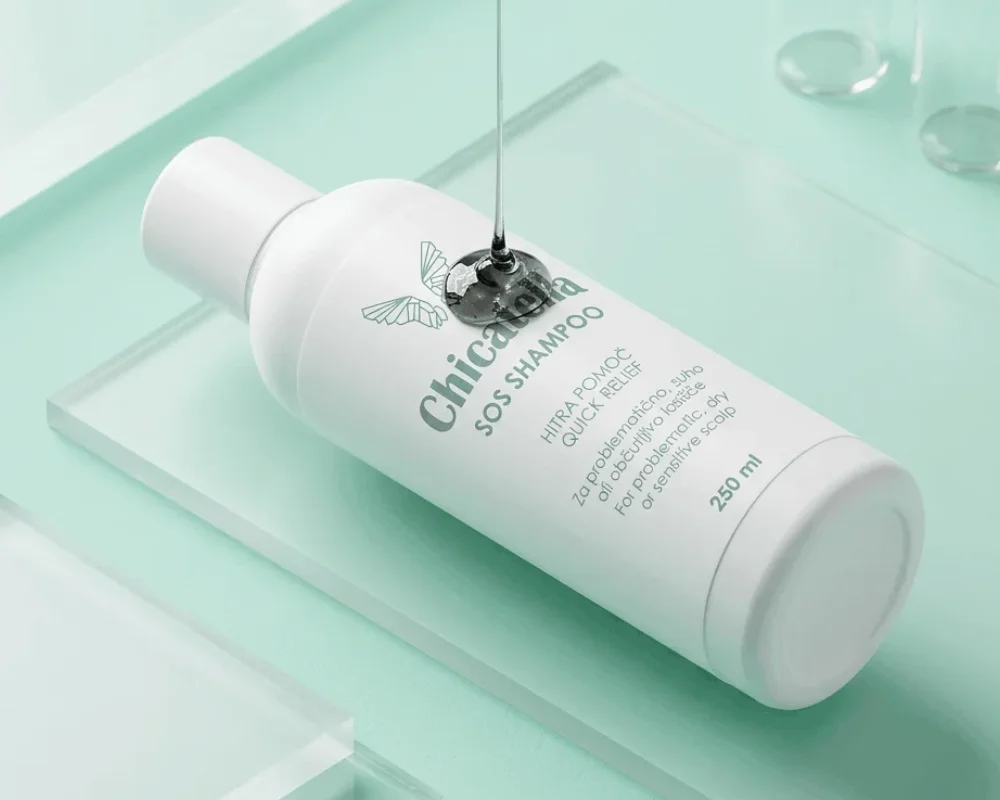
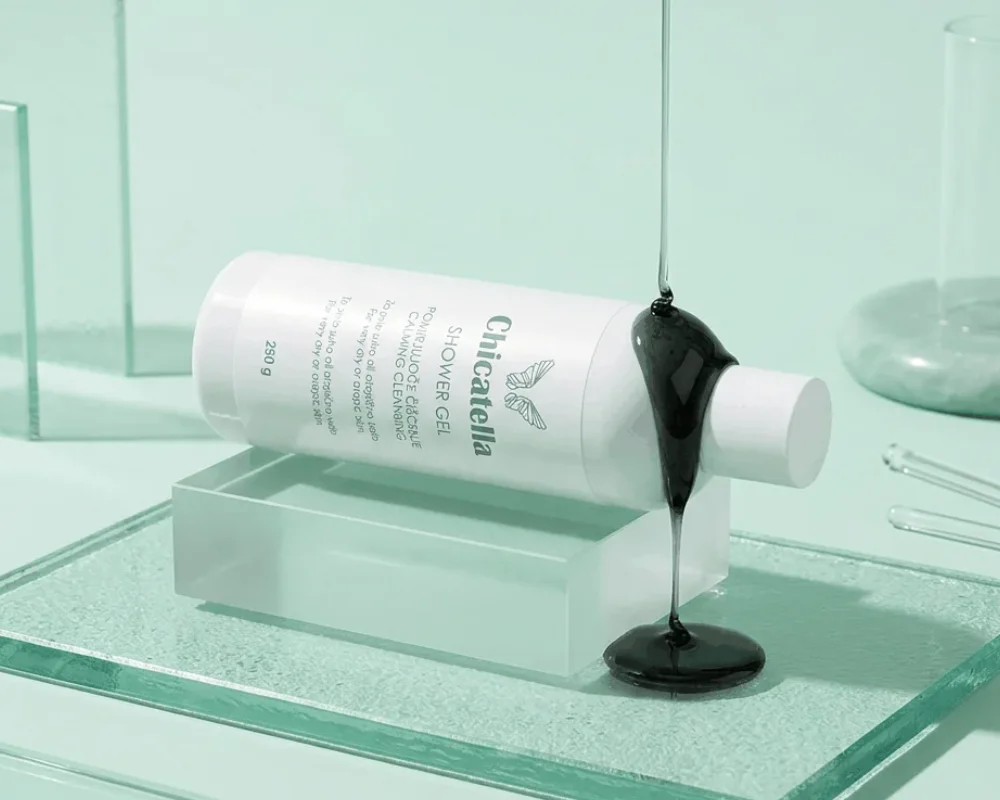
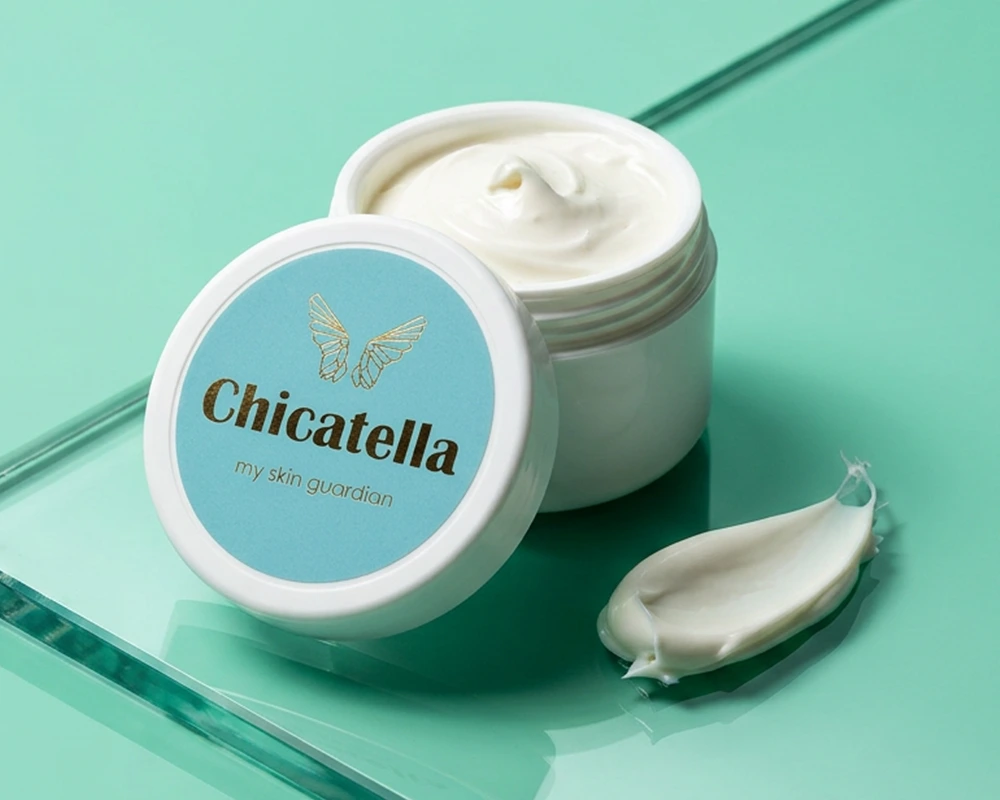
Chicatella is cosmetic skin care. It doesn’t treat seborrheic dermatitis and doesn’t replace antifungal or anti-inflammatory treatment. Don’t apply the ointment to your whole scalp.
When supportive care helps flaky, irritated skin
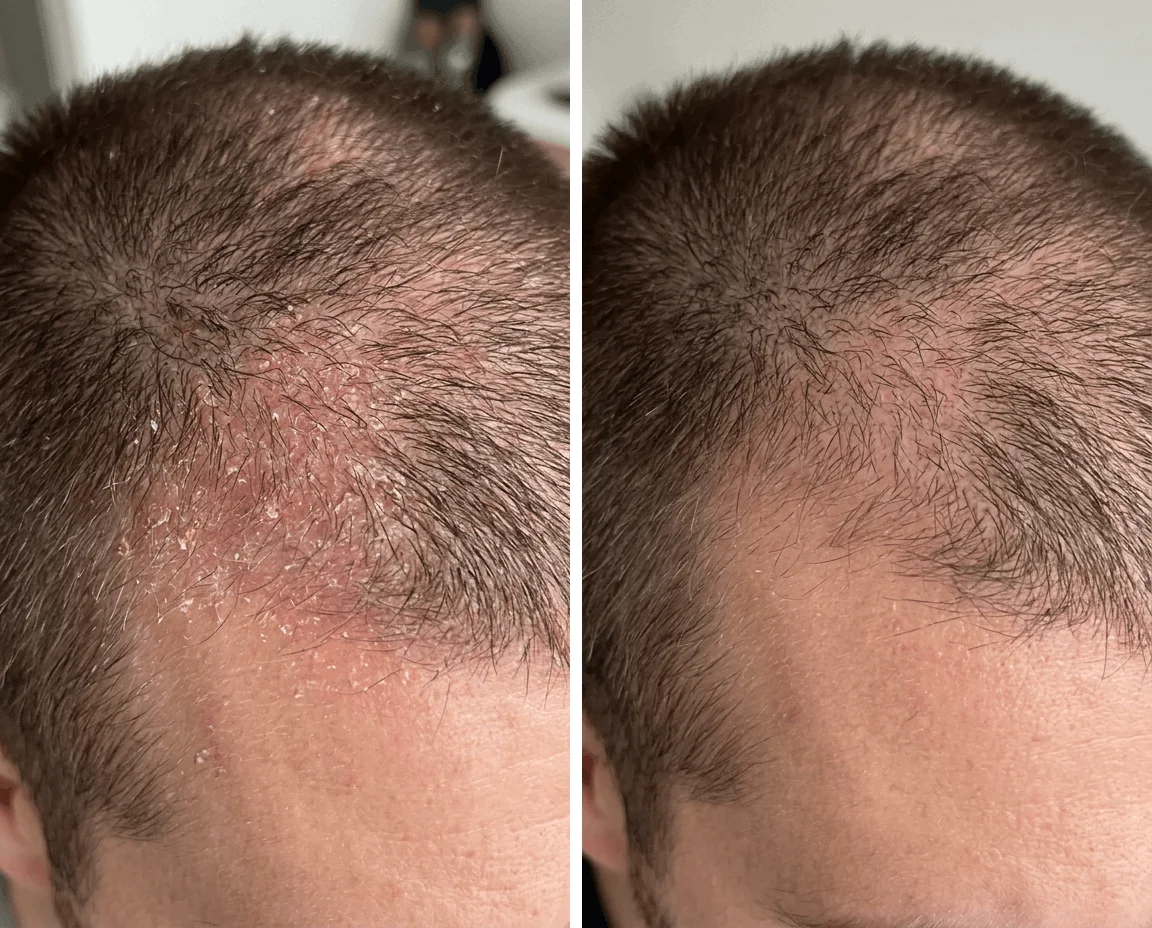
The same skin before and after care. Customer photos, shared with permission.
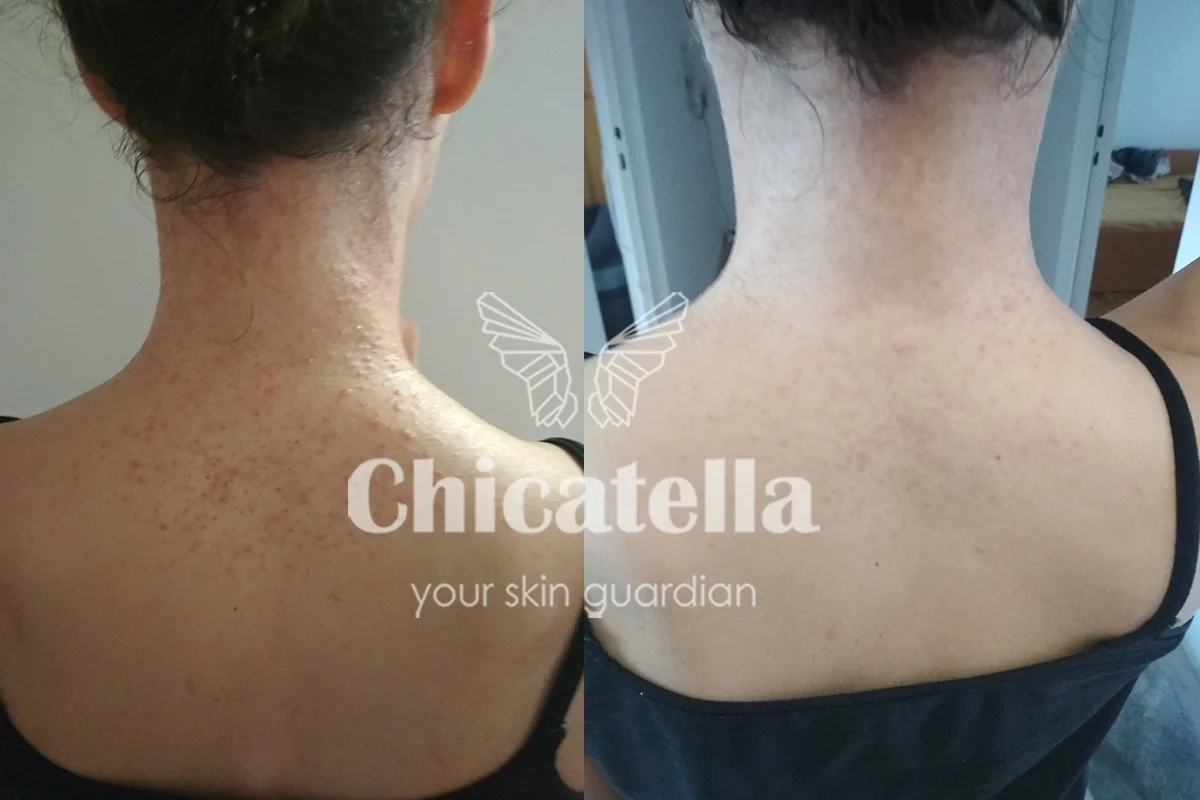
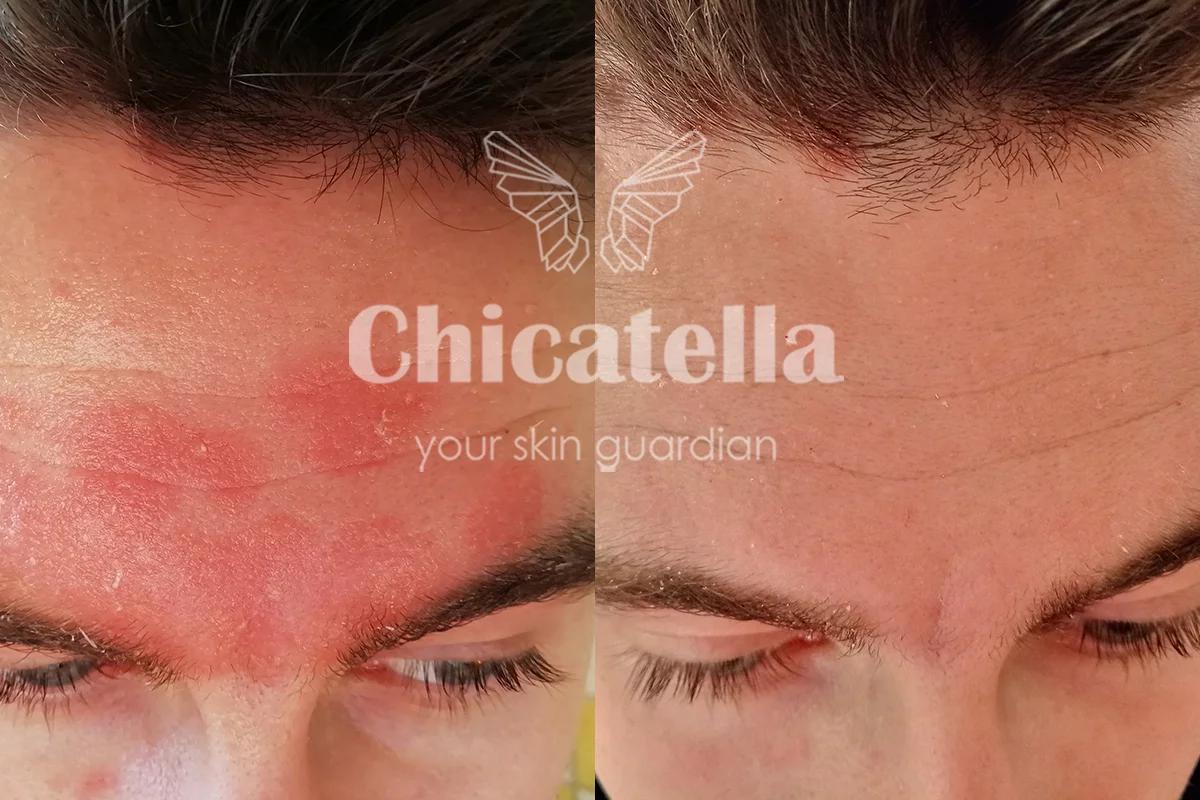
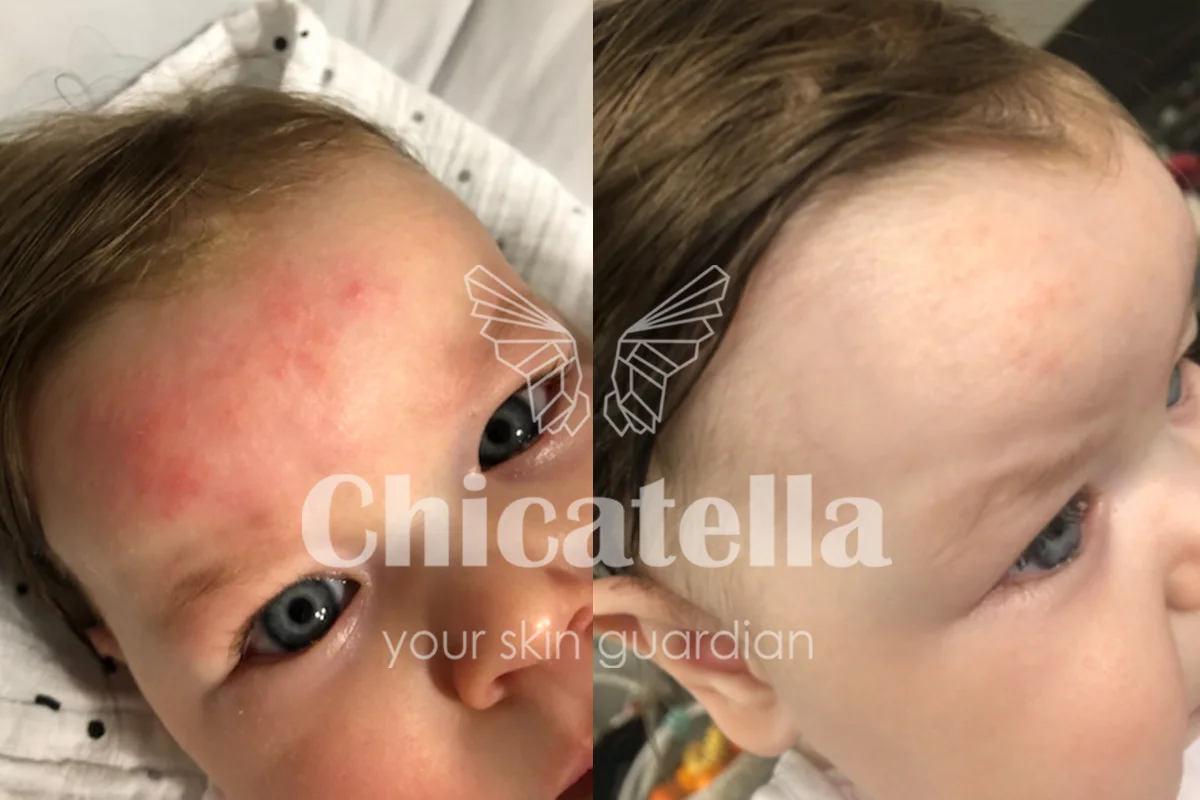
These photos show individual experiences with cosmetic care for flaky or irritated skin. Chicatella isn’t a medicine for seborrheic dermatitis, the photo doesn’t confirm a diagnosis, and individual results may vary.
Tell similar conditions apart
Find the right care for your skin in three steps
No guesswork. Answer three quick questions and we’ll tell you what your skin needs.
This content is for information only and doesn’t replace a doctor’s exam, diagnosis or treatment. Similar skin conditions can need different care. Chicatella products are cosmetic skin care products, not medicines.
- 01Seborrhoeic dermatitis. DermNet NZ. ↗︎
- 02The global prevalence of seborrheic dermatitis: a systematic review and meta-analysis. 2024. ↗︎
- 03Assessing biophysical and physiological profiles of scalp seborrheic dermatitis. 2019. ↗︎
- 04Lesional skin of seborrheic dermatitis patients: barrier dysfunction and ceramide composition. Exp Dermatol, 2024. ↗︎
- 05Seborrheic dermatitis: from microbiome and skin barrier dysfunction to novel therapeutic approaches. Cosmetics, 2024. ↗︎
- 06Antifungal treatments applied to the skin for seborrhoeic dermatitis. Cochrane. ↗︎
- 07Modulating the skin mycobiome-bacteriome with a probiotic-enriched oily suspension. Sci Rep, 2024. ↗︎
- 08Nutrition, obesity, and seborrheic dermatitis: a systematic review. 2024. ↗︎
- 09Roflumilast foam 0.3%: a phase 3 study. JAAD. ↗︎
- 10Impact of seborrheic dermatitis on quality of life. Dermatol Pract Concept, 2026. ↗︎