Rosacea: one red face, five different causes
Your face flushes in the heat. Then it starts to burn after washing. A cream that felt fine yesterday stings today. A few weeks later small bumps show up, and it all gets one name: rosacea (said roh-ZAY-shuh). But that one word can cover several different processes, so the answer isn’t the same for everyone.
Rosacea isn’t caused by poor hygiene, and it isn’t something you did to yourself.
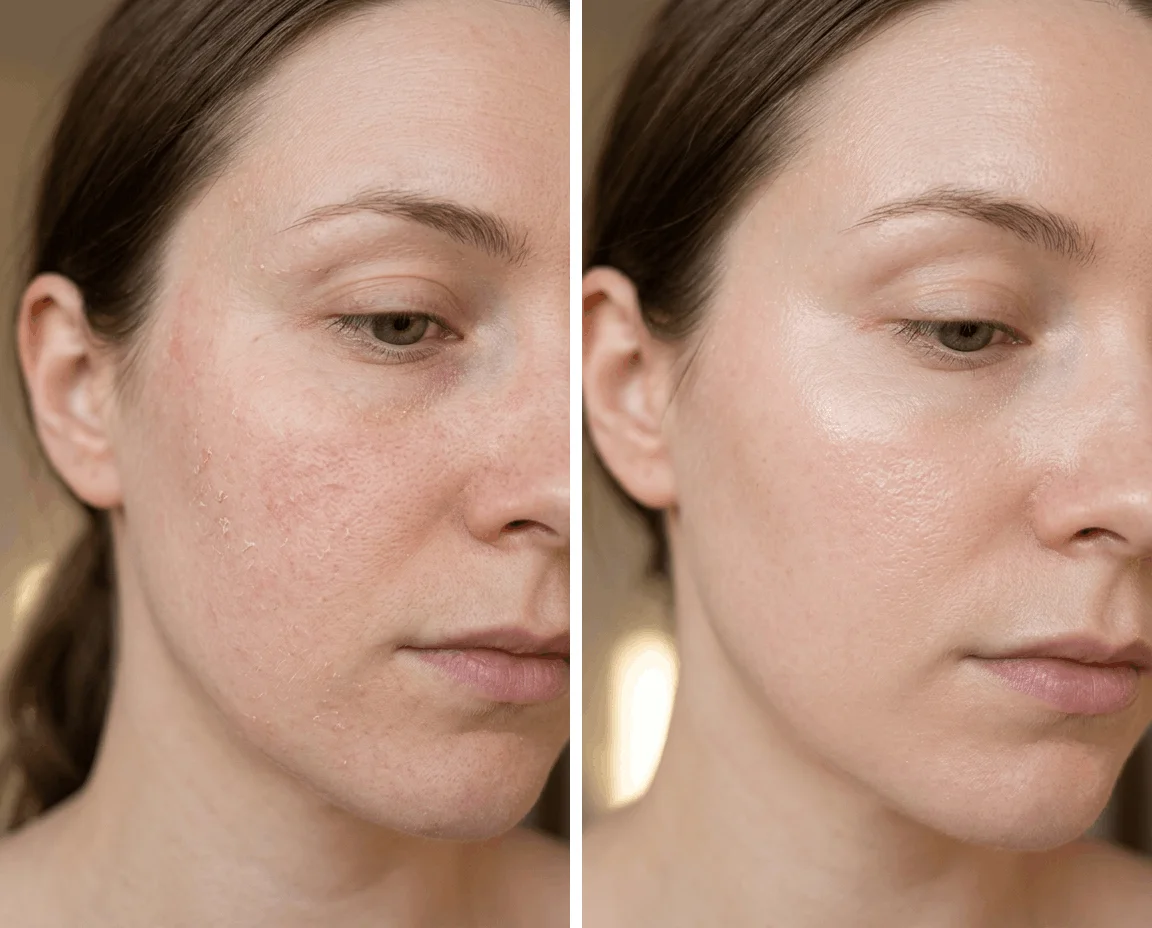
How we put this article together
The short version
Rosacea is more than redness, and it isn’t the same for everyone.
Today, treatment is chosen based on the signs you can see and what you feel, not just the old four “types.”
Sun, heat, stress, cold or alcohol can set off a flare, but they aren’t necessarily the root cause.
A damaged skin barrier can play a big part in dryness, tightness, burning and trouble tolerating products.
Moisturizing, protective skin care helps with that part of the problem. It doesn’t remove visible blood vessels, doesn’t treat eye problems and doesn’t replace medicine for bumps.
Eye pain, sensitivity to light or blurry vision need to be checked by a doctor.14↗︎
Five signs people often mix up
Swipe on your phone, use the arrows on a computer. These are illustrations. We don’t have our own approved rosacea photos, so we’d rather show accurate drawings than photos that could mislead.
Answers to the most common questions first
What is rosacea?
What are the most common signs?
How do I know it’s not just sensitive skin?
Is rosacea the same as acne?
What most often triggers flushing?
Is rosacea contagious?
Does Demodex mean poor hygiene?
Which cream is right for rosacea?
Can an occlusive ointment help with dry rosacea?
Can diet or probiotics get rid of rosacea?
When do I need a dermatologist, and when an eye exam?
The rosacea dashboard: five switches, one face
On the left is what you notice. On the right are the five systems behind it. The colored dots next to each sign show which systems are likely involved. This isn’t a diagnostic test. It’s here to show why the same diagnosis doesn’t mean the same needs.
Flushing that comes and goes, lasting redness and small visible blood vessels.
Heat, stinging, prickling and a feeling that your skin burns more than it looks red.
Red bumps, bumps with a pus-filled tip, and swelling.
Flaking, roughness, tightness, water loss and products that suddenly sting.
Natural residents of the skin that, in some people, are linked to a stronger skin reaction.
Heat directly widens the small surface blood vessels, and the nerves amplify the feeling. What helps most here is spotting your personal triggers and overheating less. A cream won’t fix this part.
When the protective barrier is losing water, irritants reach sensitive nerve endings more easily. This is the part of the problem that most often responds to a gentle routine and good moisturizing care.
Inflammation is front and center, in some people together with a higher density of Demodex. That’s what dermatology treatments target, not a moisturizer.
Think of the barrier first. But greasier scales by the nose and eyebrows can also point to seborrheic dermatitis, and itching after a new product to contact dermatitis. It’s worth telling them apart.
Widened surface blood vessels stay visible even when the skin is otherwise calm. Skin care doesn’t close them; that’s a job for a vascular laser or IPL.
Different redness, different problems
| What you notice | What’s likely front and center | What everyday skin care can do | What often needs a different approach |
|---|---|---|---|
| Occasional flushing and heat | blood vessels and nerves | sun protection, less overheating, a gentle routine | managing your own triggers, a doctor if needed |
| Persistent redness | blood vessel response | comfort, barrier protection, SPF and, if you like, color-correcting makeup | prescription medicine for redness, or a vascular laser or IPL |
| Visible blood vessels | widened surface blood vessels | skin care doesn’t remove them, but it can cut down on extra irritation | laser or light-based treatments |
| Red bumps and bumps with a pus-filled tip | inflammatory or immune response | gentle supportive care | dermatology treatment chosen for bumps |
| Flaking, tightness and stinging | damaged barrier and sensitive nerves | this is where the right moisturizing, emollient and protective care makes the most sense | an exam if it doesn’t settle down or the diagnosis isn’t clear |
| Eye problems | eyelids, tear film and the surface of the eye | face products don’t go in the eye | a doctor or ophthalmologist |
Why medicine is dropping the old four boxes
Rosacea used to be sorted into four subtypes. Today, guidelines increasingly go sign by sign, looking at what’s actually front and center for each person.3↗︎
One person, one box. Whatever didn’t fit was left out of the picture.
The signs overlap. The same person can have several problems at once, so they can’t be shut into one box.
A systematic review of 39 studies with 9,190 patients. Don’t read these numbers as slices of one pie. The studies differed from each other, the signs overlap, and the same person can have several problems at once. So “What’s front and center for me right now?” is a more useful question than “Which box do I belong in?”6↗︎
What the numbers tell us, and what they don’t
Four big numbers from research. Next to each one we also say what it doesn’t tell you. That matters just as much.
A systematic review of 32 studies covering more than 26.5 million people estimated that rosacea affects about this share of adults.5↗︎
The estimates depended heavily on how rosacea was diagnosed. It isn’t an exact count for every country.
adults from 32 clinical trials were included in a 2026 network meta-analysis that compared ten topical treatments. How well they work varies.13↗︎
The studies were much better at measuring bumps than lasting redness or how the skin feels day to day. So “the best treatment” means little unless you say what it’s for.
people from 52 studies showed that rosacea really does affect quality of life, and that treatment can help with that too.15↗︎
Your face is part of who you are. Feeling uncomfortable or embarrassed makes complete sense. You’re not overreacting.
Why is coffee fine today but not tomorrow?
Picture a glass. Over the day, small stresses add up in it. When your skin is already irritated, one small extra trigger can make the glass overflow: the same coffee that was no problem yesterday.
The “trigger threshold” is a useful simplified model, not a proven formula. That’s exactly why it makes no sense to ban everything in advance.AAD↗︎
You’re not looking for a list of banned things. You’re looking for a pattern that repeats for you.
The first row is a made-up example. Copy the diary into a notebook or your phone and mark what showed up each day. It isn’t a diagnostic tool.

Why your face can burn more than it looks red
Three layers, one feeling. When the surface leaks, irritants reach the nerves faster, and the nerves send a signal to the blood vessels.
the barrier loses more water
the skin gets more sensitive
washing or a product stings sooner
you start switching products or cleansing even more
the barrier gets even less time to recover
Step five leads back to step one. That’s why it makes sense to break the cycle at the barrier: with less washing and fewer product switches, not more.
It directly widens blood vessels and makes the feeling of heat stronger.
Cold, wind and quick temperature changes can strain the barrier and set off a strong blood vessel response. So “cold” isn’t always the same as “soothing.”
Normal roommate or something that makes it worse?
Demodex is a microscopic resident of hair follicles and oil glands. It lives on perfectly healthy skin too. It isn’t a sign of being unclean, and rosacea isn’t contagious.
Having it is normal. The goal isn’t sterile skin.
A review of 23 comparison studies found it more often in people with rosacea.10↗︎
In some people, more likely an amplifier than the whole explanation.
Rosacea, or something that looks like it?
| Possible condition | Helpful clue |
|---|---|
| Rosacea: one red face, five different causes | Flushing, lasting redness in the center of the face, visible blood vessels; bumps without blackheads. |
| Acne | Blackheads and whiteheads point more toward acne than rosacea. |
| Perioral dermatitis | Tiny bumps around the mouth, with a fairly clear border right next to the lips. |
| Seborrheic dermatitis | Greasier scales by the nose, eyebrows and on the scalp. |
| Contact dermatitis | Strong itching and a clear link to a new product. |
| Lupus rash | A rash that won’t go away, together with other symptoms in the body, needs a doctor’s opinion. |
For the bigger picture, see everything the word dermatitis covers or why very dry skin needs a different texture.
What your eyes can tell you
Six signs people rarely connect with rosacea. The eye can show them one after another.
Eye signs can show up before the skin signs, at the same time, or later.
Eye pain, sensitivity to light or changes in vision aren’t a job for a skin care cream. They need a professional opinion quickly.14↗︎
Pick the tool by the goal
Medicines aren’t competing with skin care here. They show that medicine has different tools for different goals.4↗︎
The slider at the bottom of each card shows where the tool’s focus is: skin care at home or the dermatologist.
Spotting your personal triggers, avoiding overheating, sun protection and, if needed, a talk with a dermatologist about treating the blood vessel response.
For some people, a dermatologist may use medicines that temporarily narrow the surface blood vessels, or a vascular laser or IPL. Skin care supports comfort and cuts down on extra irritation, but it isn’t a laser in a jar.
Guidelines include azelaic acid, ivermectin, metronidazole and, for more pronounced cases, certain oral or systemic treatments. These target a different part of rosacea than a moisturizer does.
This is where the right skin care has the best chance of a noticeable difference: gentle cleansing, less rubbing, a moisturizer, emollients, occlusive protection if needed, and SPF every day.
This one leads to the dermatologist. Creams can’t remove blood vessels that have already widened or reshape thickened tissue.
A two-week skin care “reset”
The reset applies to skin care you don’t need, not to stopping prescribed treatment on your own.
- If your skin isn’t oily, lukewarm water may be enough; otherwise a gentle cleanser.
- A moisturizer your skin tolerates well.
- Broad-spectrum SPF 30 or higher.
- Wash your face with lukewarm water and your fingertips.
- Use any prescribed treatment as your doctor planned.
- Once your face is dry, add moisturizer.
- On especially dry or flaking spots, a thin layer of richer protective care if needed.
- no scrubs, brushes or rubbing;
- no switching products every day;
- add only one new product at a time;
- watch burning, tightness, flaking, redness and bumps as separate signs;
- take photos of your skin in similar light.
To keep track, you can use the 14-day diary above. It isn’t a diagnostic tool.12↗︎
Humectant, emollient or occlusive: what does rosacea need?
Helps draw in and hold water in the top layer of the skin.
Fills in tiny uneven spots and makes skin softer.
Forms a protective layer and cuts down water evaporation.
With dry rosacea you usually don’t have to choose between three opposing philosophies. A good cream often combines several functions, and you adjust the balance to how dry, oily, hot or sensitive your skin is.
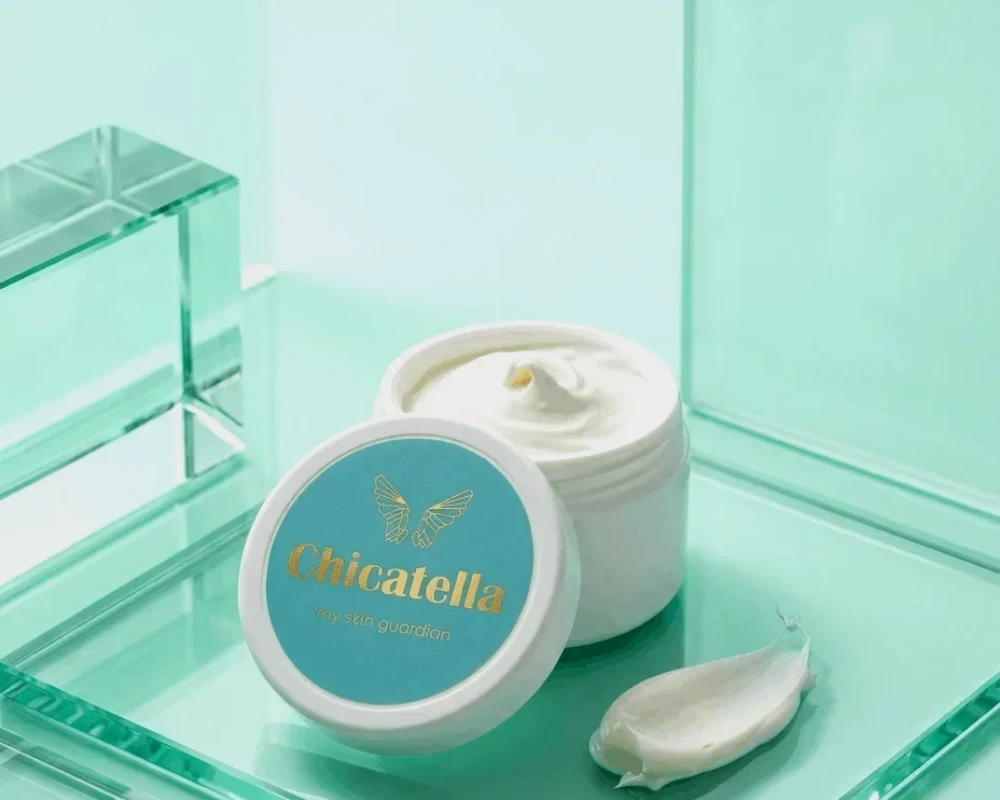
When rosacea is dry too, good barrier care can make a big difference
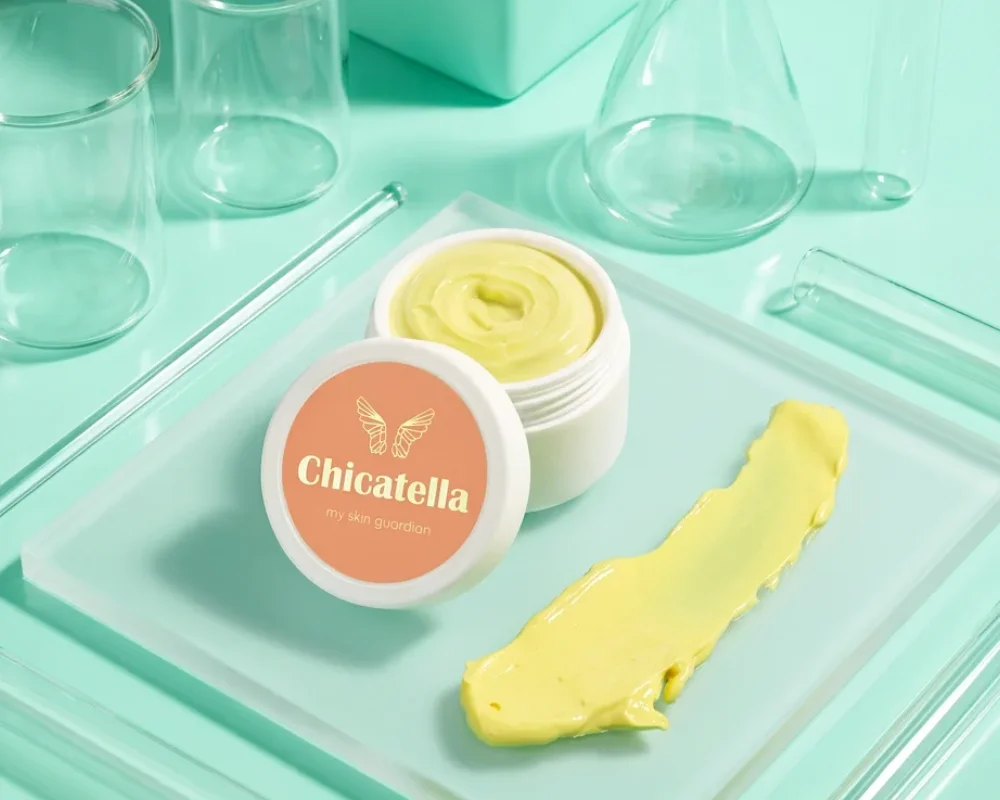
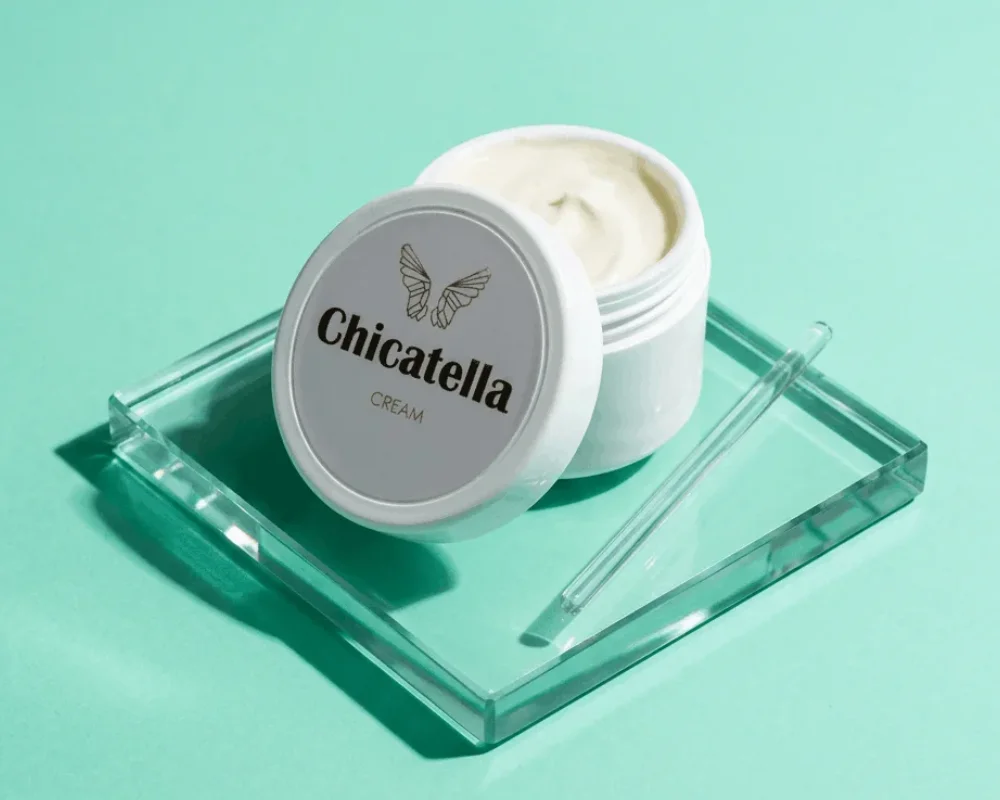
Chicatella isn’t a medicine for rosacea. It was made for skin that loses moisture, flakes, feels tight and needs protection from the outside world. For many people with rosacea that’s an important part of the problem, and a part that thoughtful everyday skin care can address really well.
If it’s not just rosacea
Find the right care for your skin in three steps
No guesswork. Answer three quick questions and we’ll tell you what your skin needs.
This article helps you understand rosacea and choose everyday skin care, but it can’t diagnose anything or replace an exam. Chicatella products are cosmetic skin care products, not medicines.
- 01Rosacea: symptoms and causes. NIAMS. ↗︎
- 02Diagnosis, treatment and steps to take. NIAMS. ↗︎
- 03Global ROSacea COnsensus 2019 phenotype recommendations. ↗︎
- 04S2k guideline: Rosacea, 2022. ↗︎
- 05Incidence and prevalence of rosacea: systematic review and meta-analysis. ↗︎
- 06Assessment of Frequency of Rosacea Subtypes in 9,190 Patients. ↗︎
- 07Biomarkers in rosacea: A systematic review. ↗︎
- 08The role of skin barrier and immune abnormalities in rosacea, 2025. ↗︎
- 09Evidence of Barrier Deficiency in Rosacea. ↗︎
- 10Evidence for the Clinical Association between Demodex and Rosacea. ↗︎
- 11Rosacea, microbiome and probiotics: the gut-skin axis. ↗︎
- 127 rosacea skin care tips. American Academy of Dermatology. ↗︎
- 13Topical Preparations for Moderate to Severe Rosacea: 2026 network meta-analysis. JAMA Dermatology. ↗︎
- 14Ocular Rosacea: An Updated Review. ↗︎
- 15Health-related Quality of Life of Patients with Rosacea. ↗︎
- 16Rosacea. British Association of Dermatologists. ↗︎