FREE SHIPPING ON 2 OR MORE·30-DAY GUARANTEE, KEEP THE PRODUCT·MICROBIOME-FRIENDLY CARE·FREE SHIPPING ON 2 OR MORE·30-DAY GUARANTEE, KEEP THE PRODUCT·MICROBIOME-FRIENDLY CARE·
Guide · skin conditions

Eczema in children isn’t one condition. It’s six different stories.

“Dermatitis” basically means inflamed skin. But in kids, that one word covers six different conditions that look different, need different care and clear up at different speeds.

Where it shows up on the body and how old your child is tell you the most about which type it is. This guide will help you figure out which story is probably yours, what you can do at home and when it’s time to see a doctor.

Itch, a sharp edge and symmetry: three things to look for when your child has a rash. 

If your child is under one year old, also read baby eczema.
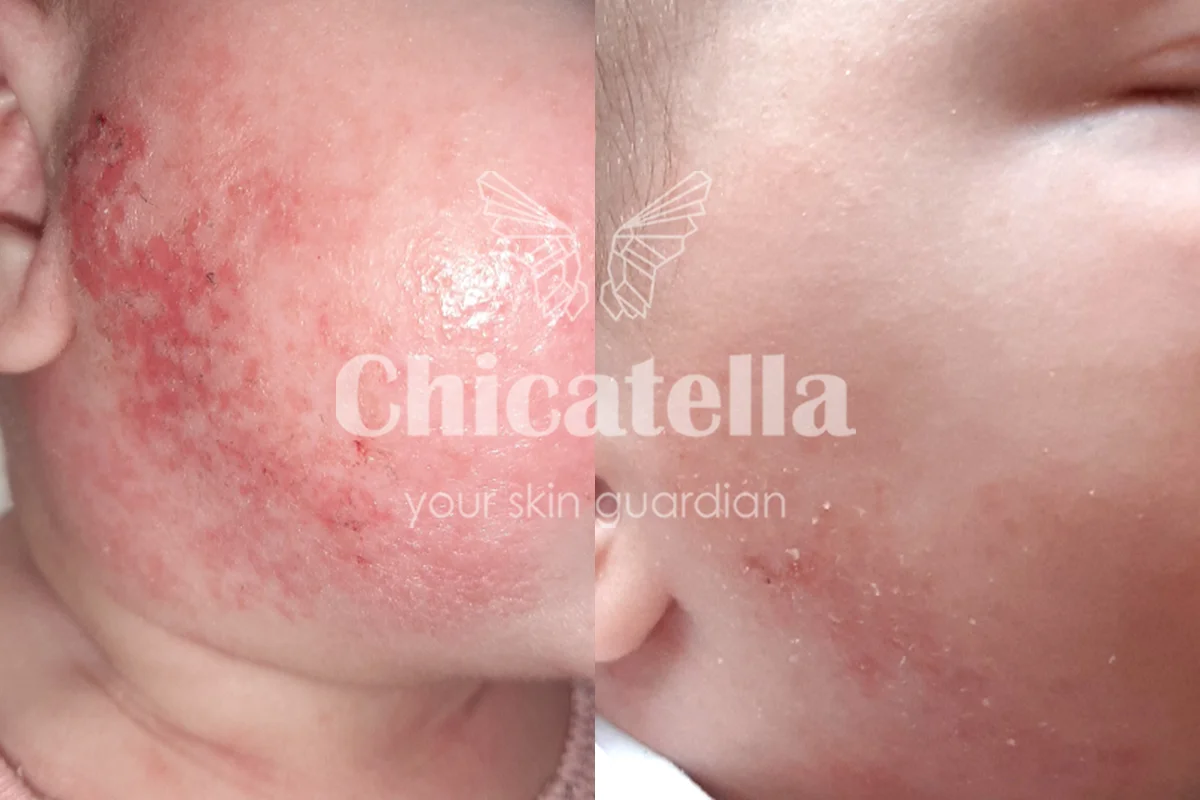
Eczema in children – red, inflamed rash on a baby’s cheek before and calmer skin after
Photo shared with permission. It shows one way a skin condition can look on a child’s cheek and is not a diagnosis.
Reading time
≈ 12 min
Published
October 2026
Medically reviewed
October 2026
How we put this article together
This article is based on pediatric skin guidelines, Cochrane and other systematic reviews, and medical literature checked through October 2026. Every figure links to its source. It’s meant to help you understand your child’s skin and choose everyday care, not to diagnose. The article was medically reviewed by prim. Jasna Cuk Rupnik, MD. Chicatella publishes this article and sells the products shown near the end.
If you’ve got 30 seconds

Five things worth knowing before you read on

  1. 01
    It’s not one condition

    Six different conditions share the same word. Where it is on the body and your child’s age tell you the most about which one it is.

  2. 02
    Itch is the key

    Atopic and contact dermatitis itch. Cradle cap and diaper rash usually don’t. That’s your first filter.

  3. 03
    Most of it passes

    Cradle cap clears in the first year, and diaper rash in a few days with the right care. Atopic dermatitis keeps coming back, but it can be calmed.

  4. 04
    Skin care isn’t medicine

    Skin care helps the skin barrier repair itself. Inflammation that won’t settle down is a job for the doctor.

Most common questions

Eczema in children: what do parents ask most?

Short answers to start with. Each one is explained in more detail further down the page.

What is dermatitis in children?
An umbrella term for inflamed skin: redness, dryness, scaling, sometimes blisters or cracks. In kids, the most common types are atopic dermatitis (the most common type of eczema), diaper rash and seborrheic dermatitis, followed by contact, perioral and nummular dermatitis. Each has its own cause and its own care, so the word “dermatitis” alone doesn’t tell you what to do.
What does eczema look like in children?
It depends on the type and the age. In babies it’s often red, rough cheeks, yellow scales on the head or redness under the diaper. In toddlers it’s red, itchy skin in the creases of the elbows and knees. In school-age kids it’s dry, thickened patches in the skin folds, on the hands, or round patches on the legs. On darker skin, inflammation looks more purple or brown than red.
What causes dermatitis in children?
It varies. In atopic dermatitis, kids inherit a weaker skin barrier and a tendency to inflammation. Diaper rash comes from moisture, rubbing and stool. Seborrheic dermatitis is probably a reaction to skin yeasts and the mother’s hormones. Contact dermatitis comes from touching something that irritates the skin or triggers an allergy. Perioral dermatitis often follows long use of steroid creams on the face, pacifiers and drool. Food is the cause less often than parents think.
How is dermatitis in children treated?
For every type, the basics are gentle washing and protecting the skin. Diaper rash settles with frequent changes and a barrier paste, cradle cap with oil and a soft brush, contact dermatitis by removing the trigger. Atopic dermatitis needs regular care and, during a flare-up, an anti-inflammatory medicine as your doctor directs. Steroid creams are safe and effective when they’re used correctly.3↗︎
How long does dermatitis last in children?
Diaper rash lasts a few days with the right care. Cradle cap lasts a few weeks to months and is gone by the first birthday. Contact dermatitis clears one to two weeks after the trigger is removed. Atopic dermatitis is long-term and comes back in flare-ups, but for many kids it calms down a lot by school age.
Is eczema in children contagious?
No. No type of dermatitis is contagious. What is contagious are infections that can look similar (impetigo, fungal infections, scabies), so if a rash is spreading through your family or daycare, have a doctor take a look.
When should a child with dermatitis see a doctor?
Right away if your child has a fever and a rash, honey-colored crusts or pus-filled blisters, clusters of small identical blisters on the face, swollen lips or eyelids, or if your baby is under 3 months old. Otherwise, when the rash doesn’t settle within one to two weeks despite good care, or when the itch is costing your child sleep.
Six types

One word, six different stories

Each sketch shows where on a child’s body that type usually shows up and how to recognize it. The sketches are simplified and aren’t a self-diagnosis tool. Swipe or use the arrows to see them all.

01 · Cheeks, skin folds, neck
Atopic dermatitis

The most common one. Very itchy, the skin is dry and rough, and flare-ups come back in waves. In babies on the cheeks and forehead, in toddlers in the skin folds.

ITCHY · COMES BACK
02 · Under the diaper
Diaper rash

Red, sometimes shiny skin where the diaper presses against the skin. The deep folds are usually spared, because urine and stool don’t reach them.

MOISTURE · RUBBING
03 · Scalp, eyebrows, folds
Seborrheic dermatitis

Cradle cap is really seborrheic dermatitis: yellowish, greasy scales on a baby’s head, sometimes also on the eyebrows and in the folds. It usually doesn’t itch and goes away on its own in the first year.

NOT ITCHY · CLEARS ON ITS OWN
04 · Wherever something touches
Contact dermatitis

A sharply outlined rash in the shape of whatever touched the skin: a jeans button, a bracelet, a scented wipe, a sticky bandage. The spot tells you the cause.

SHARP EDGE · SHAPE OF AN OBJECT
05 · Around the mouth and nose
Perioral dermatitis

Tiny red bumps around the mouth, with a narrow strip right next to the lips staying clear. Often after long use of steroid creams on the face, or from a pacifier and drooling.

AROUND THE MOUTH · LIPS CLEAR
06 · Legs, arms, torso
Nummular dermatitis

Round, coin-shaped patches of dry, itchy skin, often on the legs in winter. It can be mistaken for a fungal infection, so have a doctor look at it.

COINS · IN WINTER
By age

Same child, another year, another spot on the body

Age is the best first clue. Pick your child’s age and see what’s most likely at that stage and where.

0–12 MONTHS

Cradle cap on the head, diaper rash under the diaper, atopic dermatitis on the cheeks and forehead. The skin around the mouth is often red from drool, not an allergy. With atopic dermatitis, the diaper area usually stays clear, because the diaper keeps it moist.

1–5 YEARS

Atopic dermatitis moves to the creases of the elbows and knees, the wrists, ankles and neck. Scratch marks and thickened skin appear. Contact dermatitis shows up where metal buttons, bracelets and scented wipes touch the skin.

6–12 YEARS

The skin folds stay, and the hands, eyelids and lips join in. Nummular “coins” on the legs in winter. Perioral dermatitis around the mouth, especially after long use of steroid creams on the face. Eczema on the feet from closed shoes can show up too.

Three questions

Before you call the doctor, answer these three

Your answers won’t give you a diagnosis, but they’ll save the doctor five minutes and save you a lot of guessing.

Does your child itch?
YES

More likely atopic or contact dermatitis. Your child rubs against the sheets, sleeps worse, and there are scratch marks on the skin.

NO

More likely cradle cap or diaper rash. Your baby is in a good mood despite the redness.

Does the rash have a sharp edge?
YES

More likely contact dermatitis or diaper rash. The shape follows an object or the edge of the diaper.

NO

More likely atopic dermatitis. The redness fades into healthy skin with no clear border.

Does it look the same on both sides of the body?
YES

More likely atopic dermatitis (both cheeks, both elbow creases). The body is reacting from the inside.

NO

More likely contact or nummular dermatitis. Something from the outside affected one spot.

Fungal infections, scabies and bacterial infection (impetigo) can look like dermatitis, and you can’t tell them apart at home. That’s why any rash that doesn’t settle within a week should be seen by a doctor.

★ The Chicatella community

Be the first to know

Sign up and be the first to get our latest science-backed skin care tips. No boring emails, just good things for your skin.

Join 23,400+ fans · no spam, unsubscribe in one click
Diaper rash

What’s going on under the diaper?

Moisture, rubbing and enzymes from stool soften the skin and leave it open to irritation. Research reviews agree: what helps most reliably is changing diapers often and a protective layer of zinc oxide or petroleum jelly that keeps moisture off the skin at every change.2↗︎

  • 01Change the diaper as soon as it’s wet or dirty. At night too, if the skin is red.
  • 02Clean with lukewarm water and a soft cloth. Use wipes without fragrance or alcohol, and above all not synthetic ones!
  • 03Let the skin dry completely before the new diaper, then apply a thick layer of barrier ointment.
  • 04As much diaper-free time as possible is the cheapest fix there is.
  • 05If it doesn’t settle in three days, or there are red bumps in the folds or blisters on the skin, see a doctor. It could be a yeast infection.
The protective layer at work
DIAPER · MOISTURE BARRIER PASTE (ZINC · PETROLATUM) skin under the layer stays dry and calm
Care at home

Three habits for every family

In recent years, pediatric skin guidelines agree on three points: short, lukewarm baths without scented soap, moisturizing dry skin right after bathing, and treating inflammation when skin care isn’t enough.3↗︎4↗︎

5–10 MIN · LUKEWARM
Bath time

Short, lukewarm, no scented bubbles. The bath doesn’t dry the skin out. The air afterward does, if you don’t moisturize.

AFTER THE BATH · 3 MIN
Moisturize within three minutes

On still-damp skin, over a wide area, not only on the red spots. For very dry skin, use a thicker texture in the evening.

CARE + TREATMENT
The doctor treats inflammation

Red, itchy skin that skin care doesn’t calm needs an anti-inflammatory medicine as your doctor directs. Skin care works alongside steroids!

What often surprises parents

We don’t moisturize healthy baby skin “just in case”

A review of 33 studies with almost 26,000 babies found that regularly moisturizing healthy skin in the first year mostly doesn’t prevent eczema and may even raise the chance of a skin infection.1↗︎ That’s why we only recommend Chicatella for babies when their skin is very dry, rough or prone to inflammation, not as prevention. Preventive care is for kids from age 3!

How the scales soften
OIL · 20 MIN · SOFT BRUSH don’t scrape with a fingernail, don’t peel dry
Cradle cap

Yellow scales on the head that don’t need treatment

Seborrheic dermatitis in babies shows up between the third week and the third month, affects roughly one baby in ten, doesn’t itch and goes away on its own, mostly by the first birthday.5↗︎ If it lasts past the first year or gets very inflamed, have a doctor look at it, because it could be something else.

  • 01In the evening, massage a little gentle ointment into the scalp and leave it on.
  • 02In the morning, gently loosen the scales with a soft brush or comb, then wash the hair.
  • 03Repeat a few times a week. Scales pulled off by force leave little sores, so go easy!
  • 04If there’s a lot of redness, the doctor may prescribe a short course of a mild antifungal or anti-inflammatory product.
When to see a doctor

Signs that can’t wait until tomorrow!

Most dermatitis in kids is annoying, not dangerous. These signs are the exception and need a doctor’s visit as soon as possible.

Fever + rash

Your child feels hot, is tired or isn’t drinking, and the rash spreads fast or hurts.

Blisters and crusts

Honey-yellow crusts, pus-filled blisters or fast spreading: possibly a bacterial infection.

Small, identical blisters in clusters

Especially on the face of a child with atopic dermatitis: possibly a herpes infection. Urgent.

Baby under 3 months

Any widespread rash with a fever in a baby this young needs to be seen by a doctor right away.

Swelling of the lips or eyelids

Together with a rash, vomiting or trouble breathing, it can be an allergic reaction: call 911.

Nothing helps for 1–2 weeks

Not urgent, but it’s time for a checkup. Skin that stays inflamed for a long time means worse sleep, more scratching and a harder time settling down.

Steroid creams aren’t the enemy. In an inflamed flare-up they’re often a necessary, well-studied part of treatment. Used as your doctor directs, they calm inflammation faster and more safely than waiting it out. Skin care works alongside them; it doesn’t replace them.3↗︎

Chicatella care

Which of our products make sense for kids, and when

Chicatella is cosmetic care for dry skin that’s prone to irritation. It makes sense for atopic and nummular dermatitis and for very dry skin. For cradle cap and diaper rash, the steps above are enough, sometimes with a little ointment. For contact dermatitis, the most important thing is removing the trigger.
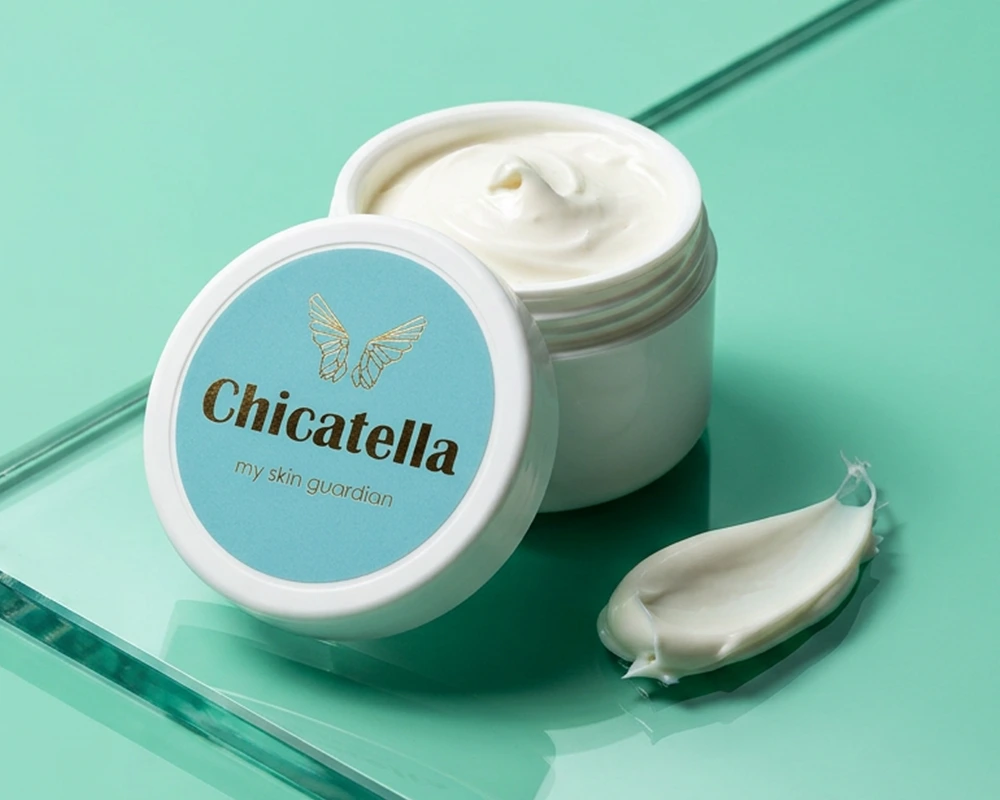
SOS Ointment – eczema ointment for kids with very dry, cracked skin, open jar
DRY, CRACKED SPOTS · SKIN FOLDS
SOS Ointment

A thick protective film for cheeks, skin folds, little bottoms and wrists when skin needs a break. Fragrance-free, gentle enough for babies.

See the product →
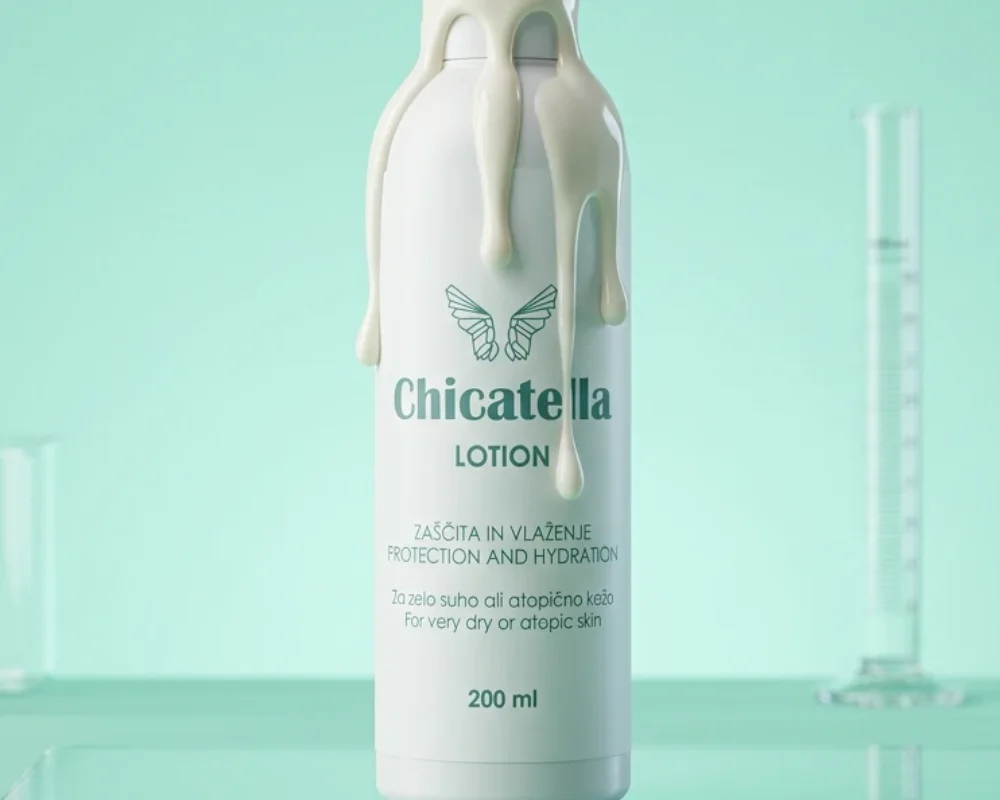
Body Lotion – eczema lotion for kids with very dry skin, 200 ml bottle
WHOLE BODY · AFTER THE BATH · 2X A WEEK
Body Lotion

Light barrier care for the whole body within three minutes of the bath. It absorbs pretty quickly, so your child doesn’t have to wait around.

See the product →
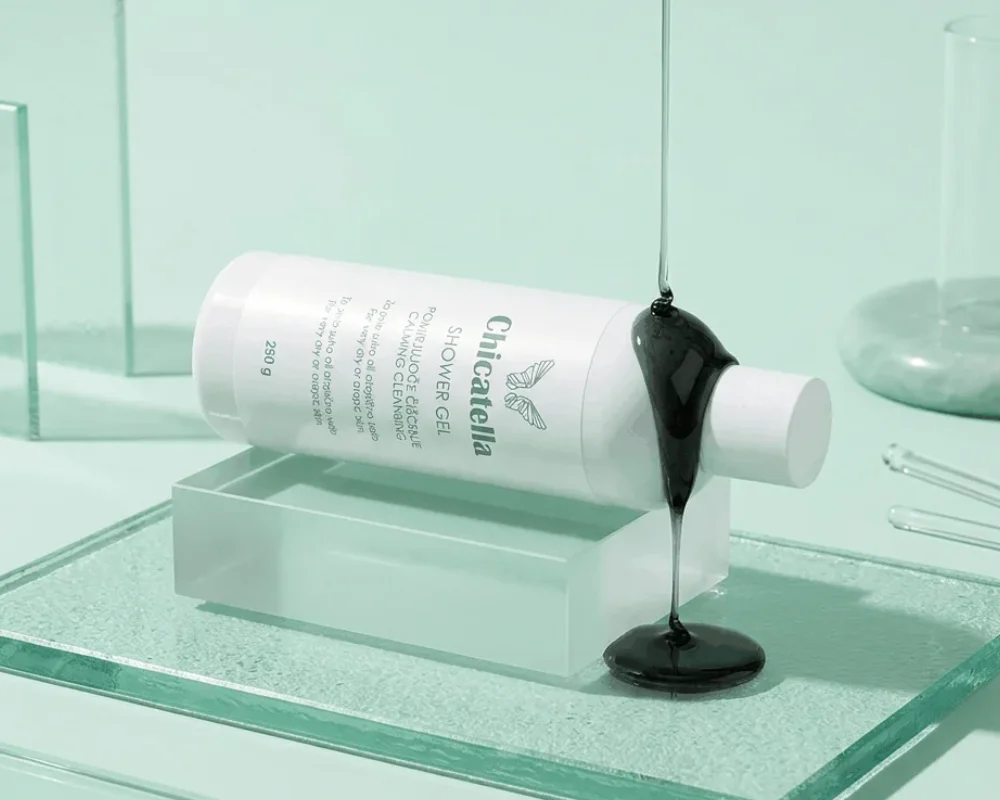
SOS Body Wash – gentle body wash for kids with eczema-prone skin
Washing · fragrance-free · doesn’t dry
SOS Body Wash

A mild wash that doesn’t damage the barrier. For kids whose skin feels tight after every bath.

See the product →

More on caring for kids’ skin: atopic dermatitis in children.

Product claims are cosmetic and separate from the medical information on this page. Chicatella doesn’t treat or diagnose.

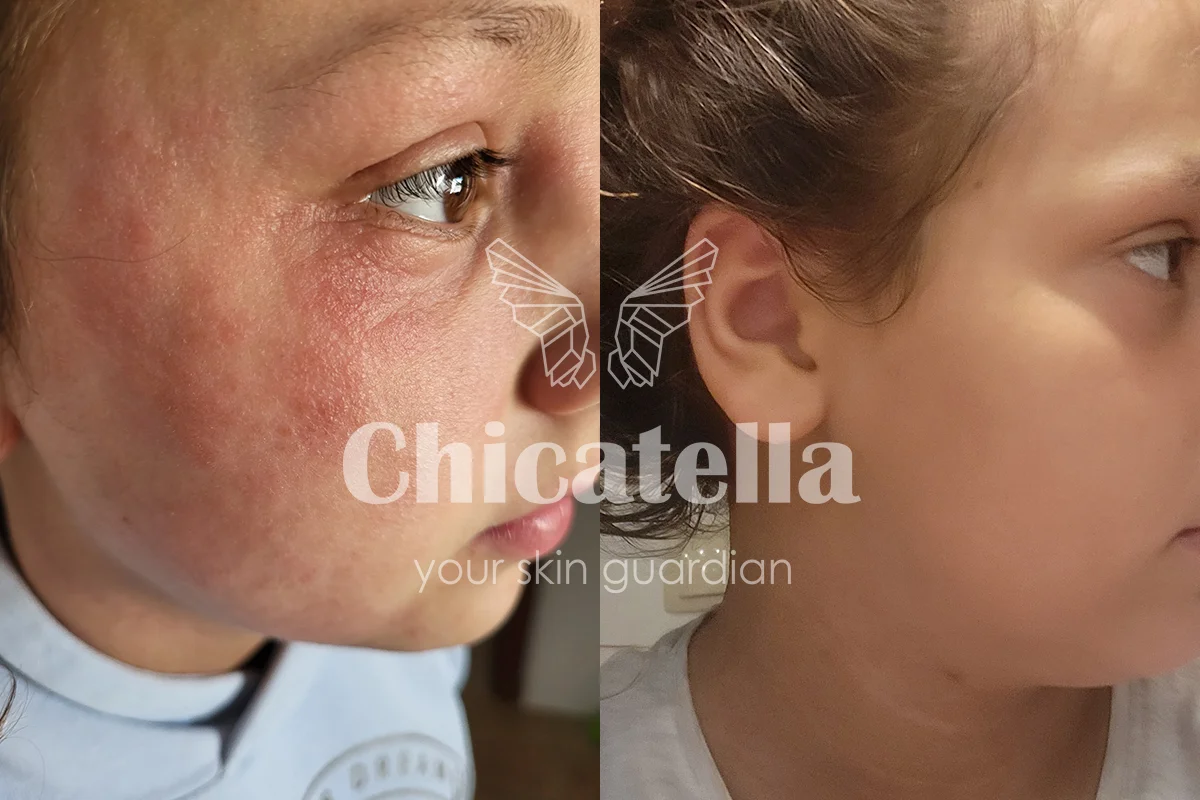
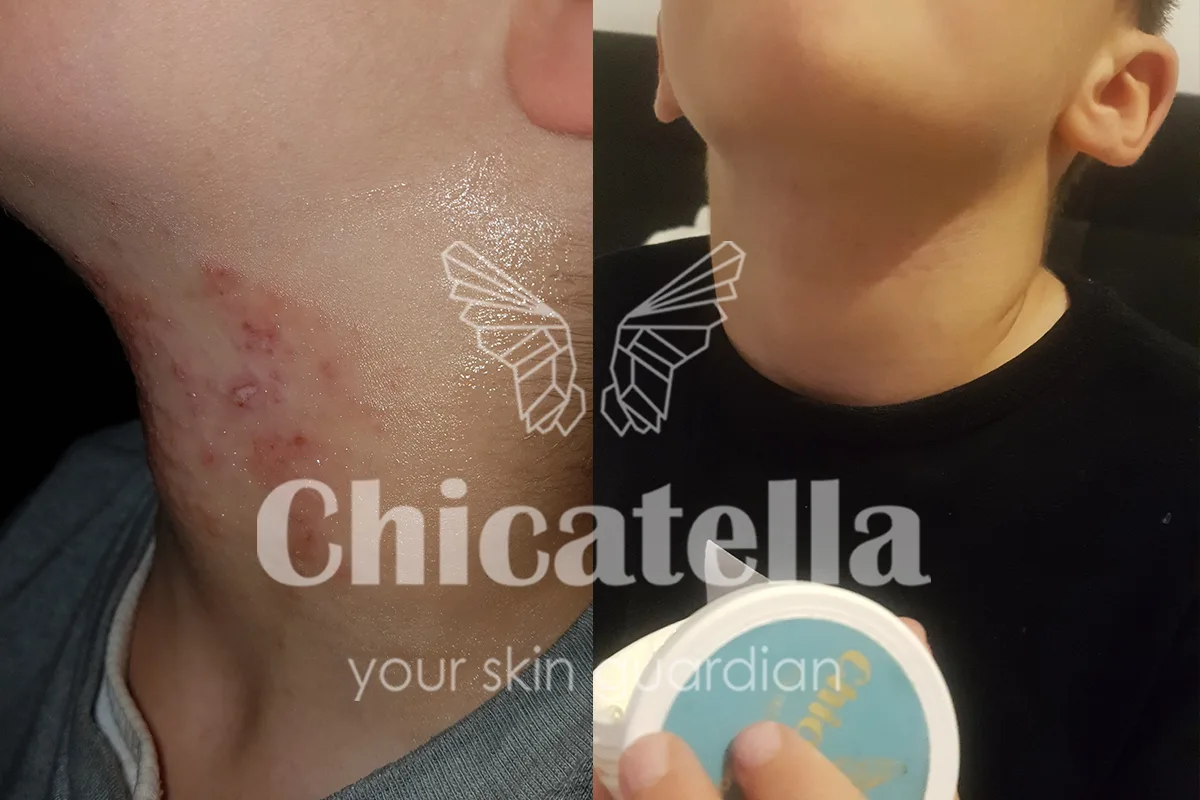
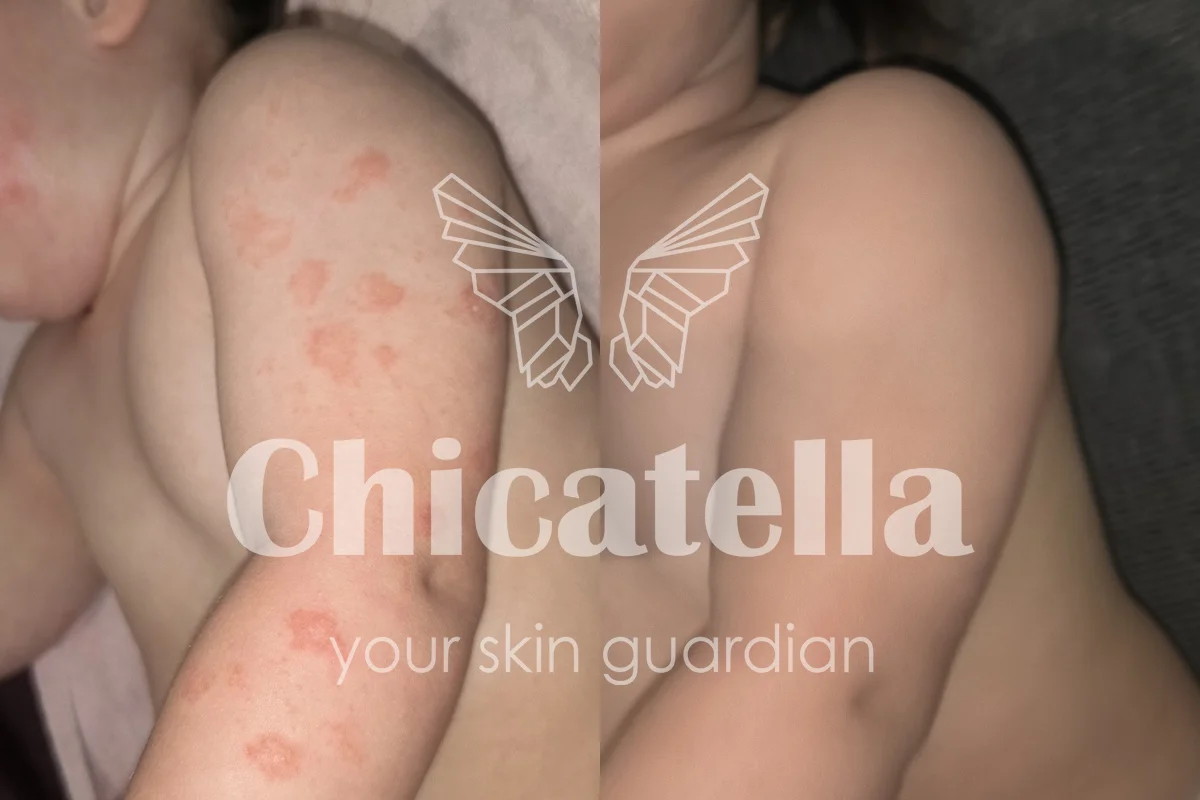
Before & after

How a child’s skin can look different with regular care

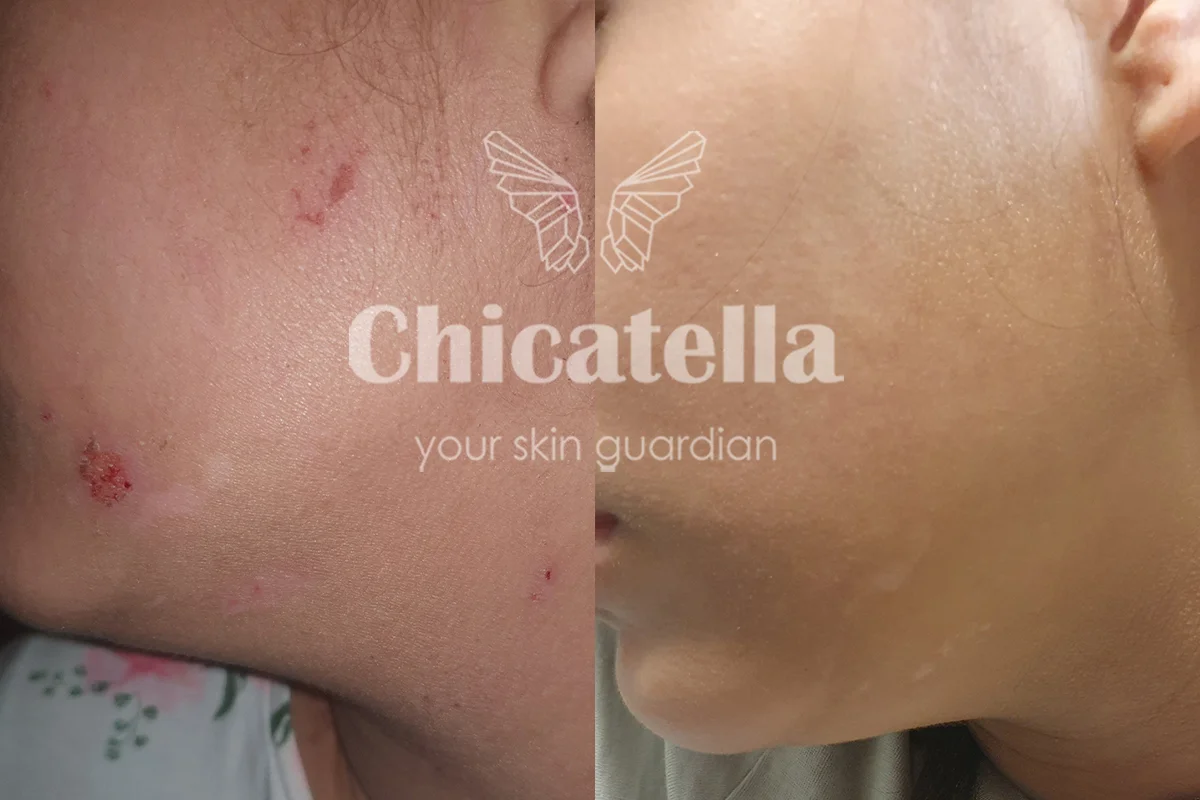
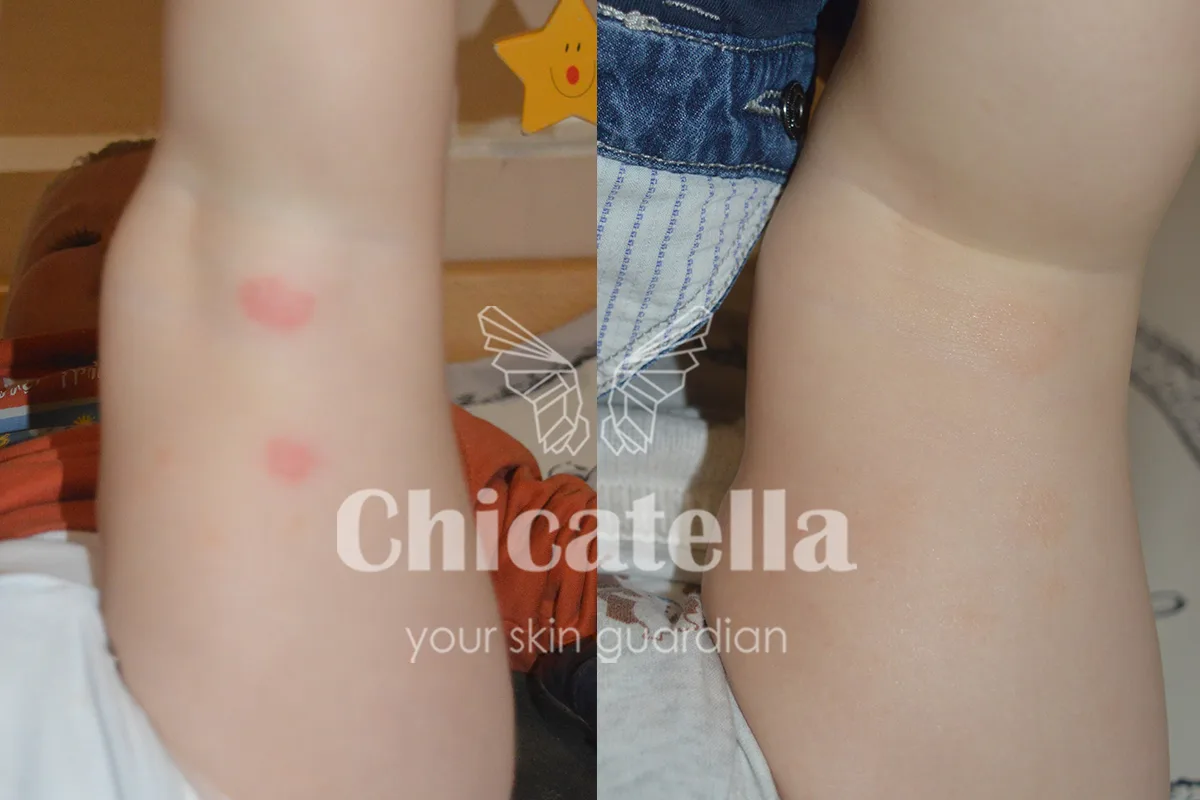
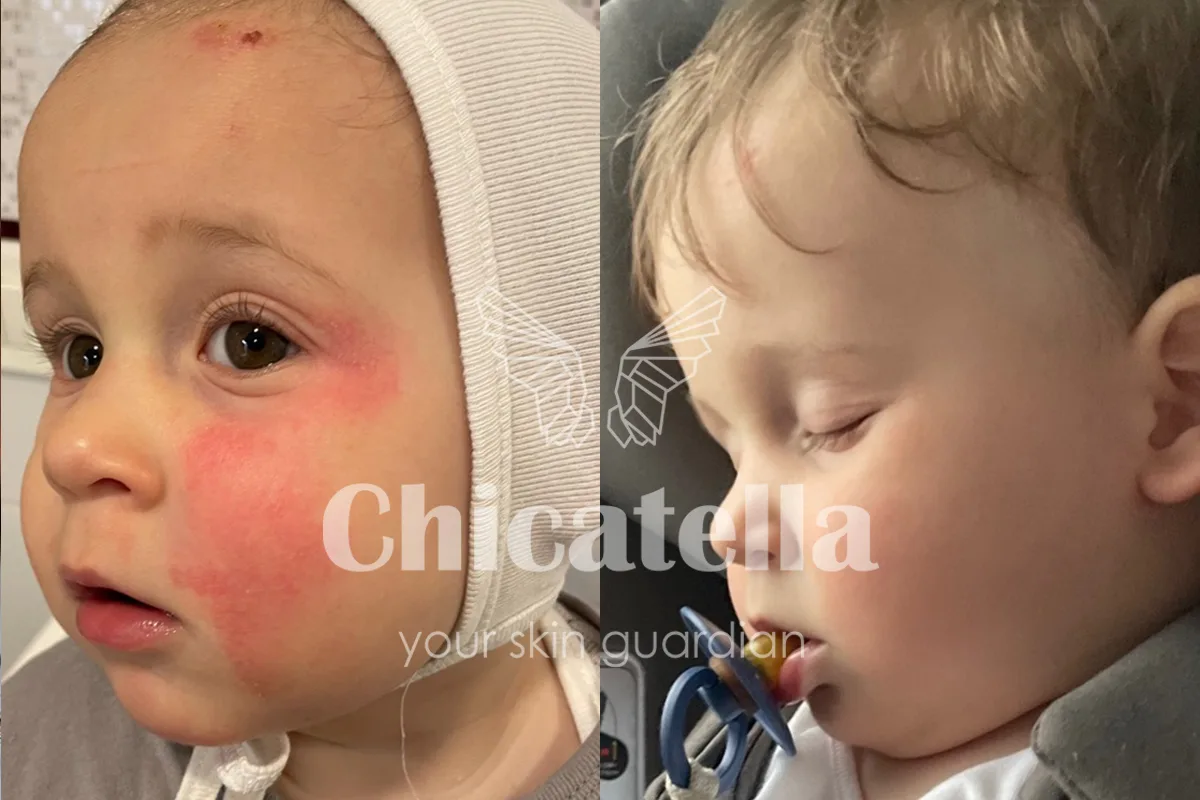
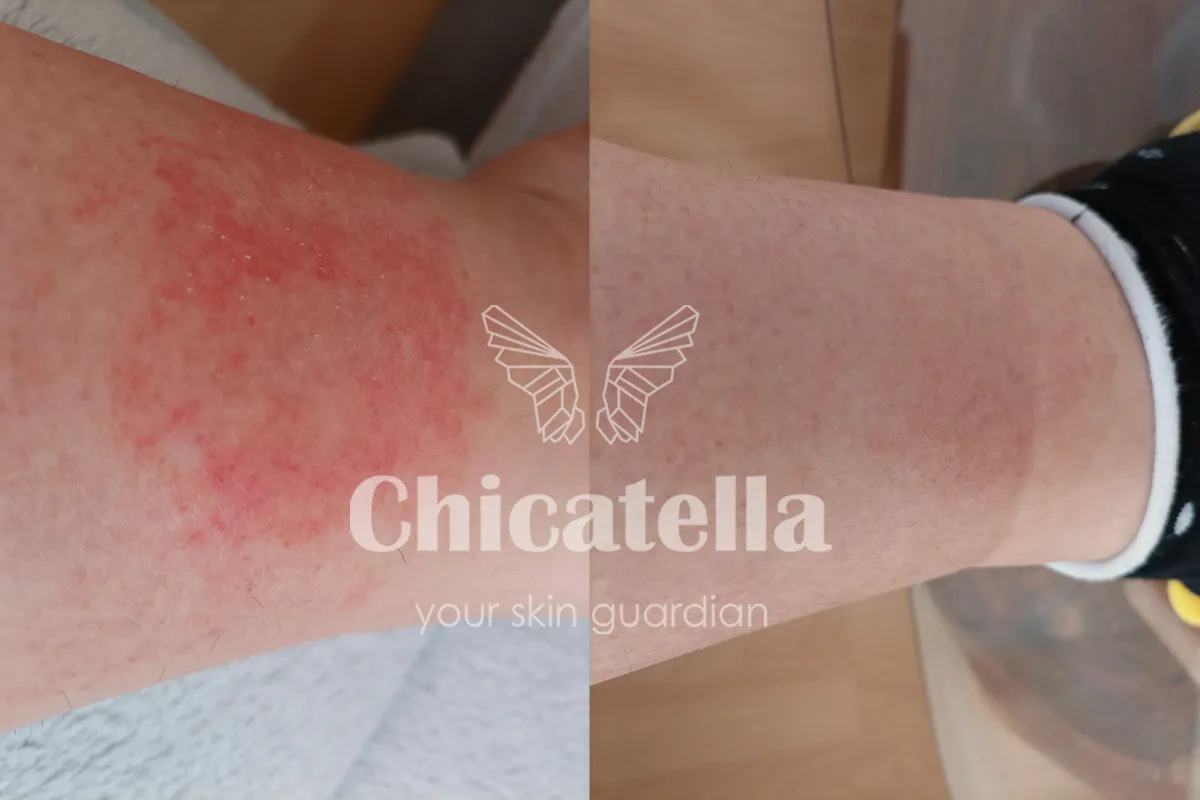
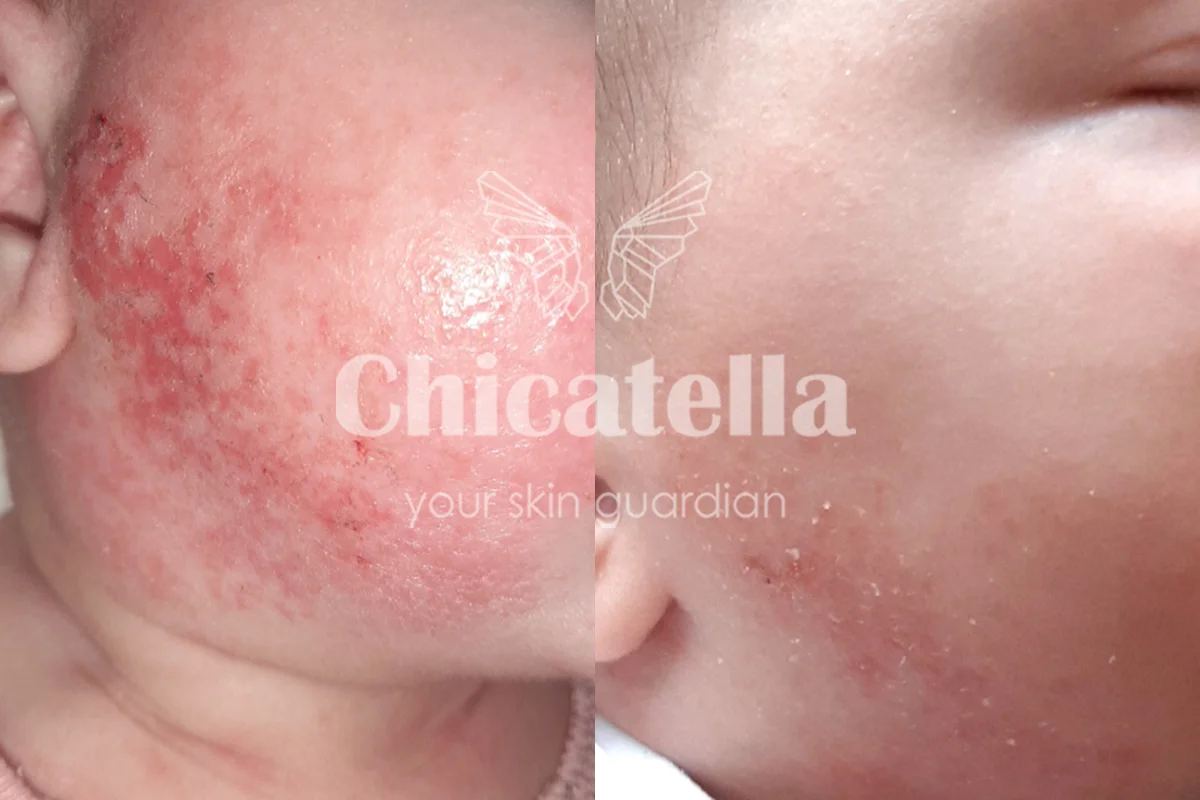
The same spot before and after care. Photos from parents, shared with permission.
Browse→
Eczema in children – a baby’s cheek before and after: red, rough patch on the face
Eczema in children on the cheek before and after – red, dry patch next to the eye
Eczema in children on the neck before and after – scratched, red rash below the jaw
Eczema in children on the upper arm before and after – round red patches on the shoulder
Eczema in children on the face before and after – scratched spots on the cheek and jawline
Eczema in children before and after – two round, red spots on a little one’s skin
Eczema in children: a toddler before and after – bright red patch on the cheek and chin
Eczema in children before and after – red, rough rash in a skin fold, then calmer skin

These photos show individual families’ experiences caring for very dry or irritated skin. Our products are cosmetics, not medicine. They don’t cure dermatitis, and results vary from child to child.

Parents’ questions

What you ask us most

Is eczema in children contagious?
No. None of the six types is contagious. What is contagious are infections that can look similar (impetigo, fungal infections, scabies), so if a rash is spreading through your family or daycare, have a doctor take a look.
Is food to blame?
For most kids, no. Food is an important trigger mainly in babies with more severe atopic dermatitis, and even then only in some of them. Cutting out foods by guesswork hurts your child. Targeted testing makes sense when your doctor thinks it’s needed.6↗︎
Will my child outgrow it?
Cradle cap and diaper rash, definitely. Atopic dermatitis calms down a lot by school age in many kids, but in some it sticks around or comes back in puberty. Good skin care in childhood means fewer flare-ups, but it doesn’t change the genes.
Can I use an adult cream on my baby?
If it’s free of fragrance, dyes and essential oils and made for sensitive skin, usually yes. For babies under one, avoid products with salicylic acid, menthol, camphor and high percentages of urea.
How do I get my child to stop scratching?
Short nails, cotton mittens at night for babies, a cool compress instead of scratching, a cream chilled in the fridge. And above all: calmer inflammation itches less. If the itch is costing your child sleep, that’s a reason to act, not to wait it out.
Daycare or school: does my child need to stay home?
Not because of dermatitis. Keep them home only if you suspect a skin infection (honey-colored crusts, blisters, fever), until the doctor says otherwise.
Keep reading

More on each type of dermatitis

This article is for education. It doesn’t diagnose and doesn’t replace a visit to your doctor. Chicatella products are cosmetic skin care products, not medicines.

Sources & references
  1. 01Skin care interventions in infants for preventing eczema and food allergy. Kelleher MM et al., Cochrane Database Syst Rev, 2022. ↗︎
  2. 02Barrier preparations in diaper dermatitis – systematic review and meta-analysis. Cureus, 2026. ↗︎
  3. 03First pediatric atopic dermatitis guidelines. American Academy of Dermatology, 2023. ↗︎
  4. 04Atopic eczema in under 12s: diagnosis and management. NICE, CG57. ↗︎
  5. 05Atopic Dermatitis: Update on Skin-Directed Management. American Academy of Pediatrics, 2025. ↗︎
  6. 06Cradle cap (infantile seborrhoeic dermatitis). DermNet NZ. ↗︎
  7. 07Atopic Dermatitis and Food Allergy – Work Group Report. AAAAI, 2022. ↗︎
  8. 08Pediatric allergic contact dermatitis and patch testing. Pediatric Dermatology, 2020. ↗︎