Dermatitis herpetiformis: the blisters most people never see
First the skin burns or itches, then tiny scabs show up on both elbows, both knees or the buttocks. Many people never notice the blisters at all, because they scratch them open before they ever see them.
Dermatitis herpetiformis isn’t herpes and isn’t contagious. It’s a skin form of celiac disease, linked to an immune reaction to gluten. The most important step isn’t buying a new cream or cutting out gluten on your own. It’s getting properly checked by a doctor while you’re still eating gluten.
Three things that set it apart from every other kind of dermatitis.“It isn’t a virus. It often looks symmetrical. And it all starts with gluten.”
It’s also called DH or Duhring’s disease. If you’d like to know how dermatitis herpetiformis differs from other types of dermatitis, start with the broader overview.

How we put this article together
Six things worth knowing right away
It isn’t herpes and isn’t contagious.
The hallmark is extremely intense itching, often on both sides of the body.
The blisters are often already scratched open, so what you mostly see are scabs and small sores.
You can have it without obvious digestive problems.
Don’t start a gluten-free diet before you’ve been tested.
Once confirmed, it’s treated with a strict gluten-free diet, and at first a doctor can calm the symptoms quickly with medication.
Where and how it usually shows up
Dermatitis herpetiformis has a signature that’s hard to miss once you know it: it itches intensely, appears in small clusters and almost always on both sides of the body at once. It favors places where skin stretches over bone: elbows, knees, buttocks, lower back, scalp and the back of the neck. Often you never see the blisters, because you scratch them before they fully form. What’s left are tiny scabs and scratch marks, and later darker or lighter patches. If this sounds like your skin, don’t cut out gluten on your own. See a doctor while you’re still eating it, so the tests are reliable.
The sketches are simplified and aren’t a self-diagnosis tool. The pattern helps with recognizing it, but a doctor makes the diagnosis with blood tests and a skin sample.
Quick answers first
What is dermatitis herpetiformis?
Is it the same as herpes?
Is it contagious?
Where does it usually show up?
Can I have it without stomach pain?
Is it spelled “hepetiformis” or “herpetiformis”?
The blister that’s gone before your appointment
Sometimes even doctors miss the most typical sign of this condition. Not because they’re careless, but because scratching got rid of it first!
- →It may start with a burning feeling and very intense itching.
- →The tiny blisters are often destroyed quickly by scratching.
- →So doctors often see scabs, small sores and scratch marks, not a “textbook” blister.Source↗︎
- →The rash is usually symmetrical, on both sides of the body.
- →Common areas are the elbows, knees, buttocks or lower back, scalp, shoulders and upper back.
- →It can look different from person to person and on different skin tones.
When your body draws the same pattern on both sides
Tap an area. The left and right side light up together. That’s exactly what’s typical for this condition, and it often matters more than what a single bump looks like.
Food, gut and skin: the full chain behind dermatitis herpetiformis
The rash appears on the skin, but the story starts with the gluten you eat. Important: gluten particles don’t travel to the skin. The immune reaction does!
TG2 and TG3 are two nearly identical enzymes in the body, called transglutaminases. In celiac disease, the immune system attacks the first one by mistake. In dermatitis herpetiformis, the same antibodies also hit the second.
Antibodies against TG2 are what your doctor looks for in your blood when celiac disease is suspected.
When antibodies attack it, inflammation starts in the skin and itchy blisters form.

No digestive problems doesn’t mean no celiac disease
Having no bloating, diarrhea or stomach pain doesn’t rule it out. For some people, the skin is the loudest or even the only obvious sign, and that’s one of the most common reasons the diagnosis is delayed.
The condition is linked to celiac disease, but gut changes and symptoms vary from person to person. Not everyone has the same degree of gut damage.ESsCD 2025↗︎
The key sample is taken NEXT TO the blister, not from it
This is one of the most surprising details about this condition, and one of the most common reasons for an unclear result.
A sample from an active skin lesion can be taken for a standard tissue exam.
A sample from normal-looking skin right next to a fresh lesion is taken for direct immunofluorescence, a special test of the skin sample that looks for a typical granular pattern of IgA antibodies.
This section isn’t meant to have you direct the biopsy yourself. It’s so you can tell the doctor that dermatitis herpetiformis is suspected, and understand why the sampling spot matters.EADV↗︎
The most important warning is actually very simple
If dermatitis herpetiformis or celiac disease is suspected, don’t stop eating gluten before your medical tests.
Cutting back on gluten or dropping it can lower antibody levels and change the results, which makes diagnosis harder. Let your doctor decide how much gluten to eat, and for how long, before testing.
- →The usual first blood tests are IgA anti-TG2 and total IgA.ACG↗︎
- →Additional blood tests, a skin biopsy and any small-intestine exam are decided by your doctor.
- →For some selected adults, the new European guidelines allow a celiac diagnosis without a gut biopsy, but only under precisely defined conditions and with a specialist’s judgment.ESsCD↗︎
- →This rule isn’t a do-it-yourself diagnostic checklist. A specialist makes the call.
3 wrong turns that delay the diagnosis
So nobody thinks of celiac disease.
So the result can be unclear, and the whole thing starts over.
The point of this section is a better conversation with your doctor, not the feeling that you can diagnose yourself.
What can it be confused with?
| Condition | How it usually itches or hurts | Distribution | Often symmetrical? | Contagious? | Key clue for the doctor |
|---|---|---|---|---|---|
| Dermatitis herpetiformis: the blisters you miss | extremely intense itching, often with burning too | clusters on the elbows, knees, buttocks, scalp | yes, typically | no | link to celiac disease and a granular IgA pattern in the skin |
| Herpes or shingles (same virus as chickenpox) | often more painful than itchy | a cluster of blisters in one area; shingles follows a nerve | no, usually one side | yes, a virus | a band on one side and pain before the rash |
| Scabies | intense itching, worse at night | between the fingers, on the wrists, around the waist | it can be, but with a different pattern | yes | similar symptoms in people close to you |
| Atopic or contact eczema | itching, often with tightness and dryness | atopic: skin folds; contact: where the skin touched the trigger | often, with atopic | no | dry skin barrier, irritants, allergens |
| Another autoimmune blistering disease | itching or pain, depending on the disease | often larger blisters, also on the trunk or in the mouth | varies | no | blister size and a different antibody pattern |
They can look alike, and this table isn’t a diagnostic test. That’s exactly why, if you suspect this condition, an exam matters more than comparing photos online.
Treatment runs on two clocks that don’t tick at the same speed
This is often the most useful thing to know for someone who has just been diagnosed, and the reason not to give up after the first week of the diet.
- your doctor may prescribe dapsone;
- itching and new blisters can ease within a few days;
- European guidelines often report improvement in about three to four days;EADV↗︎
- it works on the skin symptoms but doesn’t stop the gut’s immune reaction to gluten;
- it’s used under medical supervision, with regular blood tests.
- a strict gluten-free diet is the main long-term treatment of the cause;
- the effect on the skin is slower and can build up over several months;
- full control of the skin can take about 6–24 months, and longer for some people;
- so the diet’s effect isn’t judged after a few days;
- IgA deposits in the skin can last even longer than the visible improvement;
- once the condition is confirmed, the diet is long-term, usually lifelong.
Gluten-free means more than “no bread”
That’s why “almost gluten-free” isn’t the same as treating a confirmed condition. Small, repeated amounts are often the very reason the skin won’t calm down.ESsCD 2↗︎
What did the 2026 research change?
How many people with celiac disease also get this skin condition?
You’ll often read online that one in four or one in ten people with celiac disease also gets dermatitis herpetiformis. A large 2026 analysis pooled the numbers from 24 studies and came up with a lower estimate: about 7 in 100. So celiac disease isn’t rarer; its skin form is.
Does this condition affect the nervous system too?
You’ll find claims online that dermatitis herpetiformis causes headaches, tingling or balance problems. Two studies from 2026 looked into this and came to different answers.
It reviewed the health records of an entire population. People with this skin condition didn’t have nervous system diseases more often than others.2026↗︎
It asked patients about their symptoms. Many reported nerve-related symptoms themselves, and the researchers also looked for a third type of antibody (TG6).2026↗︎
- →When people report symptoms themselves, that doesn’t prove the skin condition caused them.
- →That’s why no one recommends routine testing for TG6 antibodies.
- →A large study counts for more than a small one. One interesting study doesn’t change treatment.
- →If you have new nerve-related problems, tell your doctor. Let them find the cause, not an article.
Do probiotics help?
Short answer: not with this condition. The longer answer, in three points.
When to get help
A recurring, intensely itchy, symmetrical rash in the typical spots.
It’s the one step that can accidentally make diagnosis harder.
Before scratching blurs them. That’s often the only picture of a blister your doctor will ever see.
Any celiac disease in the family, digestive problems, anemia or other autoimmune diseases.
Rapidly spreading blisters, blisters in the mouth or eyes, fever, severe pain or feeling generally unwell aren’t a reason to wait for advice online. They need prompt medical attention.
What you can do while waiting for your appointment
While waiting for your doctor’s appointment, don’t cut out gluten, don’t use home remedies and don’t take supplements friends have recommended.
Gluten sets off new flare-ups. Good care helps skin that itching has already worn down.
On fresh, weeping or open spots, medical treatment and calming the active flare-up come first.
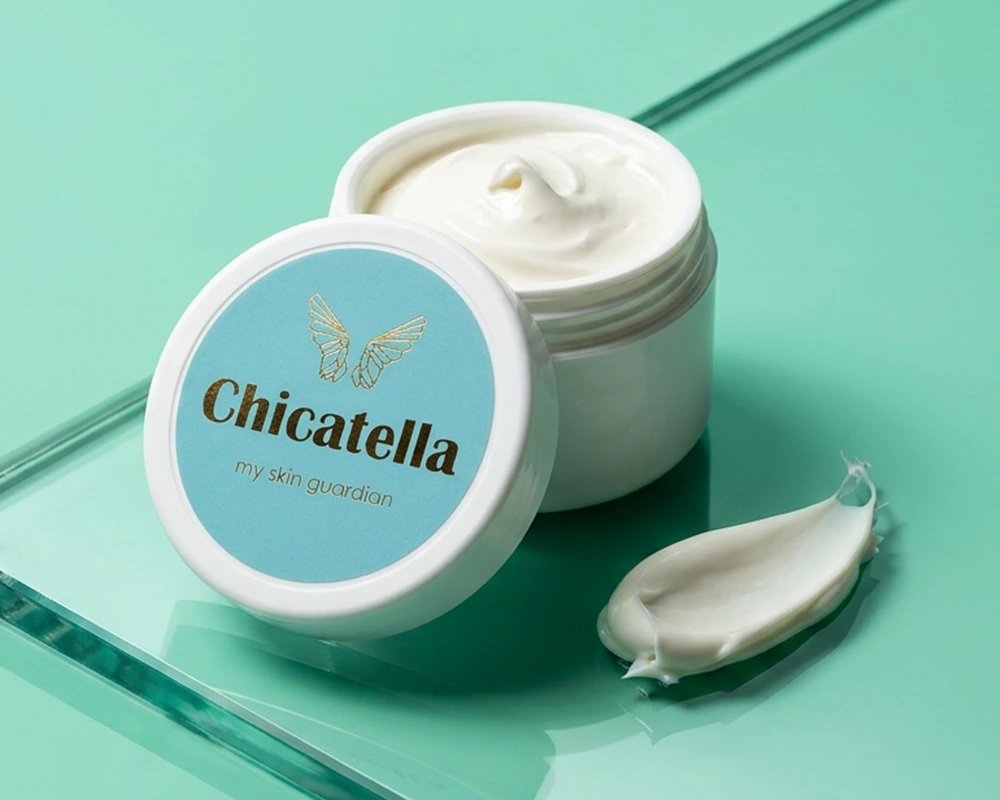
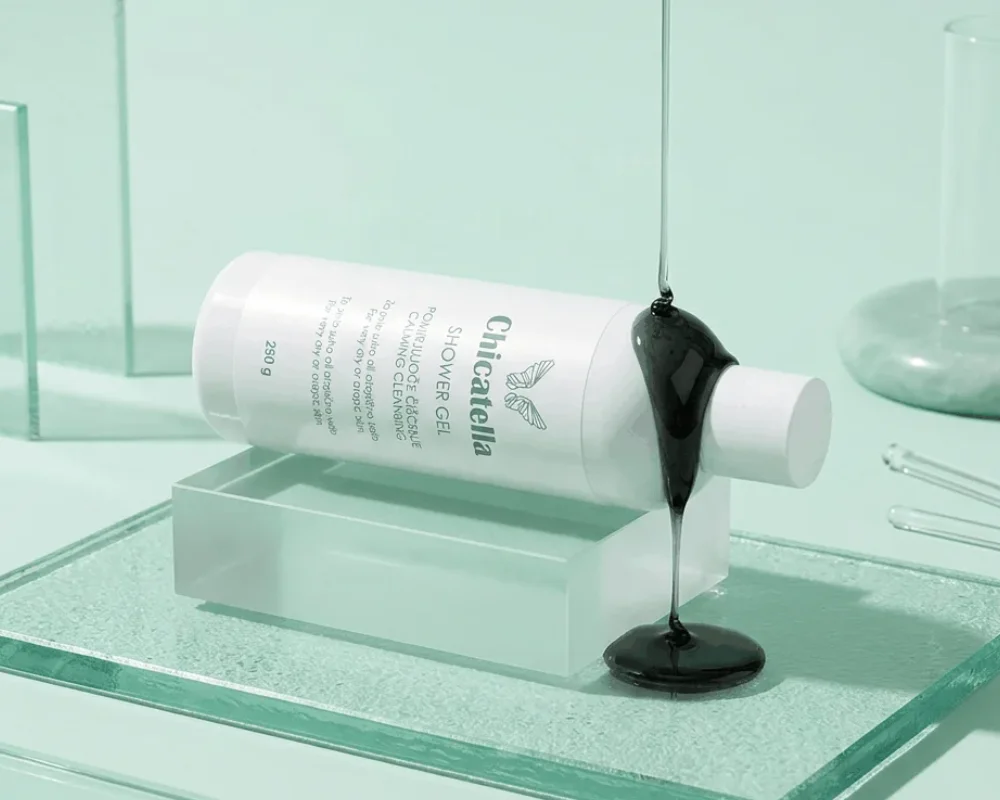
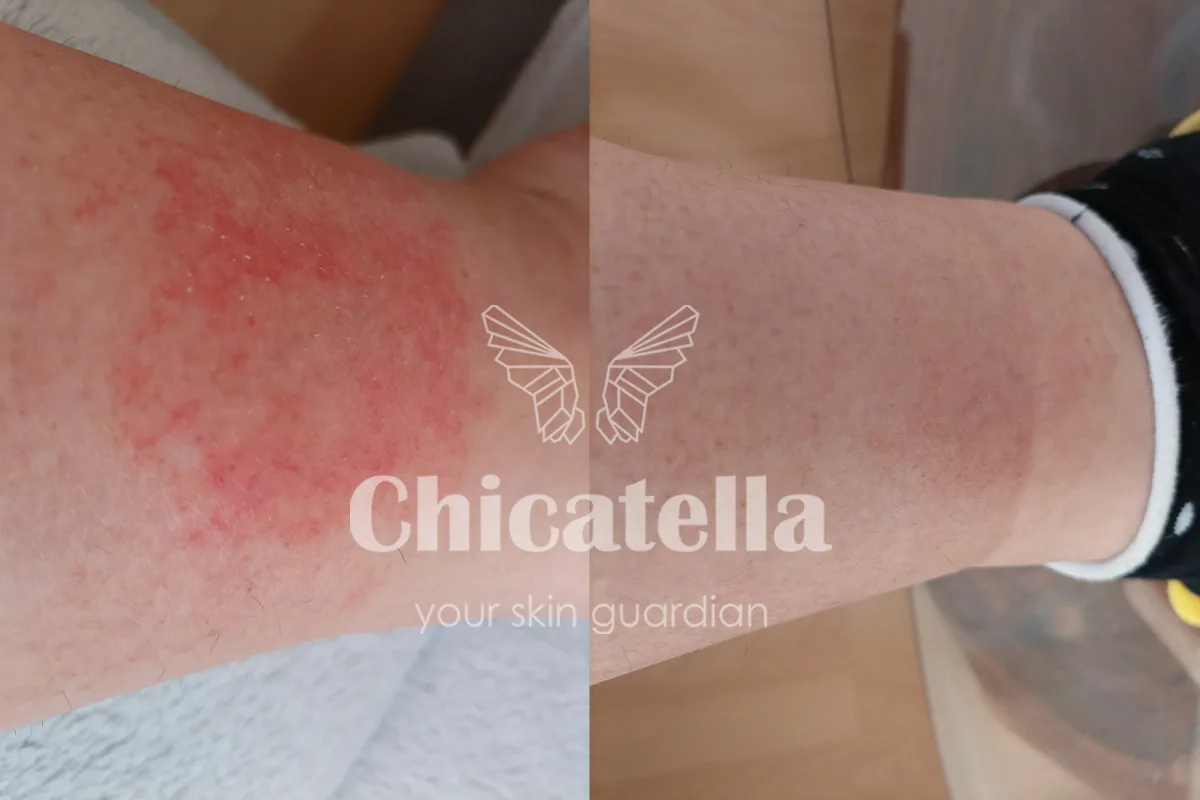
What consistent care can do for scratched, irritated skin
Elbows, knees, neck, trunk: the places where dermatitis herpetiformis most likes to leave its marks. The same skin before and after care. Customer photos, shared with permission.
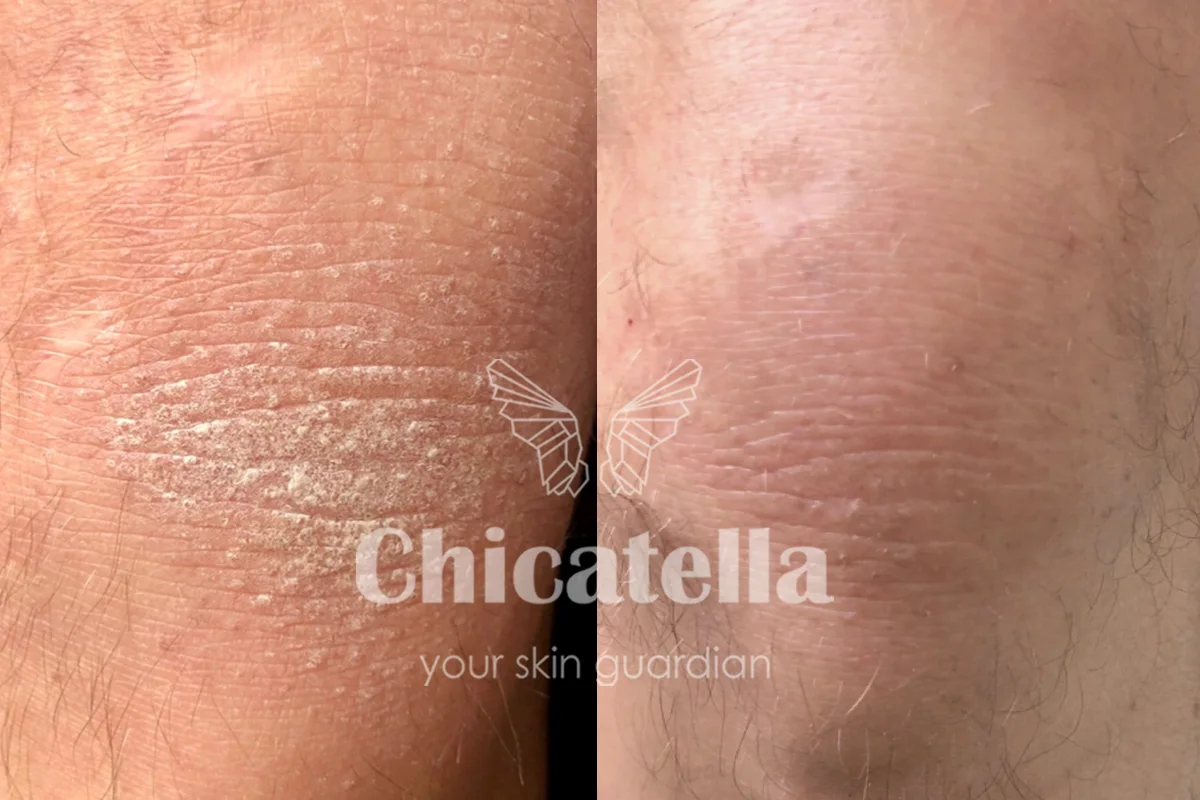
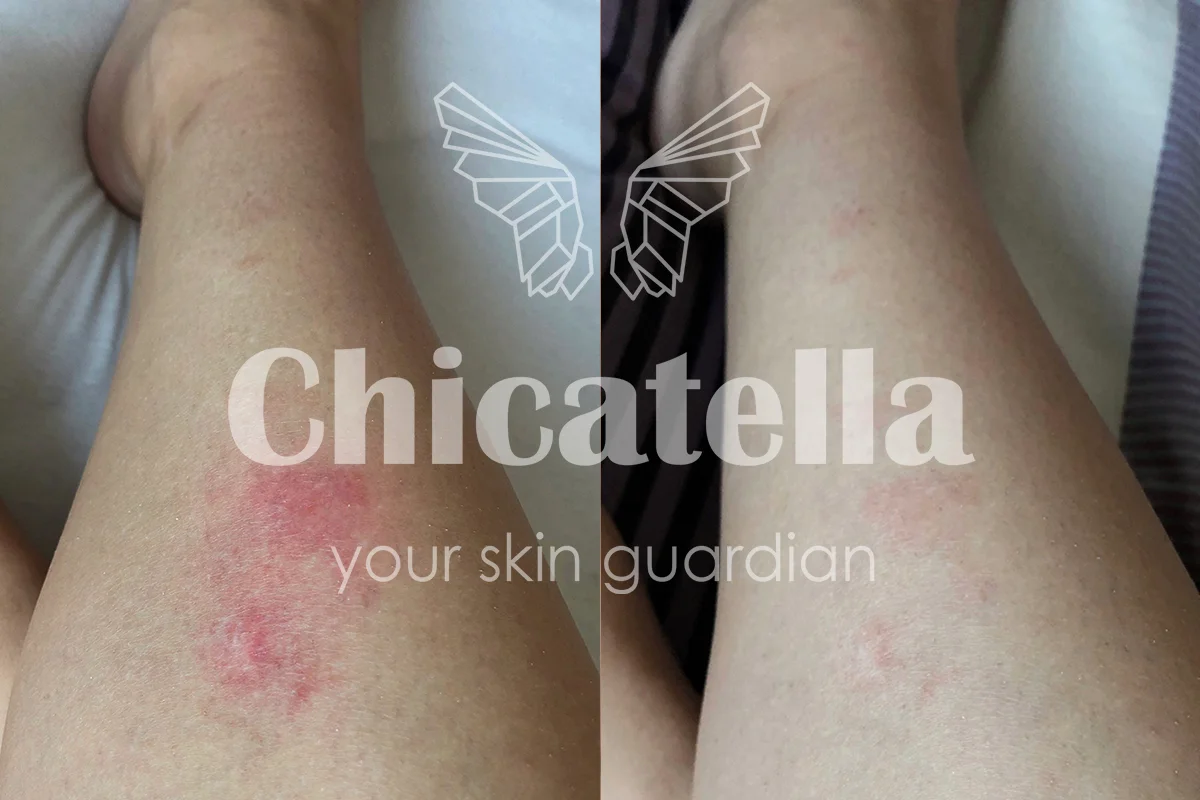
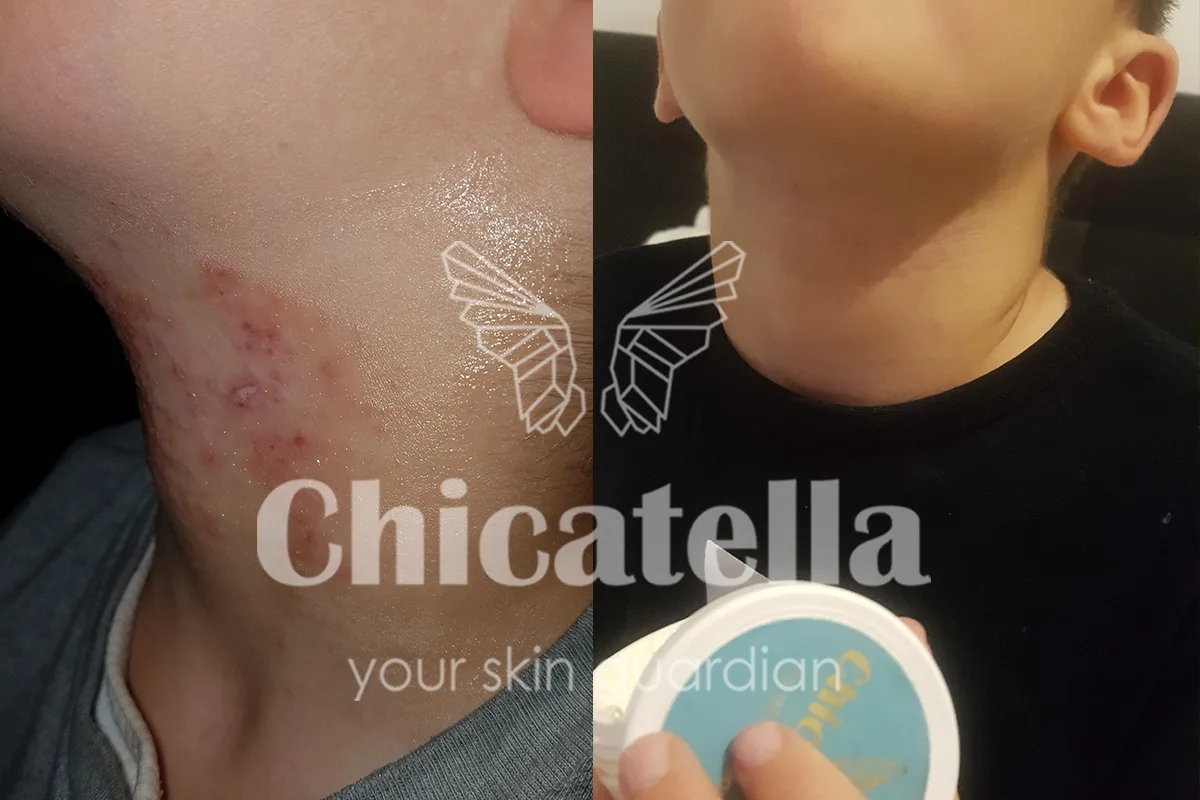
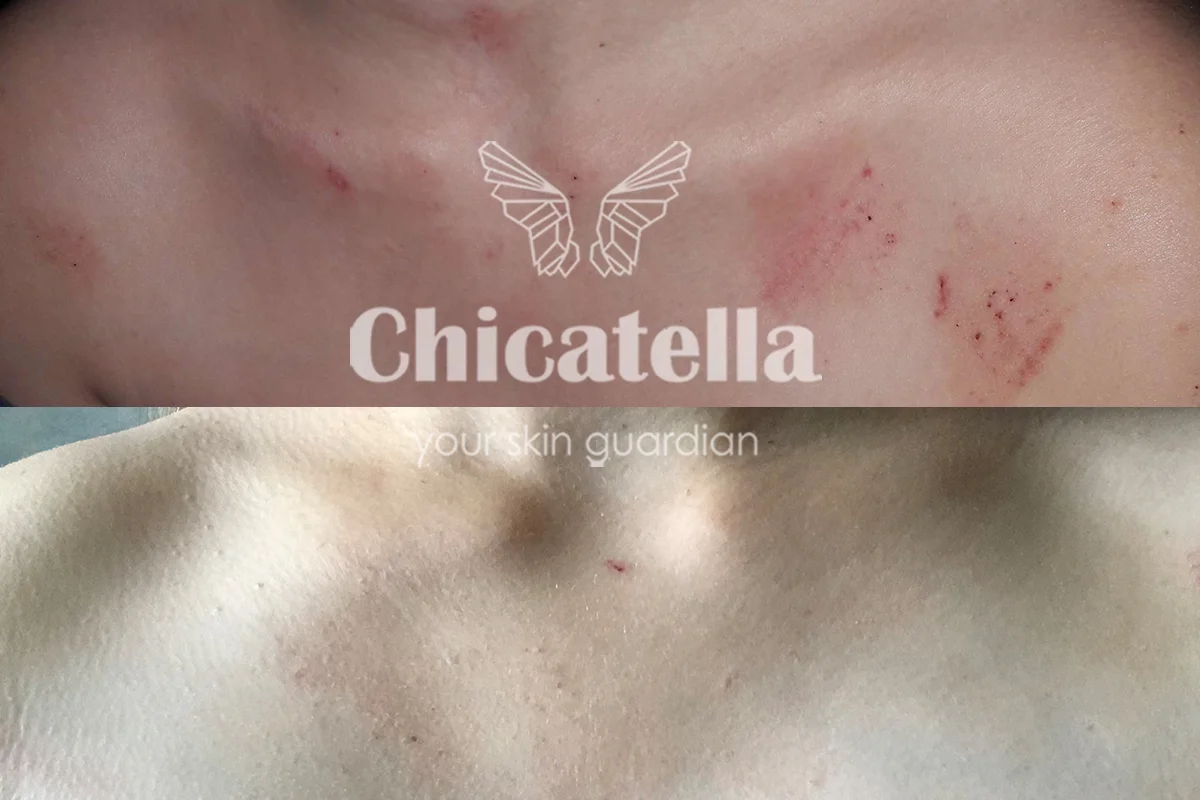
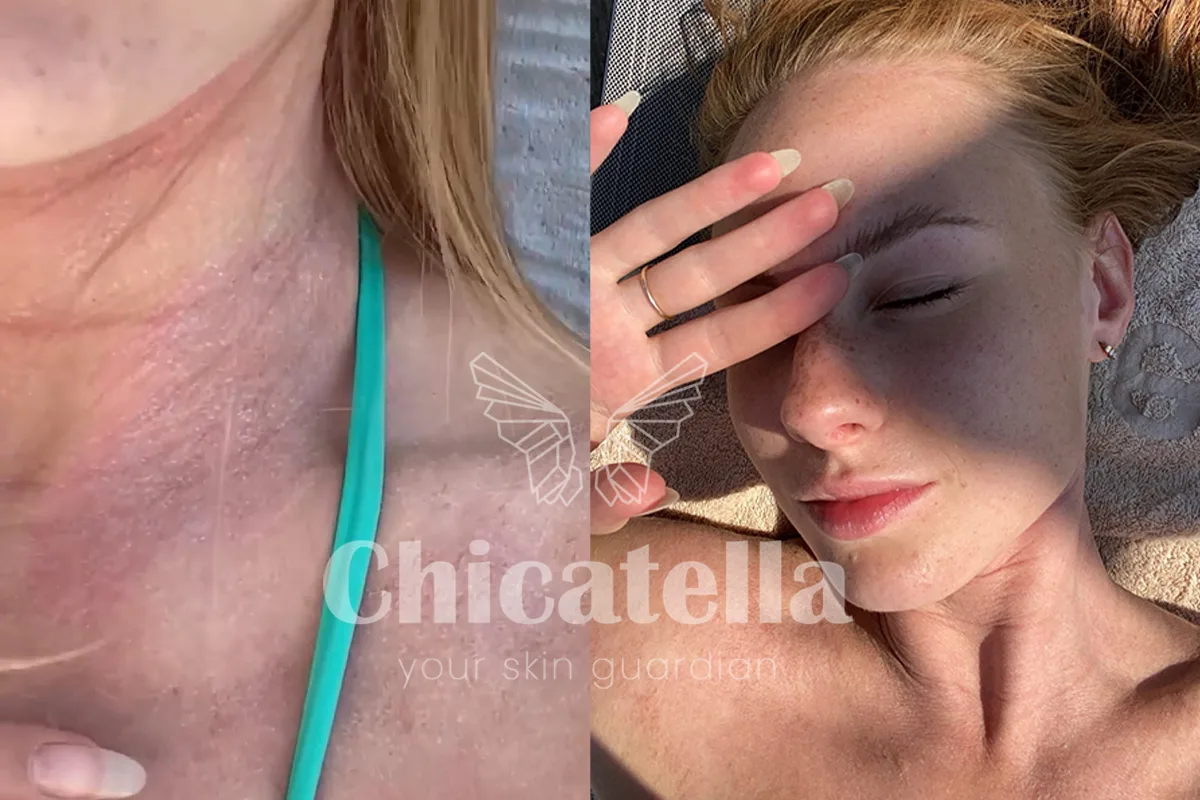
The photos show individual experiences caring for very dry or irritated skin. The products are for cosmetic care and don’t treat dermatitis herpetiformis; individual results may vary.
Related articles
Find the right care for your skin in three steps
No guesswork. Answer three quick questions and we’ll tell you what your skin needs.
This article helps you understand dermatitis herpetiformis and the right path to a diagnosis, but it can’t diagnose you or replace a visit to the doctor. Chicatella products are cosmetic skin care products, not medicines.
- 01S2k guidelines for diagnosis and therapy of dermatitis herpetiformis (PDF). EADV. ↗︎
- 02Dermatitis Herpetiformis: An Update on Diagnosis and Management. ↗︎
- 03Dermatitis Herpetiformis: Diagnosis, Disease Monitoring, and Management. ↗︎
- 04ESsCD 2025 Updated Guidelines, Part 1: Diagnostic Approach. ↗︎
- 05ESsCD Updated Guidelines, Part 2: Management and Follow-up. ↗︎
- 06ACG Clinical Guideline: Diagnosis and Management of Celiac Disease. ↗︎
- 07Dermatitis Herpetiformis in Celiac Disease: Systematic Review and Meta-analysis, 2026. ↗︎
- 08Cohort Study of Neurological and Psychiatric Morbidity in Dermatitis Herpetiformis, 2026. ↗︎
- 09Cross-sectional Study With Neurological Symptoms and TG6 Antibodies, 2026. ↗︎
- 10Dermatitis Herpetiformis. DermNet. ↗︎