FREE SHIPPING ON 2 OR MORE·30-DAY GUARANTEE, KEEP THE PRODUCT·MICROBIOME-FRIENDLY CARE·FREE SHIPPING ON 2 OR MORE·30-DAY GUARANTEE, KEEP THE PRODUCT·MICROBIOME-FRIENDLY CARE·
Article · atopic dermatitis

Atopic dermatitis pictures

Searching for “atopic dermatitis pictures” can quickly give you the wrong idea that eczema is always bright red, round and clearly outlined. In reality it can be just dry and rough, covered in tiny bumps, cracked, darker or lighter than the skin around it, or damaged from scratching. So we gathered as many real photos as we could and sorted them so you can compare the look, the body area and the age, without mistaking a photo for a diagnosis.

Photos can help you spot similarities, but they can’t confirm a diagnosis. A doctor also looks at itching, how long it’s lasted, where it shows up, whether it keeps coming back and other signs.
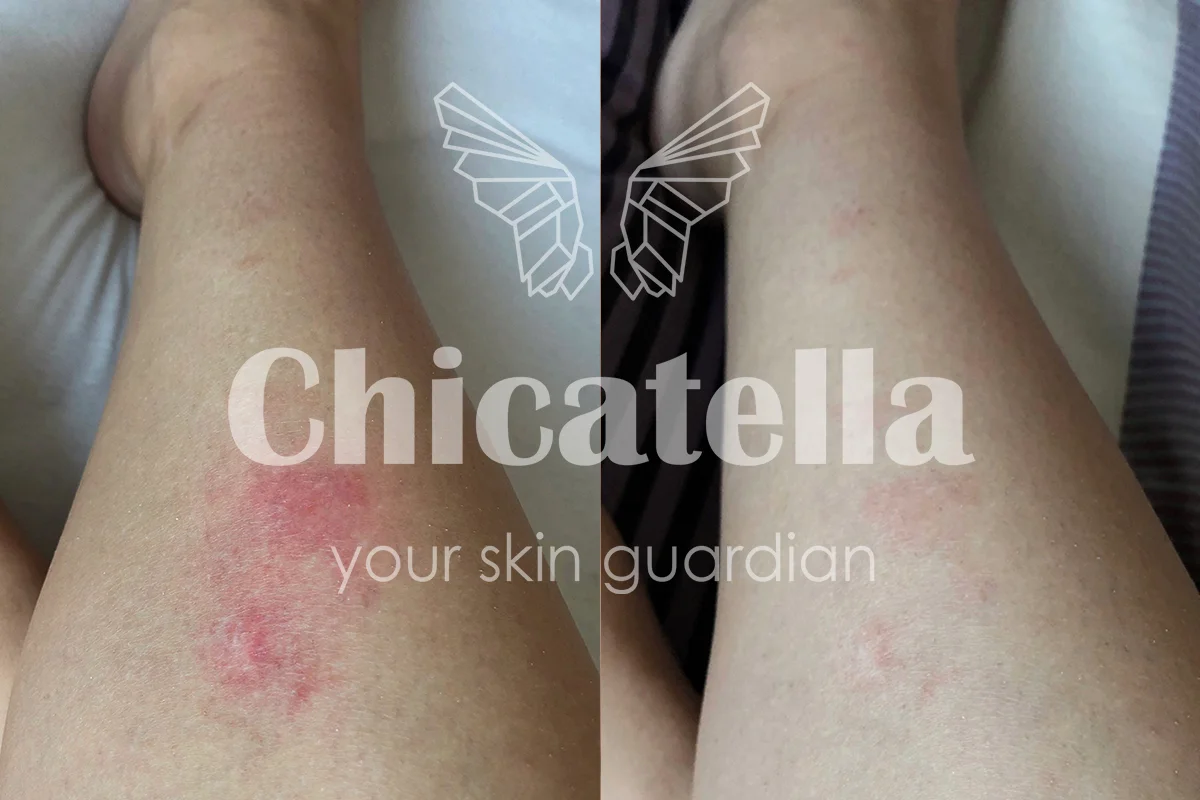

Atopic dermatitis pictures: red eczema patch on the lower leg before and after care
Photo from the Chicatella collection. It shows the state of the skin and isn’t a diagnosis.
Reading time
≈ 12 min
Published
August 2026
Medically reviewed
August 2026
How we put this article together
The photos are real, shared with the permission of our customers and shown without any edits that would change their meaning. Only technical changes to size and format are allowed. The descriptions deliberately stick to what you can see, and don’t guess the diagnosis, age or body area when we don’t know them. The expert explanations are based on dermatology guidelines, checked up to August 2026. Chicatella publishes this article and sells the products shown near the end.
The key points in 30 seconds

Before you look at the photos, three things

The photos below are real and very different from each other. To read them right, keep in mind what you’re looking for, where it shows up and why color isn’t a reliable sign.

01 · What you’re looking at

Very itchy skin that comes back in waves

  • →Atopic dermatitis is usually very itchy and keeps coming back: calm stretches and flare-ups take turns.
  • →The skin can be dry, rough, flaky, cracked, thickened or damaged from scratching. You’ll see all of these in the photos.
COMES BACK IN WAVES calmflare-up itch → scratching → worse
02 · Where, by age

The rash moves as you get older

  • →In babies: cheeks, forehead, scalp, torso and the outer sides of the arms or legs.
  • →In older kids: the creases of the elbows and knees, wrists, ankles, neck.
  • →In adults: hands, face, eyelids, neck and skin folds.
baby child adult cheeks, forehead, limbsskin folds, neckhands, eyelids, neck
03 · Color isn’t the measure

Inflammation comes in different colors, depending on your skin tone

  • →On lighter skin, inflammation is often pink or red.
  • →On darker skin it can be purple, gray, dark brown or mostly covered in tiny bumps. How it feels (rough, dry) tells you more than the color.
SAME INFLAMMATION, THREE SKIN TONES pink, red brownish red purple, gray
What a photo can’t do

On its own, a photo can’t reliably tell atopic dermatitis apart from contact dermatitis, a fungal infection, psoriasis or another type of eczema.

When to see a doctor

Wet, very painful or pus-filled skin, or eczema that spreads fast, needs a medical checkup.

What Chicatella is

Cosmetic care for dry, eczema-prone skin. It’s not a diagnostic tool and not a medicine.

Atopic dermatitis pictures

What are we actually looking at in a photo?

Instead of hunting for “the same red patch,” it’s more useful to look at six features. That’s what separates casually comparing pictures from looking at them systematically.

01 · Color

Inflammation isn’t always bright red. It can be pink, purple, gray or dark brown, depending on your skin tone and the stage.

02 · Texture

The skin can be rough, finely flaky, thickened or covered in tiny bumps.

03 · Edge

Atopic dermatitis doesn’t always have a clear, round edge. A very sharply outlined ring can point to a different condition.

04 · Location

Age and body area often matter more than the exact shade.

05 · Scratch marks

Scratches, tiny crusts and thickened skin tell you the area itches badly or has itched for a long time.

06 · Coming back

A single photo can’t show whether the problem keeps returning in the same spots. That’s why your history matters.

Visual atlas

This is what atopic dermatitis can look like in real life

24 photos sent to us by our customers. None are from a textbook and none have been retouched. A photo doesn’t make a diagnosis; a doctor does that during an exam.
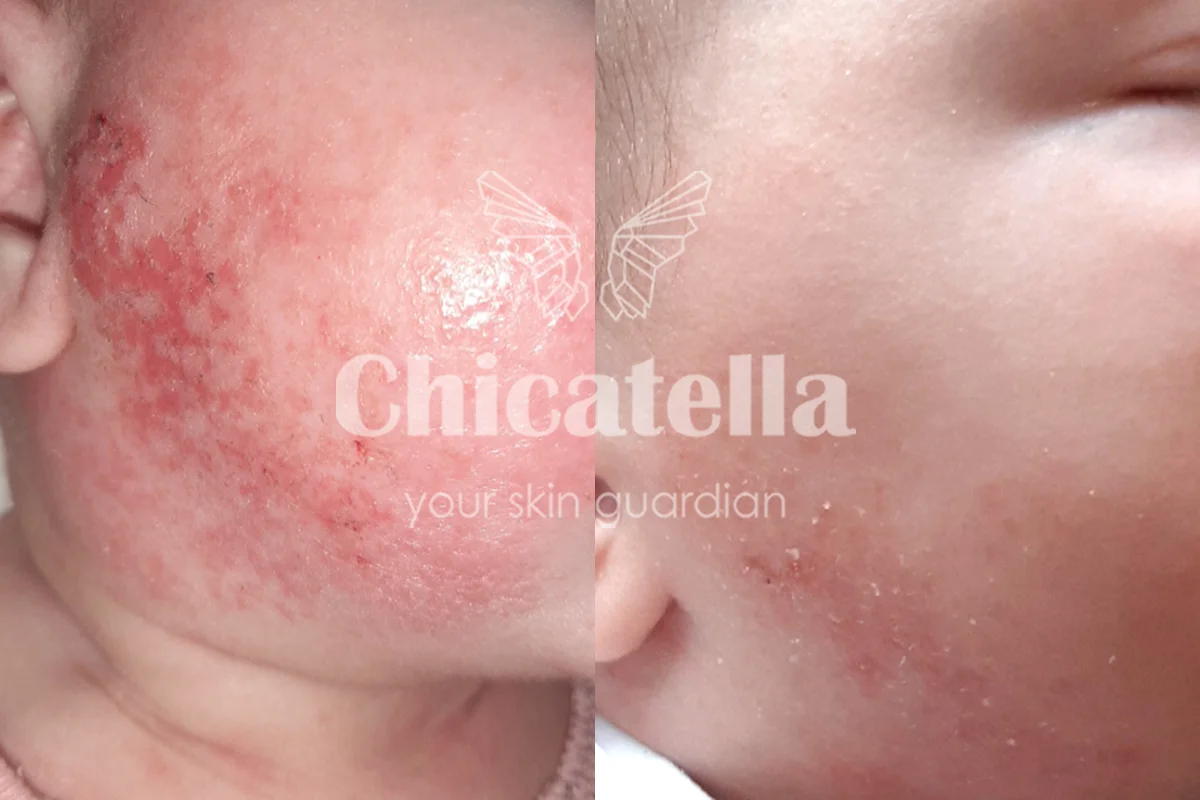
Atopic dermatitis pictures: weepy, red eczema on a baby’s cheek, before and after
A baby’s cheek: inflamed, moist redness with scales.
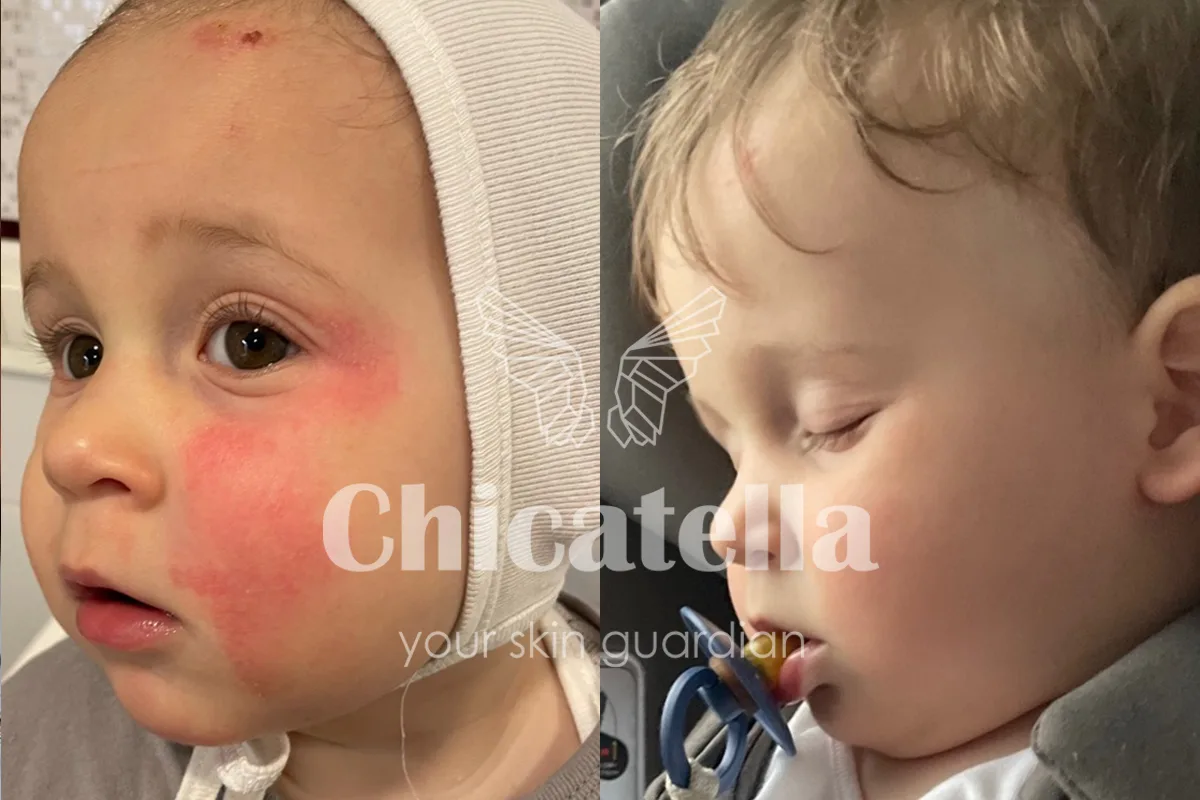
Atopic dermatitis in babies, pictured: bright red cheeks on a toddler, then smooth skin
A baby’s cheeks: sharply outlined redness on the cheek.
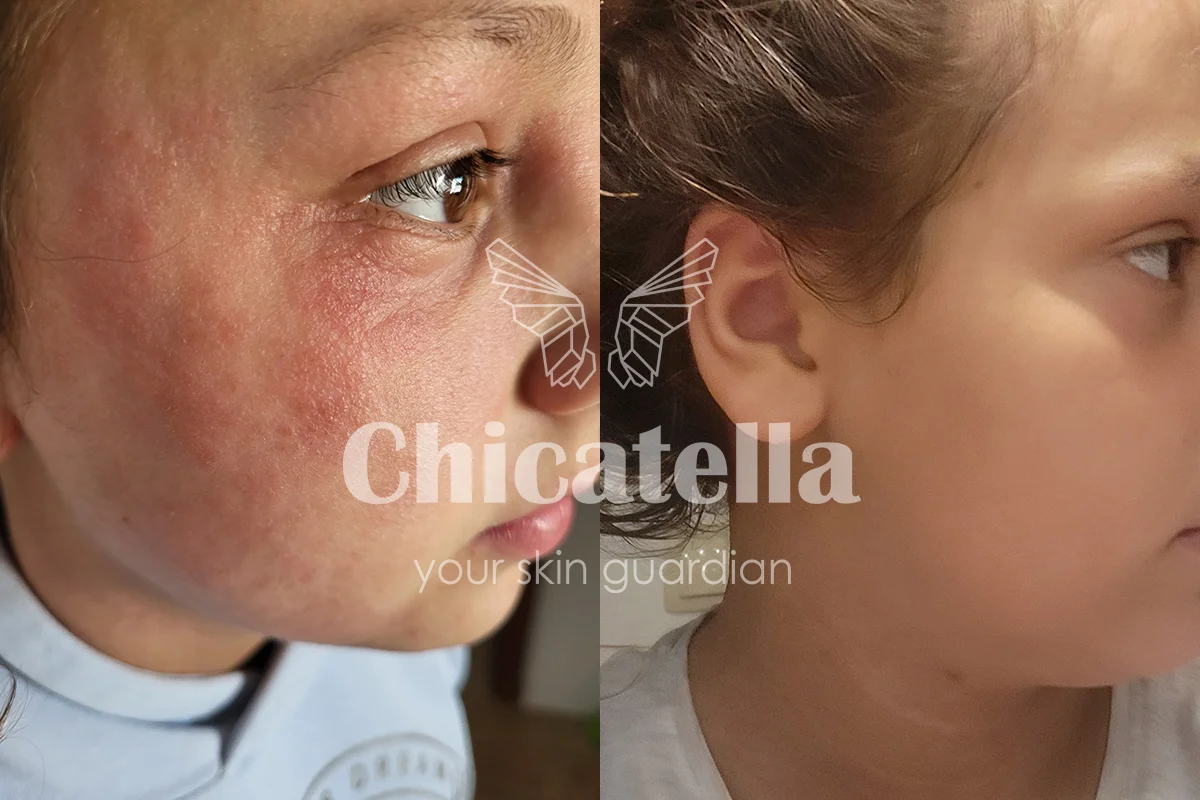
Atopic dermatitis on a child’s face: red, dry patches on the cheek, before and after
A child’s cheek: scattered redness and dry patches.
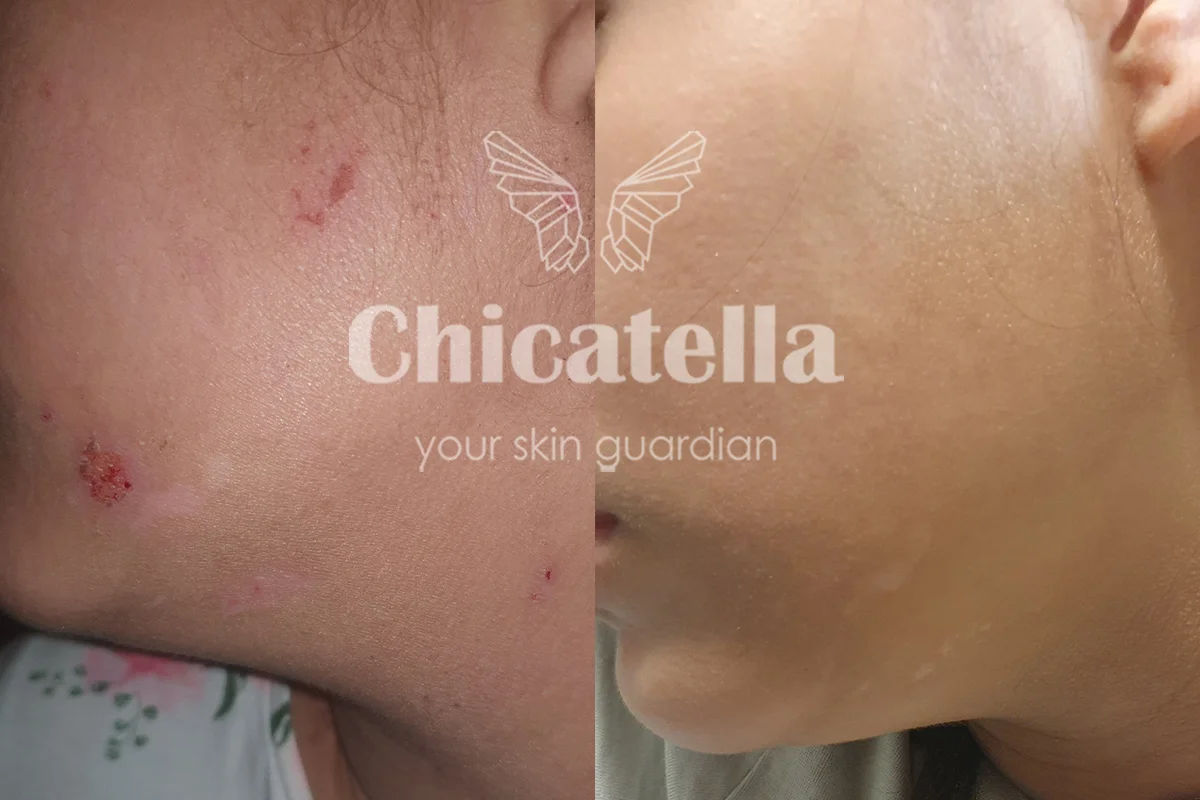
Atopic dermatitis on the jawline: scratch marks and small scabs, before and after
A child’s face and jaw: scratches and small scabs.
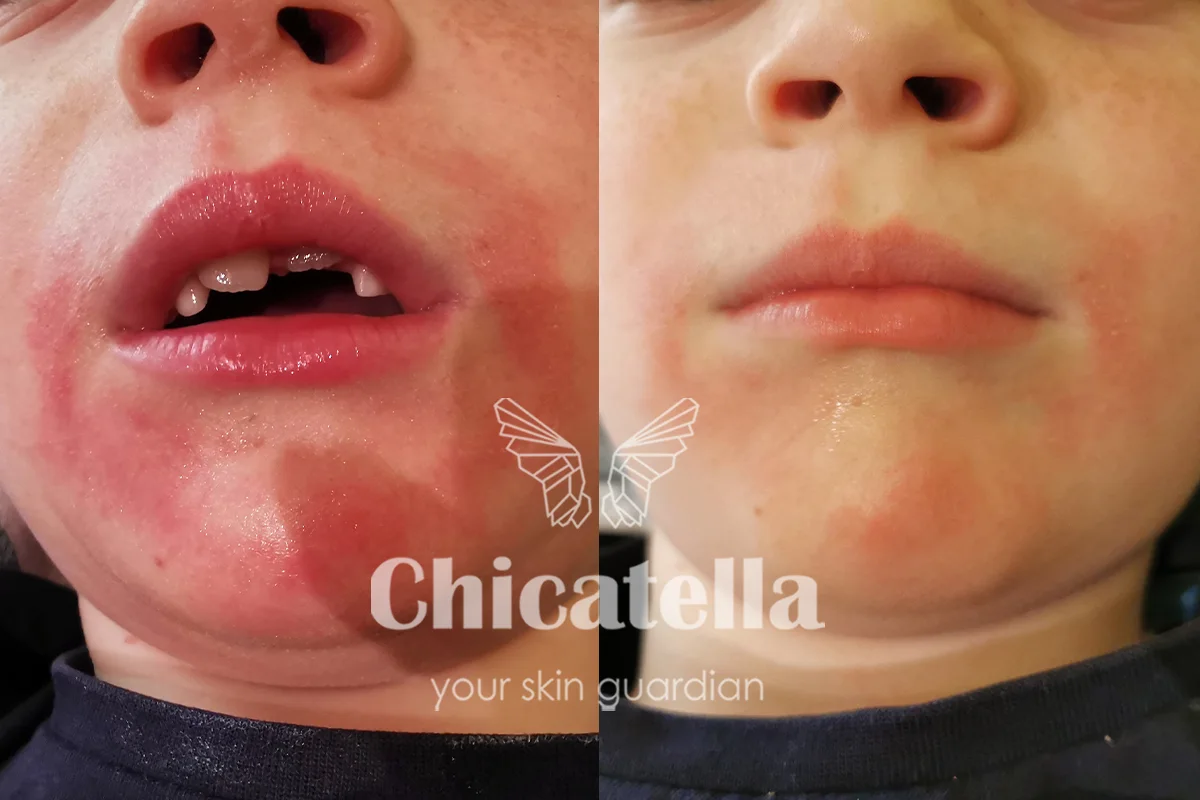
Atopic dermatitis around the mouth in a child: red rash on the chin and lips, before and after
Around the mouth: redness where the skin touches saliva and food.
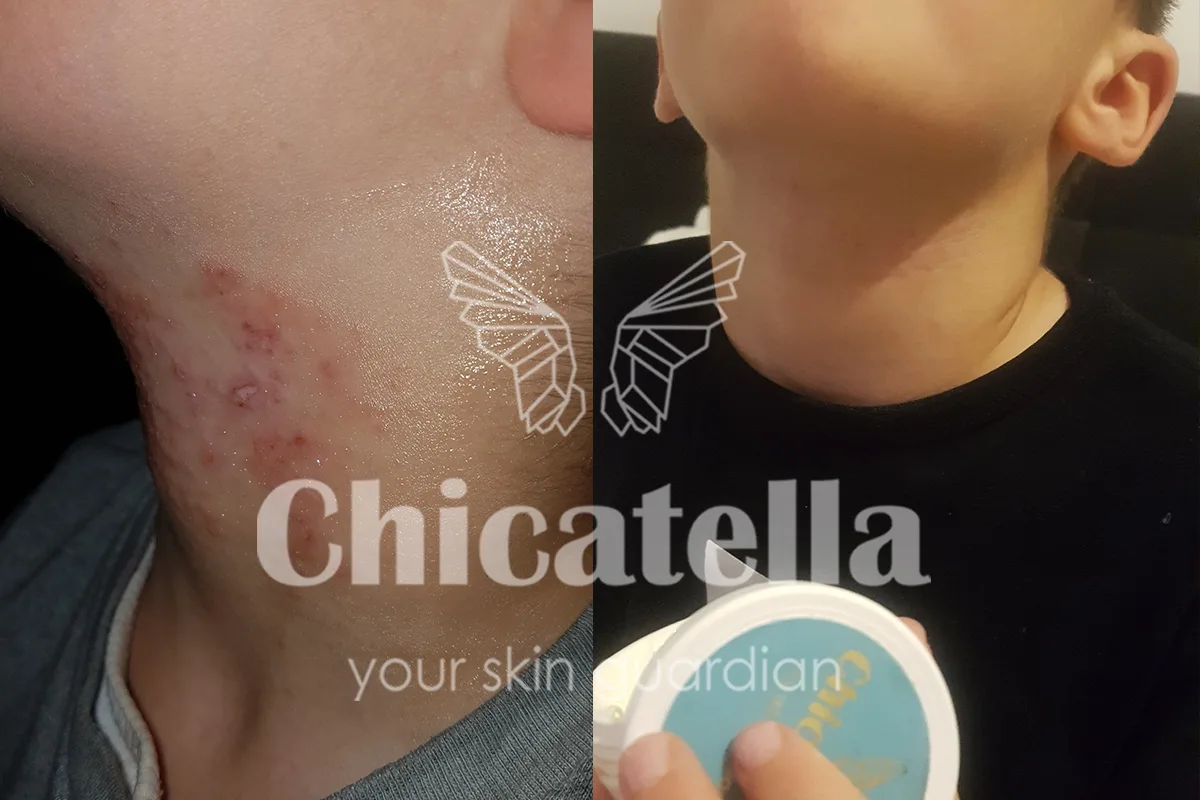
Atopic dermatitis pictures: red, bumpy eczema rash on a child’s neck, before and after
A child’s neck: inflamed, reddened areas with tiny bumps.
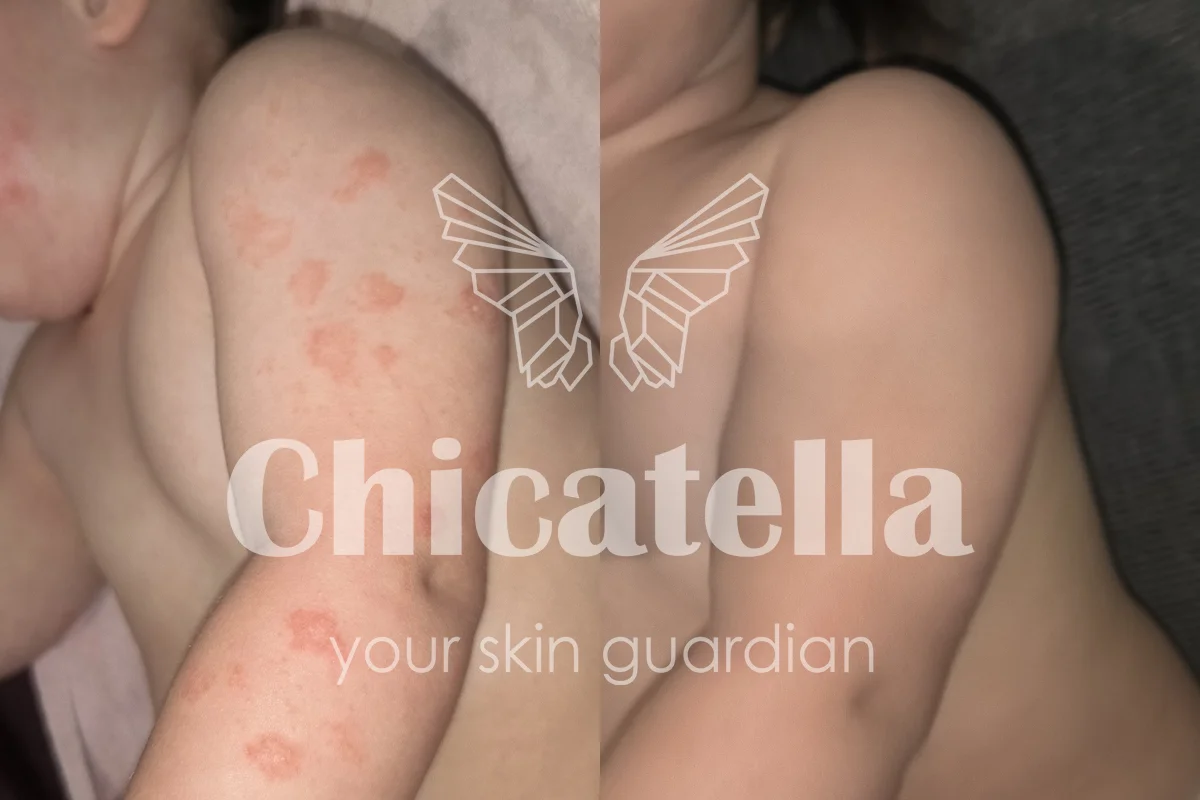
Atopic dermatitis in toddlers, pictured: red eczema spots on the upper arm, before and after
Upper arm: scattered red, dry spots on the outer side.
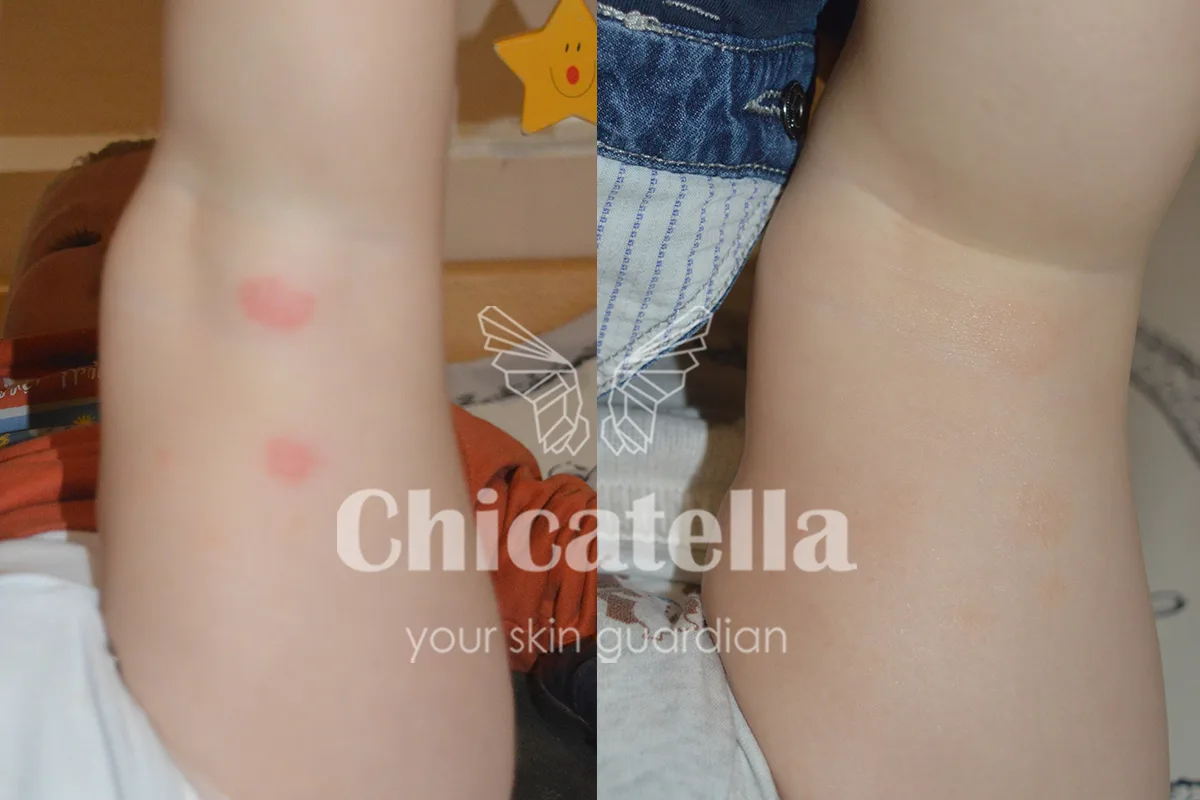
Atopic dermatitis rash pictures: a few round red spots on a toddler’s skin, before and after
Leg: round red spots on the lower thighs.
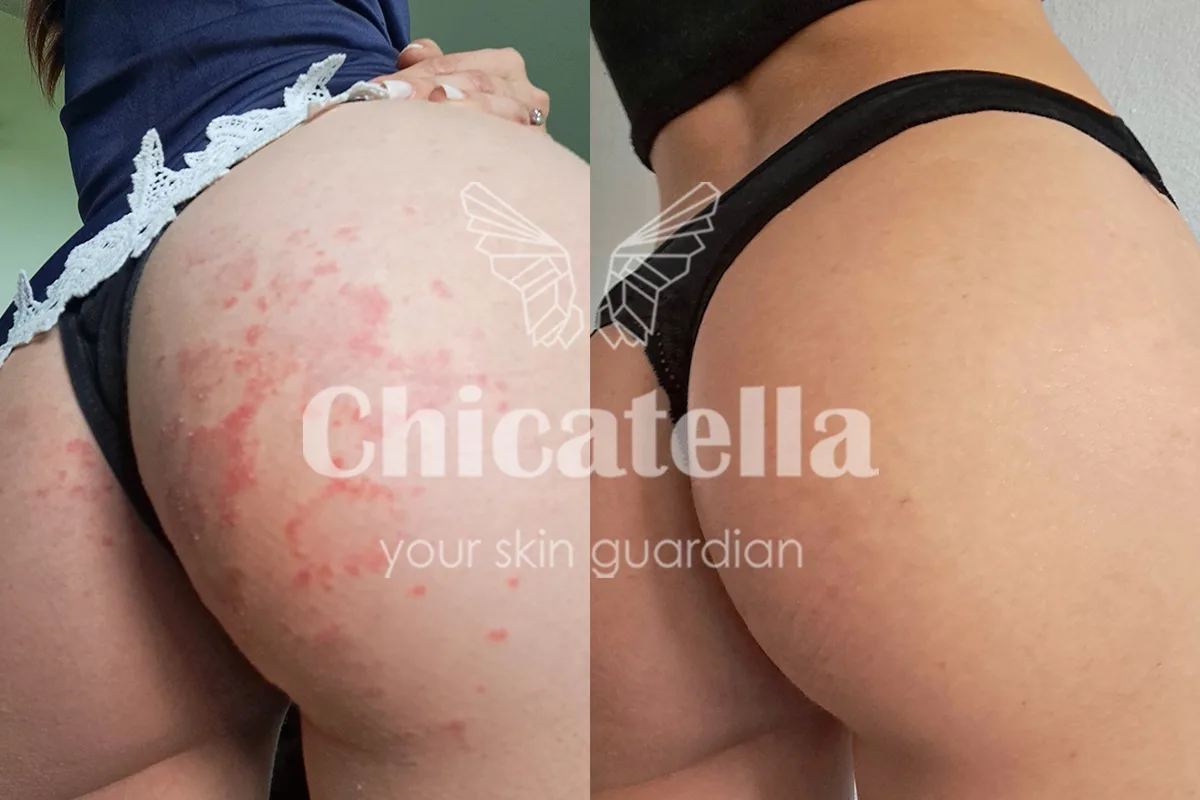
Atopic dermatitis on the buttocks: red, irritated eczema rash in an adult, before and after
Buttocks: red, irritated areas.
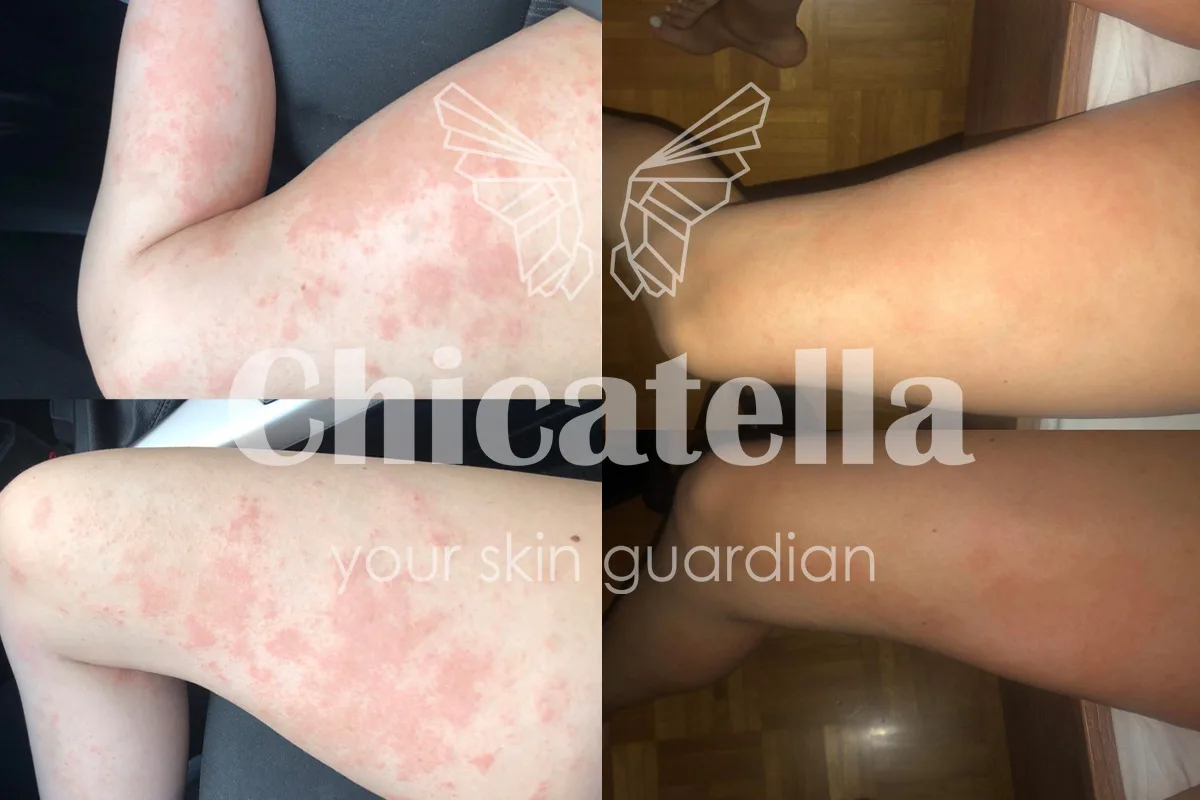
Atopic dermatitis pictures on the thighs: widespread red eczema rash, before and after
Thighs: scattered redness and dry patches.
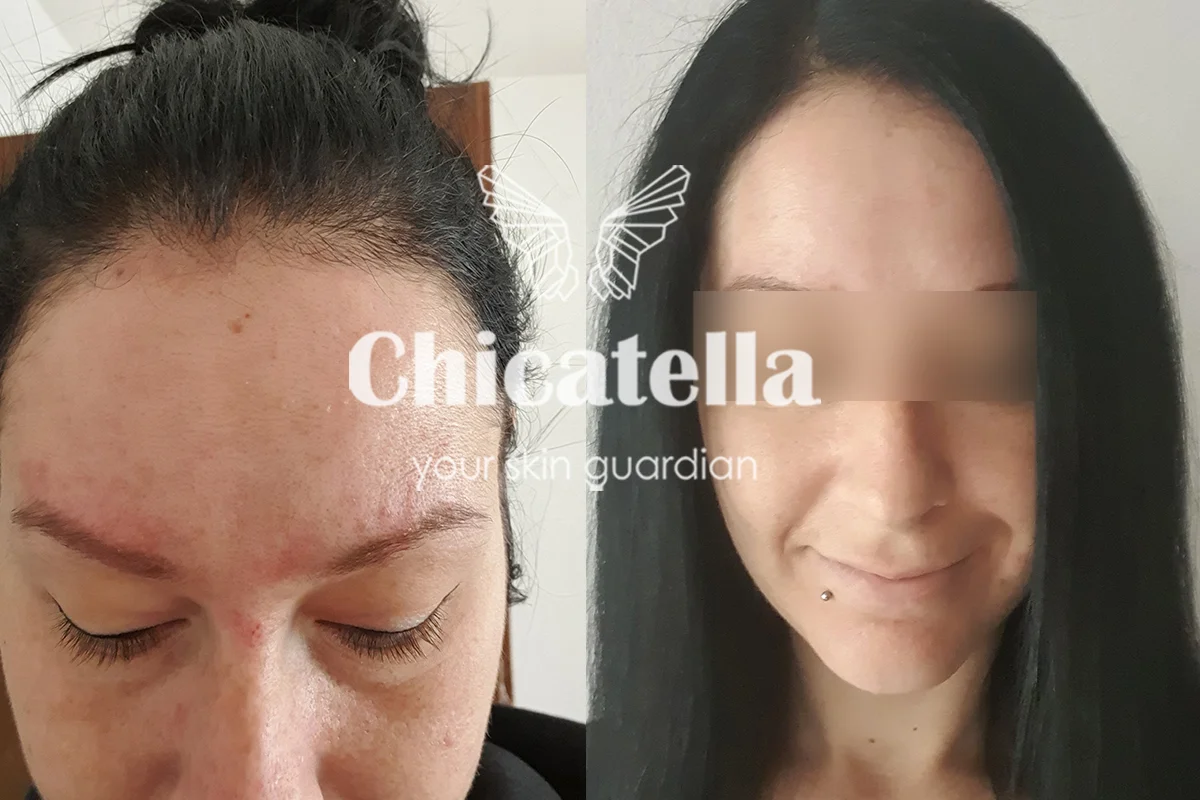
Atopic dermatitis on the face: red, scaly skin on an adult’s forehead and brows, before and after
Forehead: red, scaly skin along the hairline.
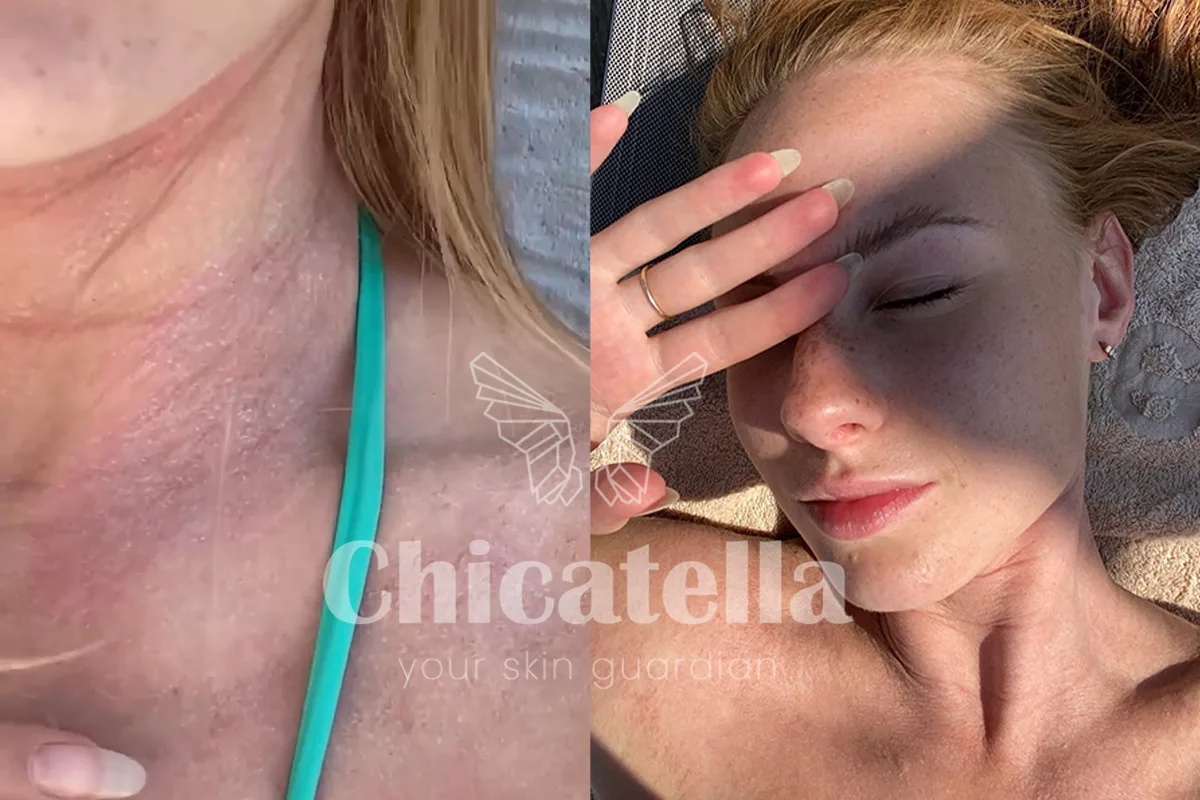
Atopic dermatitis on the chest: red, scratched skin on a woman’s neckline, before and after
Neckline: inflamed areas and scratched skin.
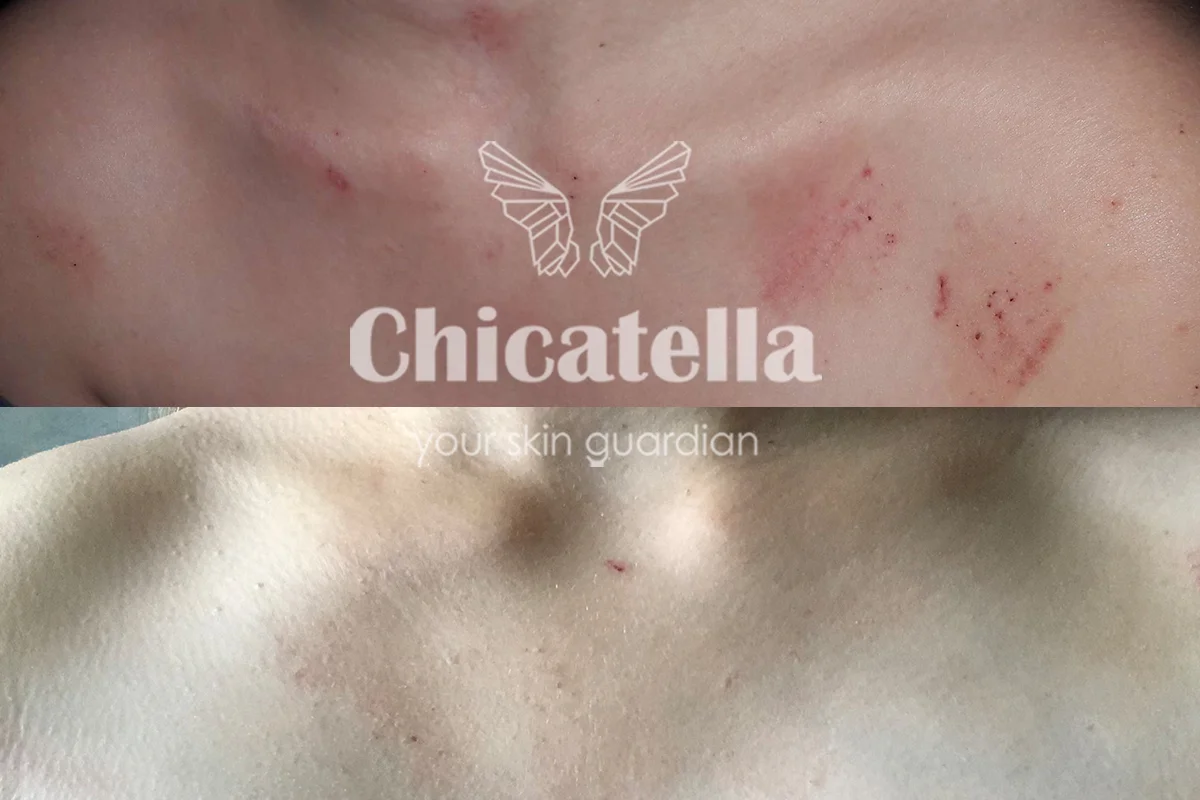
Atopic dermatitis pictures: scratched red patches across the chest and collarbones, before and after
Chest: scattered red patches on dry skin.
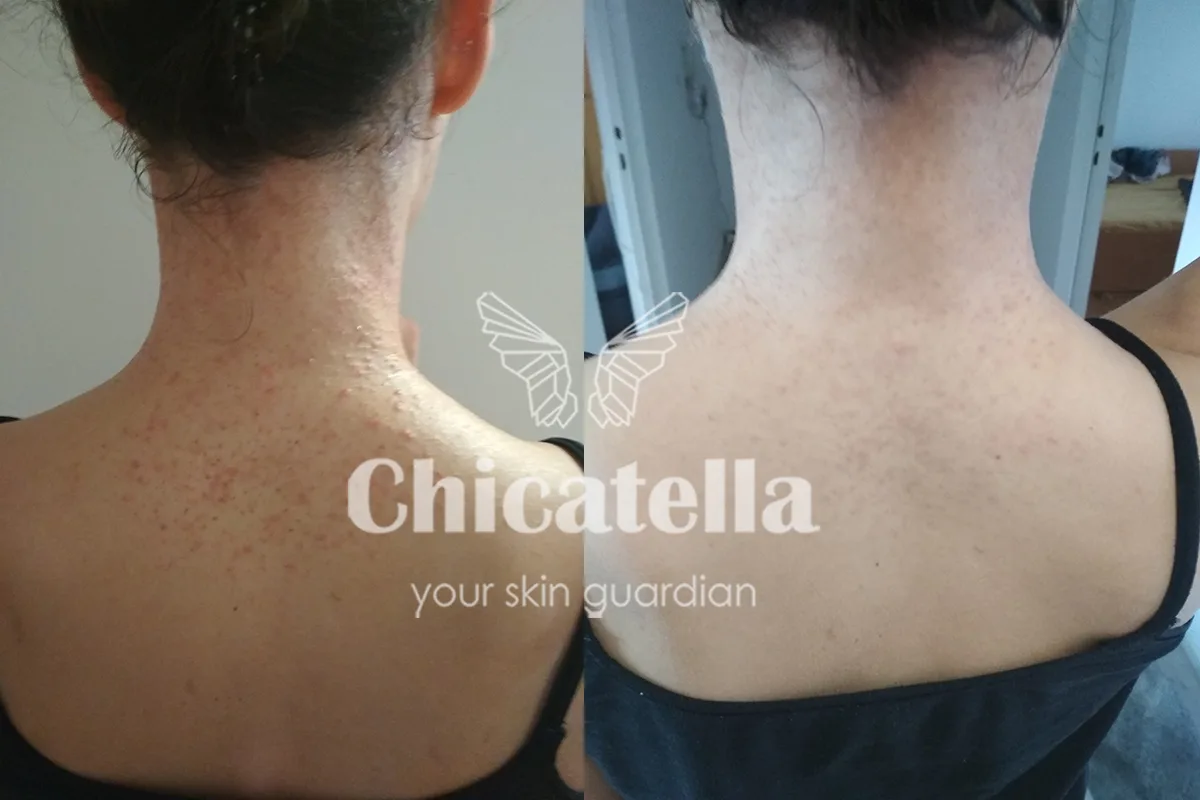
Atopic dermatitis on the back: fine red bumps across the neck and shoulders, before and after
Back: widespread rash with reddened areas.
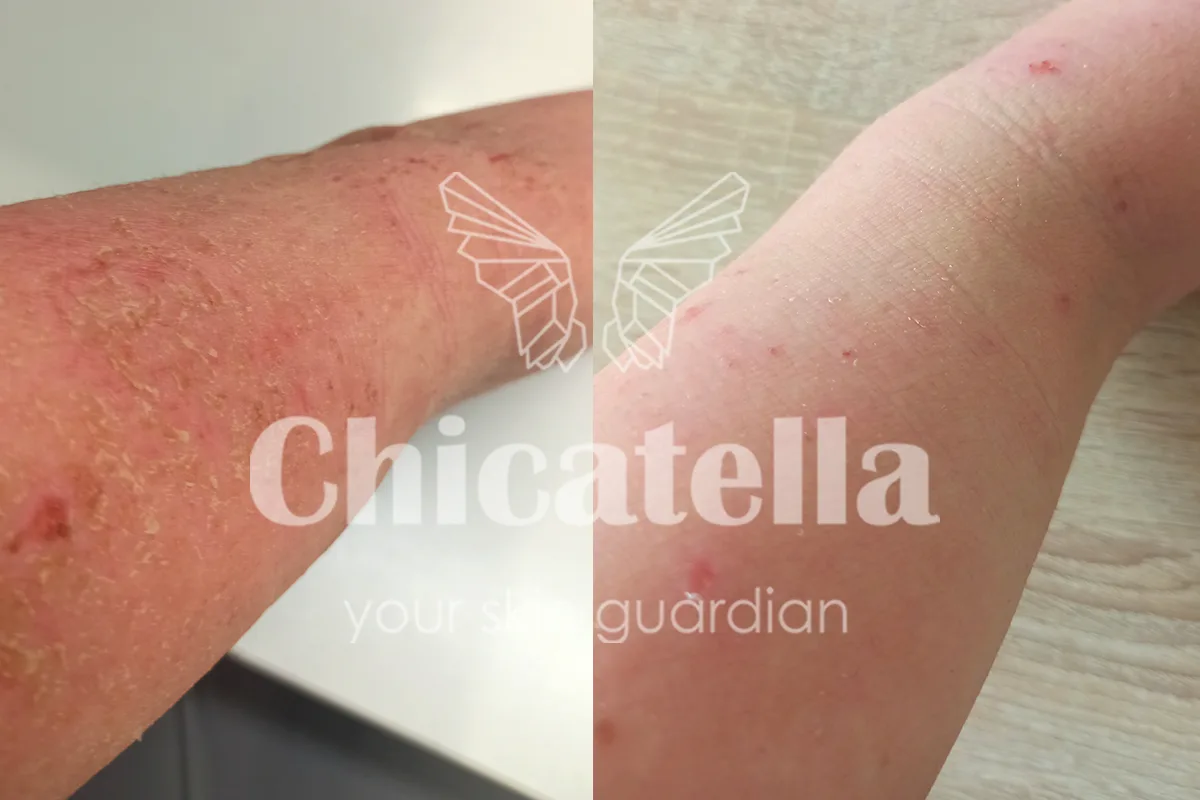
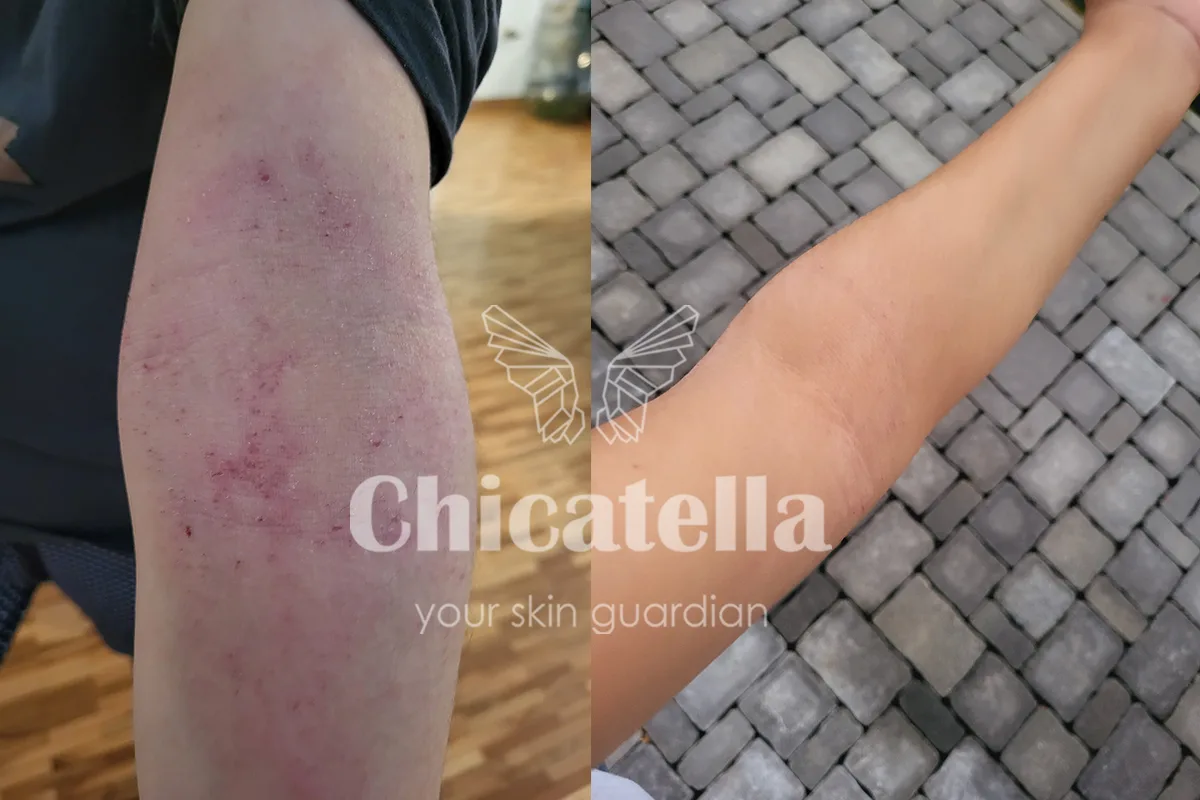
Atopic dermatitis on the arm: dry, scaly, scratched forearm skin, before and after
Arm: dry, rough skin with scratches on the upper arm.
Atopic dermatitis with dry patches on the skin: a rough, red patch, before and after care
Arm: thickened, scaly skin on the inner side.
Hand eczema pictures: cracked, peeling back of the hand before and after, with SOS Ointment
Back of the hand: deep cracks and peeling.
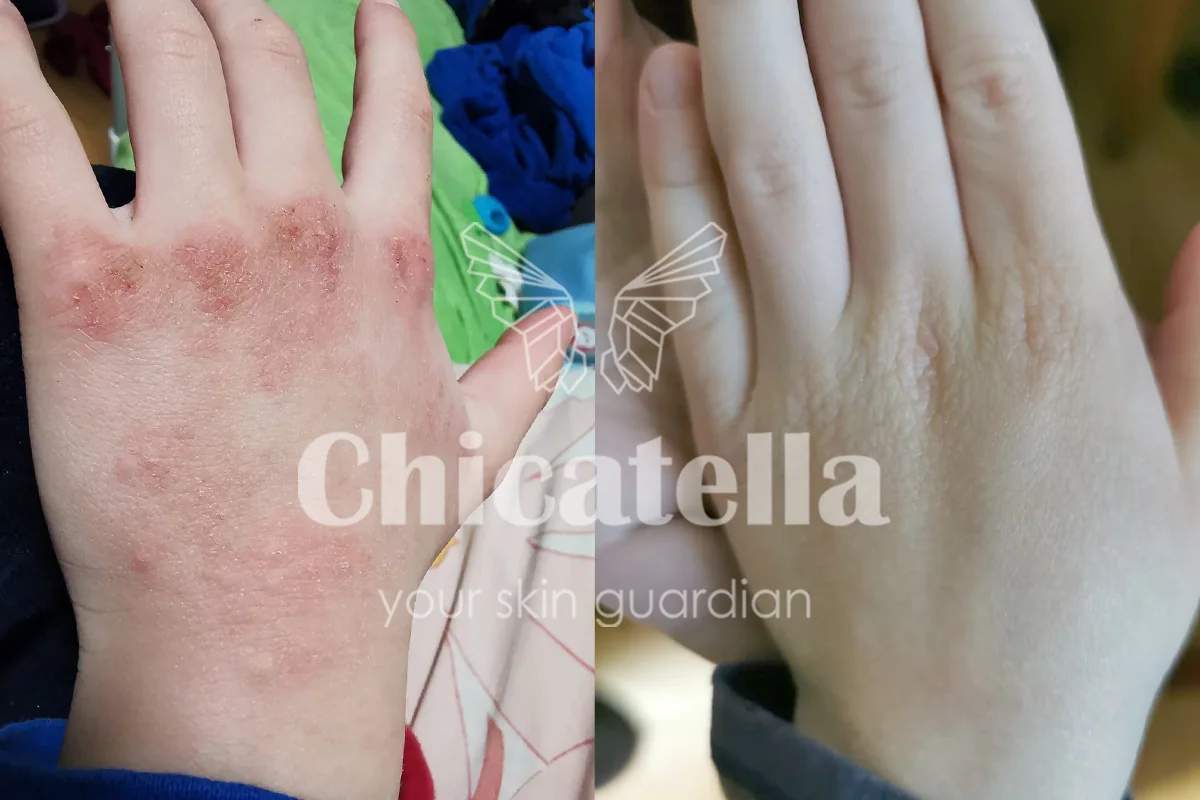
Atopic dermatitis on hands: red, dry skin over the knuckles, before and after
Back of the hand: red, dry skin between the knuckles.
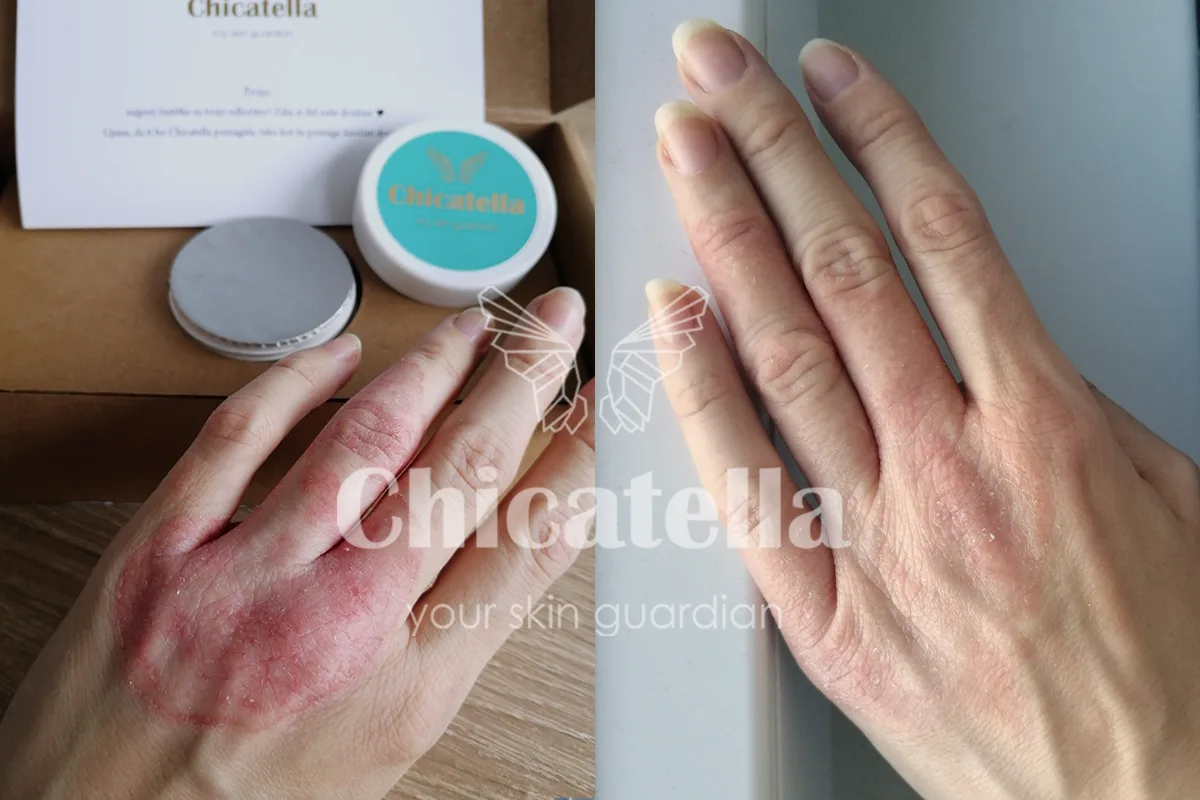
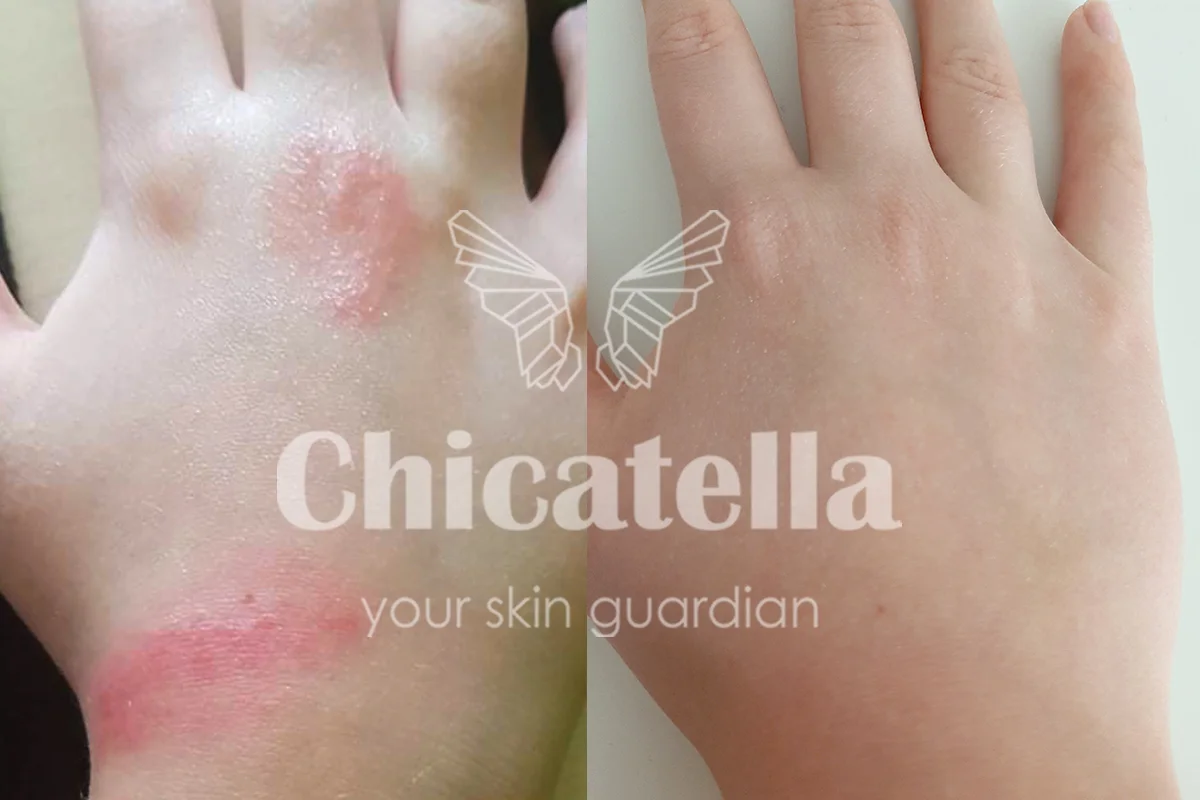
Atopic dermatitis rash on the wrist and hand: sharply outlined red patches, before and after
Arm: a sharply outlined red, dry patch.
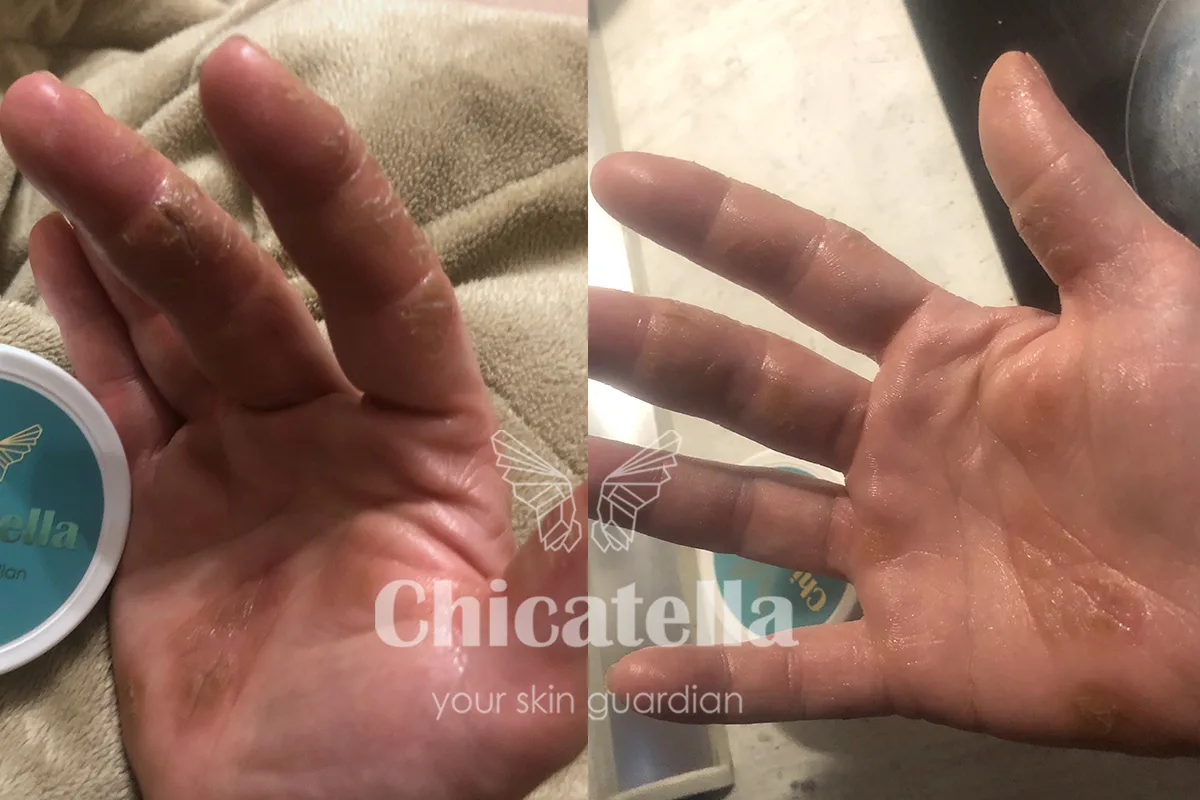
Atopic dermatitis on the palms: peeling, cracked skin on the palm and fingers, before and after
Hand: reddened, cracked skin between the fingers and on the knuckles.
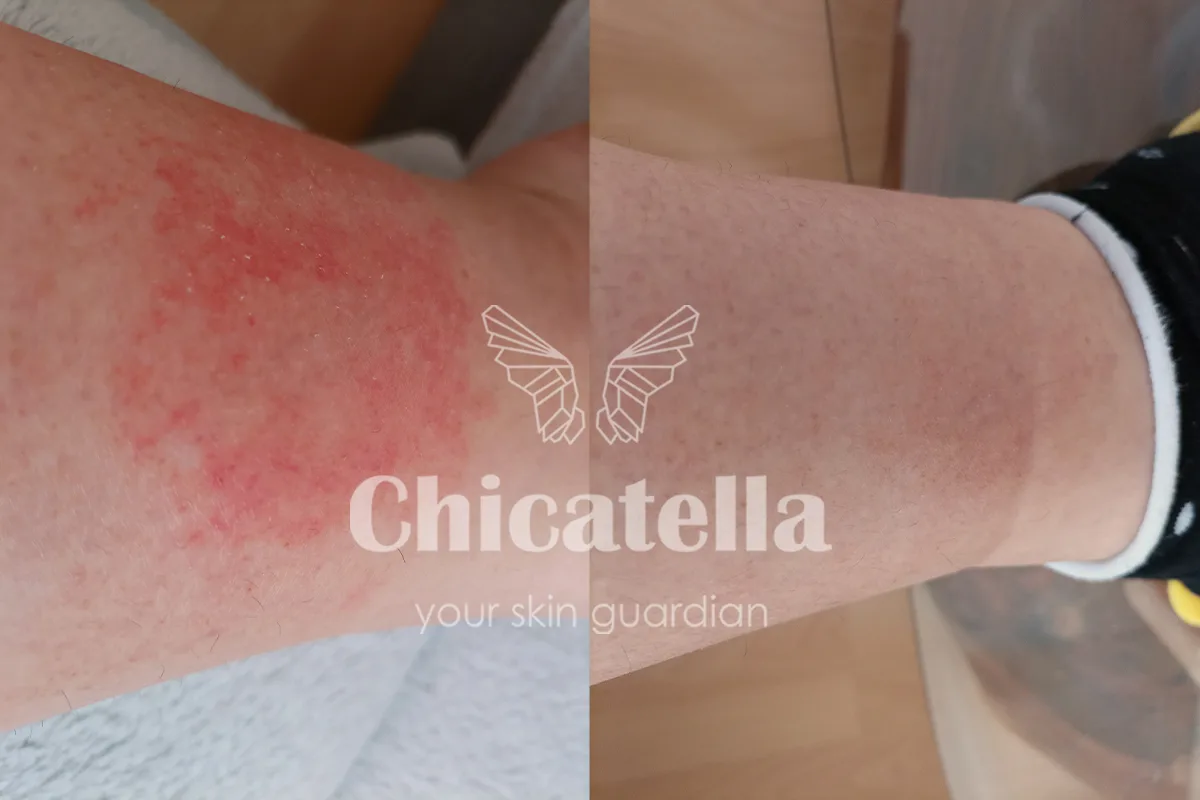
Atopic dermatitis on the leg: a large red patch on the lower leg that fades to a faint mark
Leg: a large red, itchy area on the thigh.
Atopic dermatitis pictures of the inner arm: rough, red, scratched skin, before and after
Shin: a dry, scaly patch with redness.
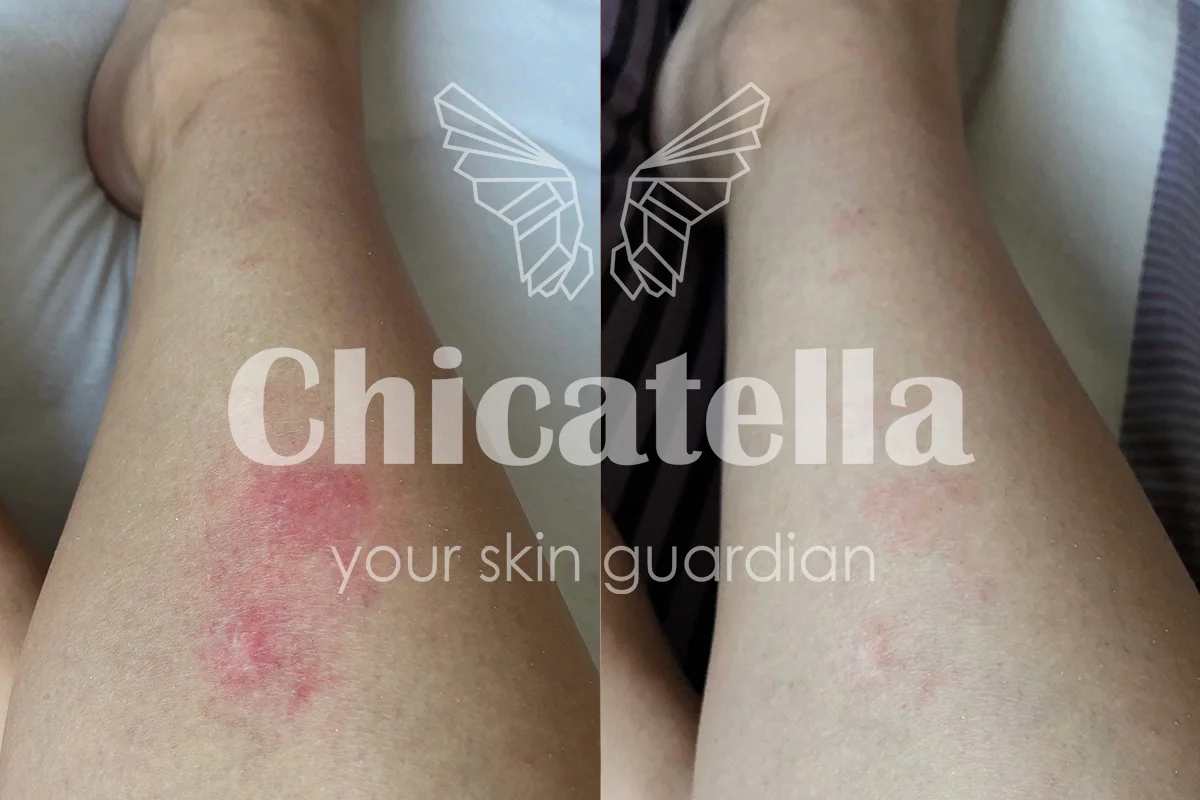
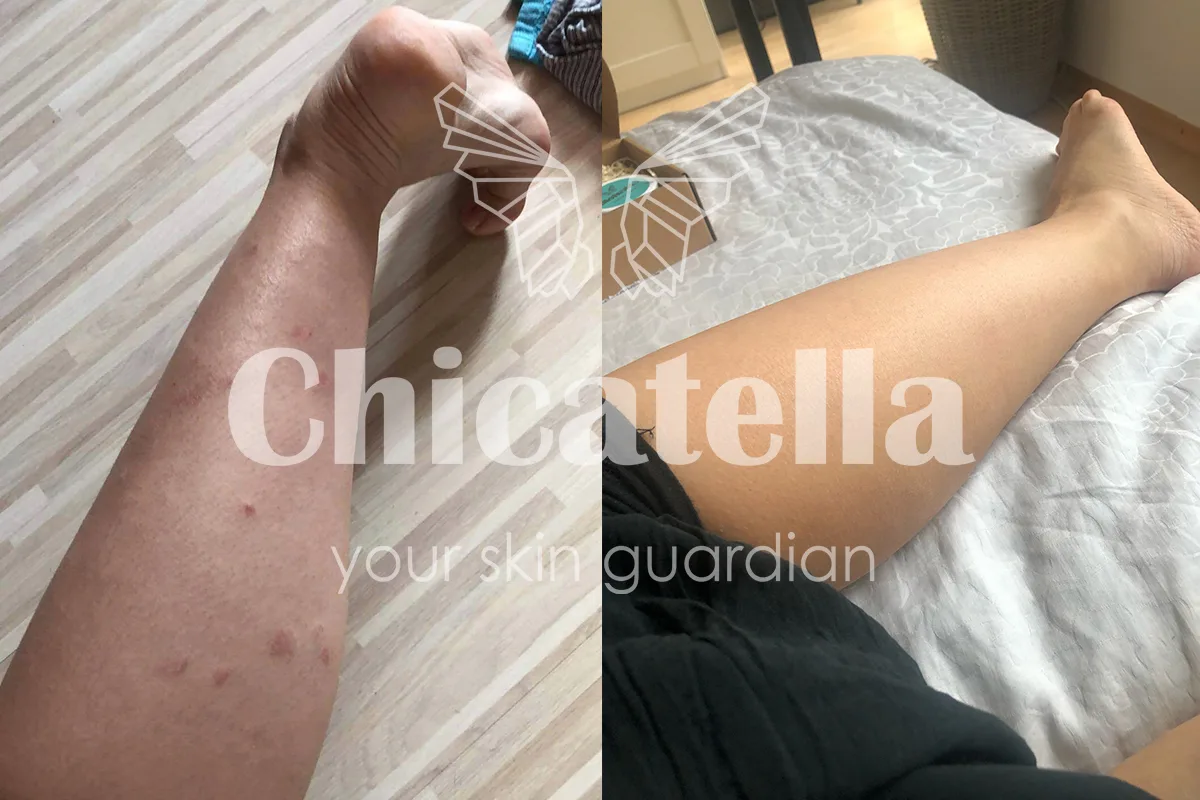
Atopic dermatitis on the legs, pictures: scattered red spots on the shin, before and after
Legs: scattered red spots on both shins.
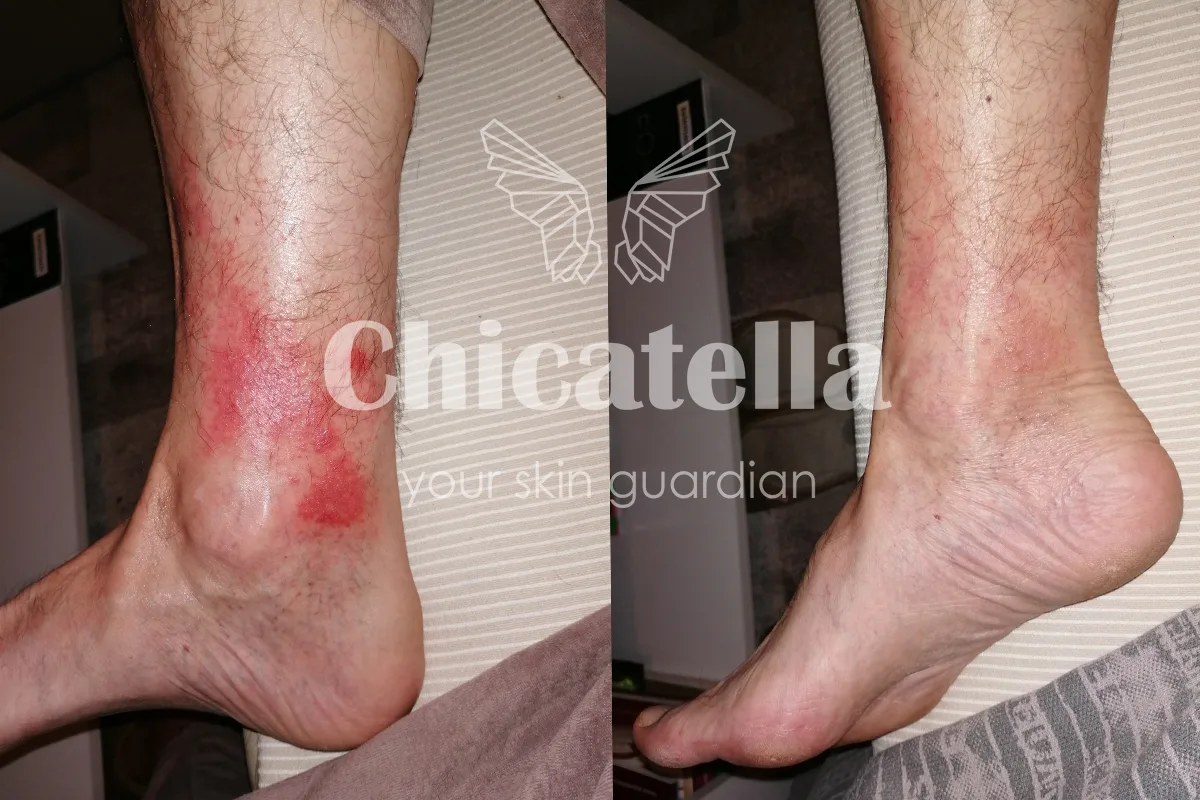
Atopic dermatitis on the ankle: inflamed red skin above a man’s heel, before and after
Ankle: thickened, cracked skin above the heel.

The photos belong to the people who shared them with us, so they’re protected with a watermark. Click a photo to enlarge it.

Skin tones

Why atopic dermatitis isn’t always red on darker skin

  • →redness is most obvious on lighter skin;
  • →on darker skin, inflammation can be purple, gray, dark brown or barely visible;
  • →what may stand out more are tiny bumps, roughness, swelling, warmth and scratch marks;
  • →once it calms down, the area can stay lighter or darker for a while.AAD↗︎

Our collection doesn’t have enough photos of different skin tones to show this difference fairly with pictures. So we use a diagram instead. We don’t create fake clinical cases.

pink brownish red purple / grayish TOP: ACTIVE INFLAMMATION · BOTTOM: FADING MARK
The little lines show roughness, which is often a more reliable clue than color.
★ The Chicatella community

Be the first to know

Sign up and be the first to get our latest science-backed skin care tips. No boring emails, just good things for your skin.

Join 23,400+ fans · no spam, unsubscribe in one click
Look-alike conditions

What can look very similar in a photo?

Look-alike conditionWhat can mislead youWhat’s often different
Contact dermatitisredness, itching, cracksoften follows the area that touched a product or material
Seborrheic dermatitisflaking on the face or scalpoften greasier scales and typical spots
Psoriasisdry, flaky patchesoften more sharply outlined and thicker patches
Fungal infectionan itchy, flaky patchmay have a more pronounced ring-shaped edge
Scabiesintense itching and scratched skinoften very itchy at night, with several people in the household affected
Impetigocrusts and damaged skintypical sticky, honey-yellow crusts
Nummular eczemaround, very itchy patchesmore clearly shaped round patches

Two photos looking alike doesn’t mean it’s the same condition.

Where a photo stops

When a photo isn’t enough

Save the photo and keep an eye on it
  • the skin is mainly dry or rough;
  • there’s no real pain;
  • it isn’t getting worse with consistent care;
  • you have no other signs of illness.
Make an appointment
  • you don’t know what condition it is;
  • it keeps coming back or spreading;
  • your usual care isn’t making it better;
  • the itch keeps you up at night;
  • cracks or frequent crusts appear.
Get medical help quickly
  • the changes spread fast;
  • a lot of pain, warmth or swelling;
  • pus or large honey-yellow crusts;
  • a fever or feeling really unwell;
  • clusters of painful blisters;
  • changes near the eye;
  • your child is unusually tired or seems really unwell.

An infection can’t be confirmed from a photo. The signs above only tell you when not to just wait for the next picture.

Practical tips

How to photograph your skin for your doctor

On the day of the appointment, skin often looks better than during a flare-up. That’s exactly why your photos are a valuable part of the doctor’s assessment.

1
Take photos in daylight.
2
Turn off beauty filters and heavy color editing.
3
Take one photo of the wider area.
4
Then take a close-up of the texture.
5
Each time, use roughly the same distance and light.
6
Note the date.
7
Write down how much the skin itches, hurts or oozes.
8
Write down the care and medications you used.
9
Photograph the change several days in a row.

You don’t need to show your face or anything else that identifies you if it isn’t needed to assess the skin.

Technical note

Important! Photos often can’t be compared for color

evening light is more yellow;
shadow can make skin look more blue or gray;
your phone’s automatic processing changes the contrast;
distance changes how visible the flaking is;
when you assess, also look at texture, spread and edges, not just color.

Real customer photos can be lit differently and look less polished than studio shots. But that’s exactly why they show real-life conditions, the way you see your skin at home in the bathroom.

Below the surface

In a photo you see dryness. But a lot can be going on underneath.

HEALTHY BARRIER water stays in ECZEMA-PRONE SKIN water escapes · irritants get in ITCH → SCRATCHING → MORE DAMAGE
A photo shows the surface. It can’t measure water loss, the microbiome or the cause of the inflammation, which is why an exam still matters.
Chicatella care

Every skin needs something different

Two skins can look quite similar in a photo, but one may need daily moisture and the other a richer protective layer.
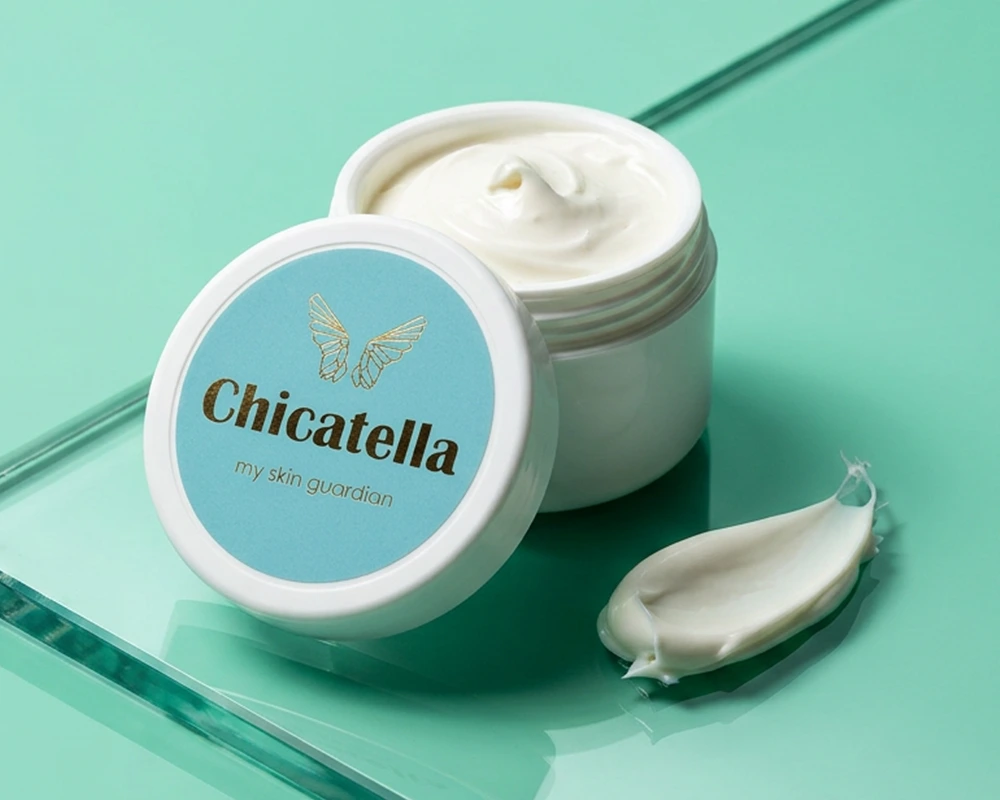
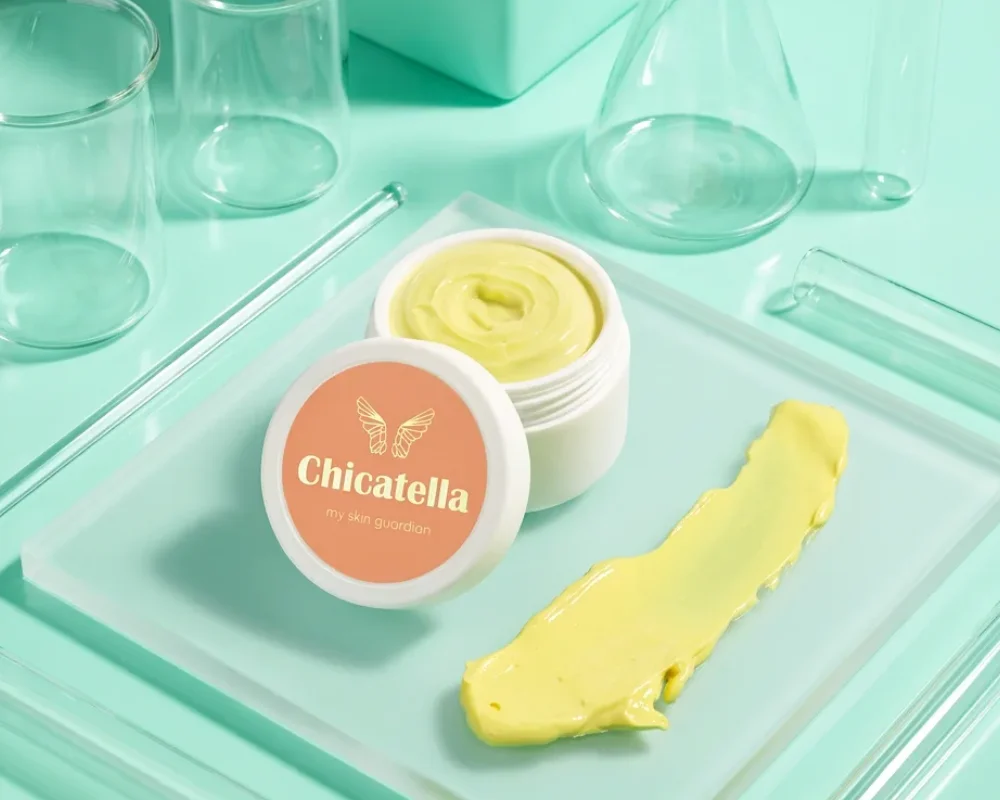
SOS Ointment – eczema ointment for dry, cracked hands, open jar with a swatch
Small areas that are very dry and rough
SOS Ointment

The richest texture we make. Occlusive means a protective layer that slows water loss, so it stays on your skin longer than a cream or lotion.

For which look

For cracked, tight and very rough areas on eczema-prone or very dry skin.

See SOS Ointment →
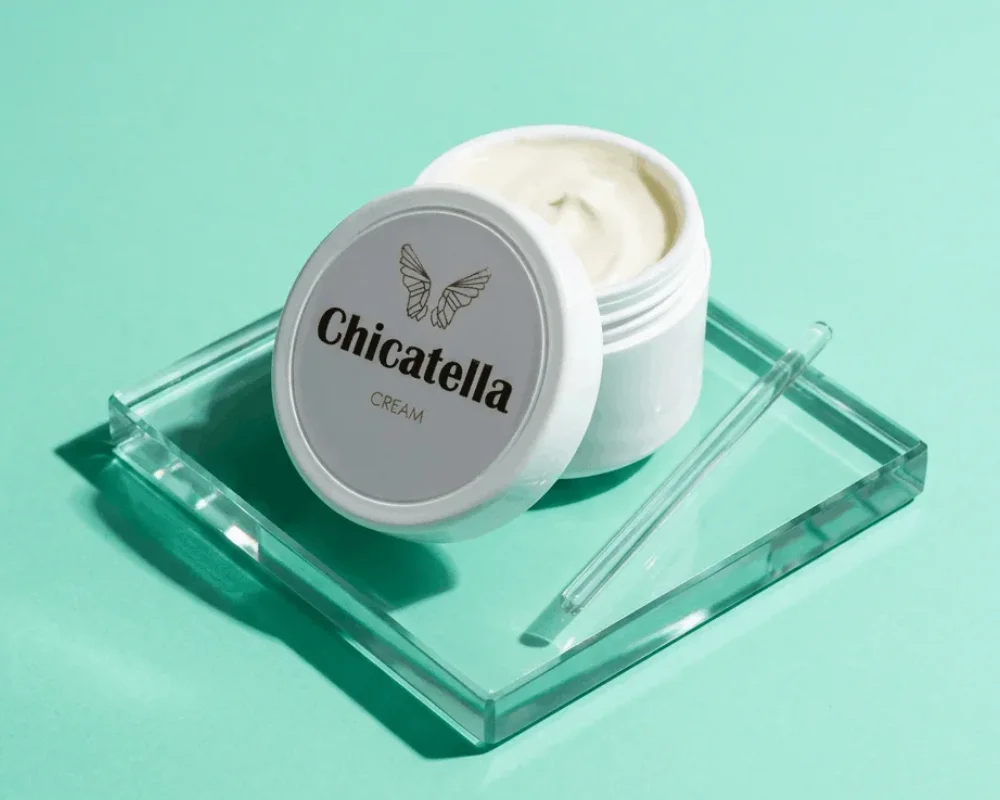
Night Repair Cream for very dry, eczema-prone skin – open jar on glass
Larger areas of dry skin
Night Repair Cream

Richer everyday care for skin that’s rough and tight over whole areas, not just in a few spots.

For which look

For widespread dryness and flaking on the torso, arms or legs.

See the cream →
Daily Moisturizer – face moisturizer for dry, sensitive skin, open jar with a swatch
Sensitive facial skin
Daily Moisturizer

A lighter option for your face and for areas where you don’t want a very rich feel, but your skin still needs moisture and comfort.

For which look

For moderate dryness, tightness and sensitivity without deep cracks.

See the moisturizer →

Chicatella makes the most sense when your skin’s main need is dryness, roughness, tightness and a weakened skin barrier.

Keep reading

Curious about more?

Atopic dermatitis
A full overview of the condition and its treatment.
Read →
In babies
Dry, inflamed or possibly infected.
Read →
In children
An in-depth guide for parents.
Read →
Eczema and diet
When food really is a trigger.
Read →
Eczema on the face
Eyelids, around the mouth and beside the nostrils.
Read →
Dry skin
Why the skin barrier needs consistent care.
Read →
Eczema cream
How SOS Ointment stands in for the skin barrier on eczema-prone skin: a guide to using it.
Read →
To wrap up

Getting your skin’s needs right

Searching for “atopic dermatitis pictures” can show you how differently the same skin condition can look. But it can’t tell you why it appeared, whether it really is atopic dermatitis, or which care will suit your skin best. So use photos to observe more closely, and base your decisions on the itching, whether it keeps coming back, where the changes are and what your skin needs right now.

If your skin is mainly dry, rough and tight, the right mix of moisture, softening and a protective layer can help.

Help me choose

Find the right care for your skin in three steps

No guesswork. Answer three quick questions and we’ll tell you what your skin needs.

The photos on this page show the state of the skin and don’t make a diagnosis. Chicatella products are cosmetic skin care products, not medicines or a diagnostic tool.

Sources and references
  1. 01Atopic dermatitis symptoms. American Academy of Dermatology. ↗︎
  2. 02Atopic dermatitis overview. AAD. ↗︎
  3. 03Diagnosis and treatment. AAD. ↗︎
  4. 04Atopic eczema guideline, 2025 (PDF). EuroGuiDerm. ↗︎
  5. 05Guidelines for diagnosis and assessment of eczema. DermNet. ↗︎
  6. 06Weeping eczema. AAD. ↗︎